Insight on cybercrime, dark web activity, OSINT and attack surface management from the DarkInvader research team.
browse by category
Capita ICO fine explained beyond the £14m headline: the six exposure gaps it exposes and how UK teams close them. See what to fix first.
NCSC hacktivist alert: find the exposed control panels, remote access and lookalike domains attackers scan for. See what to check first.
Unknown asset discovery, explained: the seven places forgotten internet-facing assets hide, how to attribute them and who fixes them. See the process.
NCSC adversary simulation guidance explained: how CyAS differs from pen testing, what to fix before scoping, and the data a red team needs. Read the guide.
Check Point VPN vulnerability response done properly: find every gateway, confirm the hotfix and catch stolen VPN logins. See the checklist.
Cyber Security and Resilience Bill: what in-scope firms and MSPs must prove, from 24-hour reporting to asset inventory. See the checklist.
Harrods data breach explained: what was taken, how a supplier let it happen, and six checks to stop the same gap hitting you. See the 30-day plan.
Monitoring Telegram for threats, explained end to end: channel collection, noise reduction, verification and escalation. See how to build the workflow.
Leaked credentials on the dark web are mostly recycled noise. Learn how to sort dead records from live, exploitable exposures. See the triage model.
Glasgow Council cyber attack explained: what was confirmed, why supplier-hosted assets go unmapped, and how to find yours. See the practical steps.
Leaked credentials check done right: cover your whole domain, tell old dumps from live stealer logs, and act in hours. See what free tools miss.
Third party data breach risk hides in gaps annual vendor checks never test. See the five blind spots and how to monitor suppliers continuously.
Attack surface monitoring software compared by what matters: discovery, noise, human triage, takedowns and reporting. See the 9 questions to ask vendors.
Stealer logs expose employee passwords, cookies and session tokens. Get a 72-hour triage runbook and see why resets alone fail. Start free.
VIP monitoring done properly: how to choose which executives need cover, the exposure signals to watch, and how to act on findings. See how to set it up.
ServiceNow vulnerabilities are only half the problem. Learn how to inventory every exposed instance, test safely and respond in 72 hours.
Manchester Airports cyber attack: what was stolen, why WiFi and number plate data matters, and a 10-day plan to check your own exposure.
PaperCut NG vulnerability response beyond patching: fingerprint exposed print servers, check for compromise and prove it’s closed.
Digital ID security risks explained through the real attack paths: stolen sessions, spoofed portals and supplier gaps. See how to monitor and respond.
Third party breach hitting your data? Get the early warning signals, a 72-hour UK response runbook and the contract fixes that stop a repeat.
CVE-2026-19490 is a critical authentication bypass in NetScaler ADC and Gateway. Learn the risk and why it needs fixing before exploitation starts.
Shadow IT risks explained from the attacker’s view: 7 exposures, how each one is discovered from outside, and what to fix first. See how to find yours.
CVE-2026-19478 is a critical GitLab code injection flaw, rated 9.4, that allows unauthenticated deletion of public projects. Patches are available.
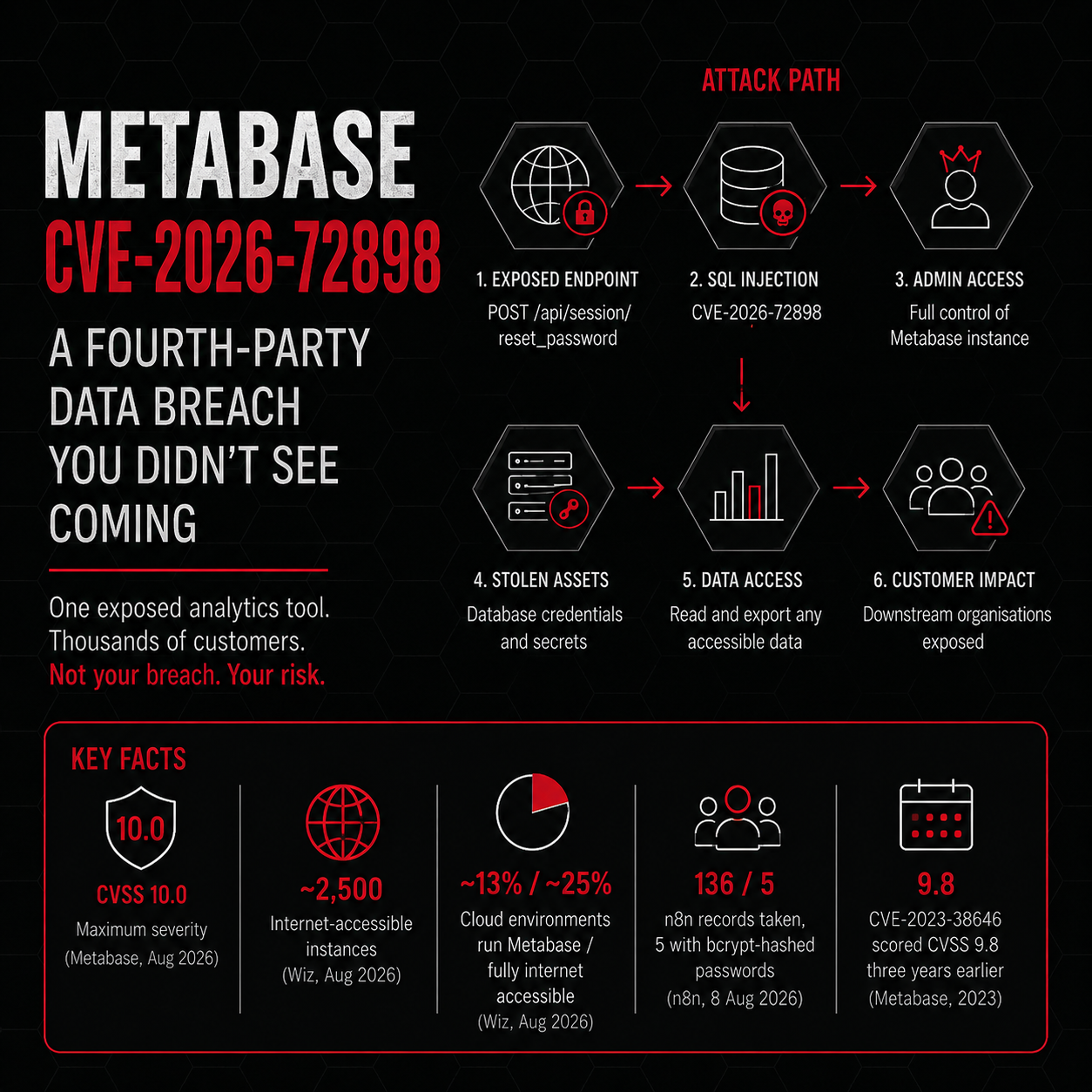
Explore the anatomy of a fourth-party data breach, examining the risks associated with Metabase, Framework, and n8n and how to mitigate them.