

Introduction
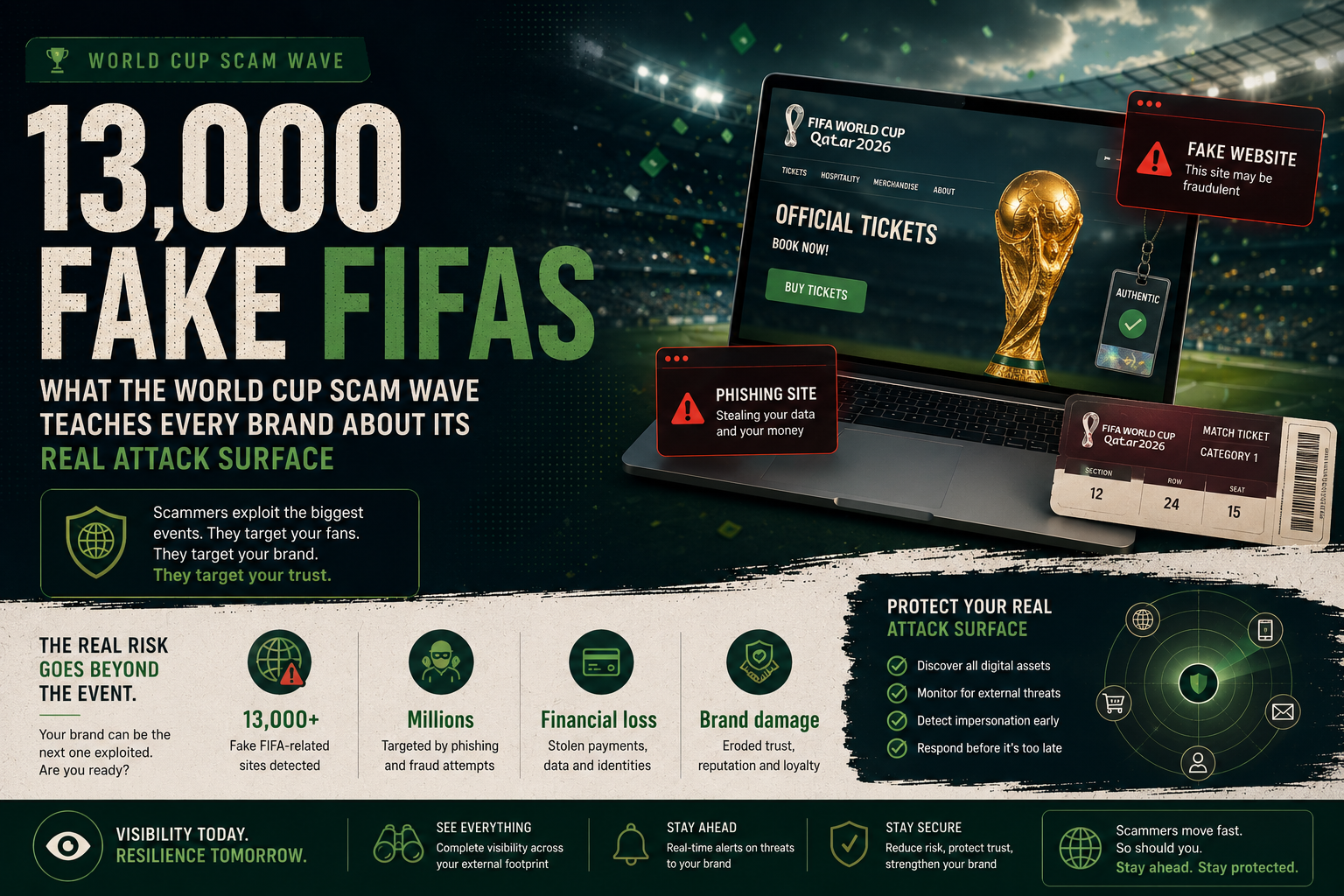
As the world thrilled to the spectacle of the FIFA World Cup, a darker parallel narrative unfolded online. In an era where digital scams are as sophisticated and widespread as the events they exploit, the revelation of 13,000 fake FIFA-related sites should serve as a wake-up call for brands globally. These scams not only prey on enthusiastic fans but also reveal the vulnerabilities in our approach to digital security. In this post, we'll explore how the World Cup scam wave sheds light on every brand's real attack surface and the vital steps needed to guard against a similar breach.
Understanding the World Cup Scam Phenomenon
The lure of the FIFA World Cup is irresistible, attracting millions of fans worldwide. But alongside this global fervour, scammers have unleashed a flood of counterfeit websites. These sites mimicked official platforms, attempting to phish sensitive information and money from unsuspecting fans. It’s a stark reminder that major global events are prime hunting grounds for cybercriminals.
The Anatomy of a Scam
The fake websites were meticulously crafted to resemble legitimate outlets. With similar logos, layouts, and design elements, victims were easily convinced. These sites often offered fake tickets, merchandise, or even false promises of sensational experiences. By offering something that seemed legitimately tied to the World Cup, scammers managed to bypass many individuals’ scepticism.
The Scope of the Attack Surface
In cybersecurity, the term attack surface refers to the total sum of vulnerabilities an attacker can exploit. This includes not just technological vulnerabilities but also human and organisational weaknesses. The World Cup scam demonstrated that any brand associated with a high-profile event must consider a much larger attack surface than previously assumed.
Lessons for Brands on Managing Their Real Attack Surface
Identifying Digital Assets
To adequately protect a brand, understanding what needs safeguarding is essential. Every digital asset, from websites and apps to social media and online transactions, contributes to the attack surface. This realisation is the first step in fortified cybersecurity measures.
One crucial strategy is asset monitoring, which helps brands identify all their digital touchpoints. Without knowing what and where your assets are, defending them effectively becomes an impossible task.
Strengthening Brand Monitoring
Investing in robust brand monitoring can catch early fraud attempts, reducing potential damage. Keeping a vigilant eye through tools that continuously scan for imposter sites or suspicious activities can alert brands before a threat escalates.
DarkInvader’s brand monitoring tools, for instance, can provide real-time insights into any malicious activities directed towards a brand. This proactive approach ensures any signs of fraud are detected swiftly.
Empowering Through Education
A brand's human resources are a pivotal part of its defence. Educating employees about phishing scams and online fraud can vastly reduce the risk posed by scammers. Workshops and regular updates about fraud trends should become a staple of any company’s cybersecurity strategy.
Utilising External Security Expertise
No brand is an island. Sometimes, internal resources lack the breadth needed to fully understand or tackle cybersecurity threats. Collaborations with cybersecurity experts or firms that specialise in dark web monitoring can drastically improve a brand's resilience against attacks. Having a team of skilled professionals dedicated to tracking and analysing threat trends is invaluable.
Enhancing Cybersecurity Protocols
Elevating your cybersecurity protocols to meet the demands of current threats is vital. This involves regularly updating software, employing multi-factor authentication, and utilising intrusion detection systems. Brands should adopt a continuous improvement mindset towards their security measures, ensuring they evolve alongside potential threats.
Summary
The World Cup scam wave underscores a critical truth for brands: maintaining awareness of your attack surface is not optional but essential. By embracing comprehensive strategies that include asset and brand monitoring, employee education, and enhanced cybersecurity protocols, brands can guard against the multifaceted nature of contemporary cyber threats.
FAQs
What is an attack surface?
An attack surface is the total sum of potential vulnerabilities and points of entry for attackers into a system. It includes technological, human, and organisational vulnerabilities that could be exploited.
How did the World Cup scams affect brands?
The scams primarily exploited the World Cup's hype, impacting fan trust and potentially targeting brands associated with the event by creating counterfeit websites and phishing scams.
How can brands protect their online reputation during events?
By utilising brand monitoring tools, brands can detect suspicious activities quickly. Additionally, regular employee training and pre-emptive cybersecurity measures can help maintain trust and safety.
Why is employee education crucial in cyber defence?
Employees can be the weakest link in cybersecurity if not properly informed. Educating them about recognising phishing scams and other cyber threats reduces the risk of human error contributing to a breach.
By adopting a proactive stance, understanding their digital landscape, and employing the right tools, brands can safeguard themselves against scams like those seen during the World Cup. For more information on enhancing cybersecurity measures, consider exploring DarkInvader's comprehensive solutions.