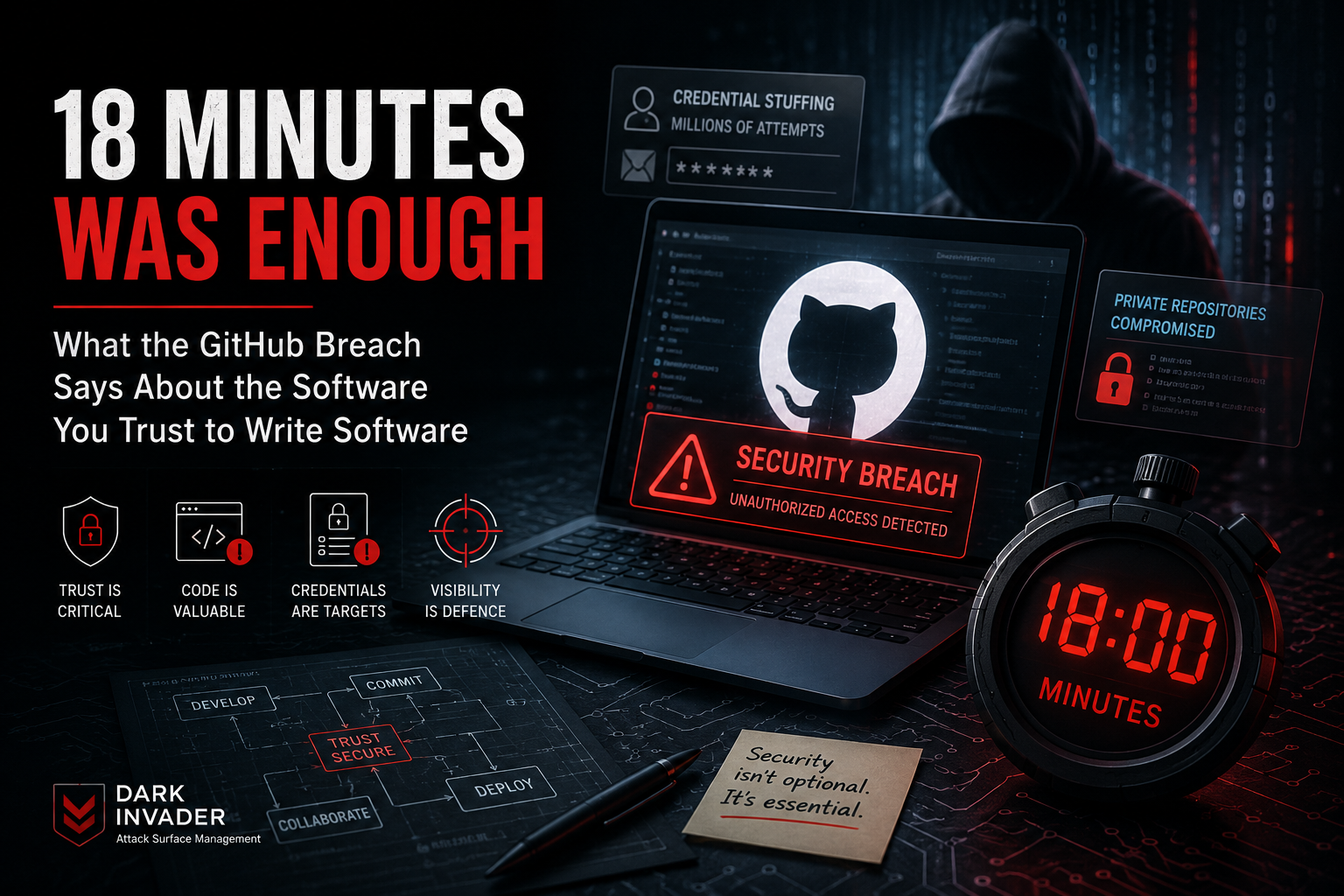
In a world driven by digital innovation, GitHub stands out as a cornerstone for software developers. It’s not just a repository hosting service; it's a vibrant community and an essential tool for software development collaboration. However, the trust we've placed in such platforms was shaken recently by a significant security breach – a breach that unfolded in just 18 minutes.
This episode isn't merely a cautionary tale but a wake-up call reflecting broader implications about software security and trust. Understanding this breach provides insights into maintaining the integrity of the software we rely on to build future innovations.
GitHub, acquired by Microsoft in 2018, is a leading platform for source code management, leveraging Git for distributed version control. The recent breach involved a sophisticated attack targeting GitHub repositories, potentially compromising sensitive information.
The hackers exploited weaknesses within GitHub’s system, using a credential-stuffing attack that involved automated scripts testing millions of username and password combinations. What's alarming is the speed and precision – within 18 minutes, the perpetrators had made an impact.
This breach doesn't just risk exposure of personal data; it poses a threat to entire software projects. Malicious actors gaining access to private repositories could introduce vulnerabilities, or worse, compromise the intellectual property.
The trust developers place in platforms like GitHub is immense. They serve as critical infrastructure for project collaboration, version control, and even as a learning tool for burgeoning programmers. However, the breach signals a reminder: no system is infallible.
When a platform widely used like GitHub suffers a breach, it doesn't only affect individual users but also large-scale projects. Projects can face delays due to reassessed security protocols. Companies reliant on open-source projects might need swift audits to ensure there are no embedded threats now exposed.
The GitHub incident should be a catalyst for all software developers and companies to re-evaluate their security measures. Implementing stronger security practices, like two-factor authentication, regularly updating passwords, and ensuring they aren’t reused across platforms, is essential.
Companies shouldn't solely rely on internal security teams. Utilising external monitoring services like OSINT Monitoring provides a broader perspective on potential threats.
Additionally, vulnerability-scanning services such as those offered by Dark Web Monitoring can be pivotal in discovering breached data before it's used maliciously.
Developers and organisations must adopt a proactive rather than reactive approach to security. Embedding security into the development pipeline ensures that vulnerabilities are caught early and that incidents like the GitHub breach don't repeat.
The cybersecurity field is rapidly innovating. New tools are emerging that use artificial intelligence to detect unusual behaviour or potential attacks before they happen. Investing in these developing technologies could provide the foresight needed in a rapidly evolving digital world.
The GitHub breach serves as a sobering reminder that no digital fortress is impenetrable. Our reliance on software to create software is profound, and thus the need for robust security measures is essential. By re-evaluating our security postures and leveraging emerging technologies, we can protect not only our code but also the innovation it fosters.
The main consequence of the GitHub breach was the exposure of sensitive data within private repositories, which could potentially be used maliciously or compromise intellectual property.
Developers can enhance protection by implementing two-factor authentication, conducting regular security audits, and using services like DarkInvader's Leaked Credentials Monitoring to monitor and respond to potential threats swiftly.
While no system is entirely invulnerable, GitHub has likely ramped up security measures post-breach. However, users should remain vigilant and practice good security hygiene.
Cybersecurity is critical in software development because the integrity and confidentiality of code directly affect software reliability and trust. As breaches become more prevalent, prioritising security conveys protective measures for long-term sustainability.

Unlock full visibility of your external attack surface with DarkInvader’s continuous, real-time monitoring. Create your free account to discover unknown assets, detect emerging risks and stay ahead of potential threats before attackers can exploit them.
Create My Free Account
Platform 7D, New Station Street, Leeds,
LS1 4BT, United Kingdom
Mon-Fri, 9:00-17:00
Contact:
sales@darkinvader.io
+44 (0)1138805336
Last updated: 14 August 2026
©2026 DarkInvader, All Rights Reserved


