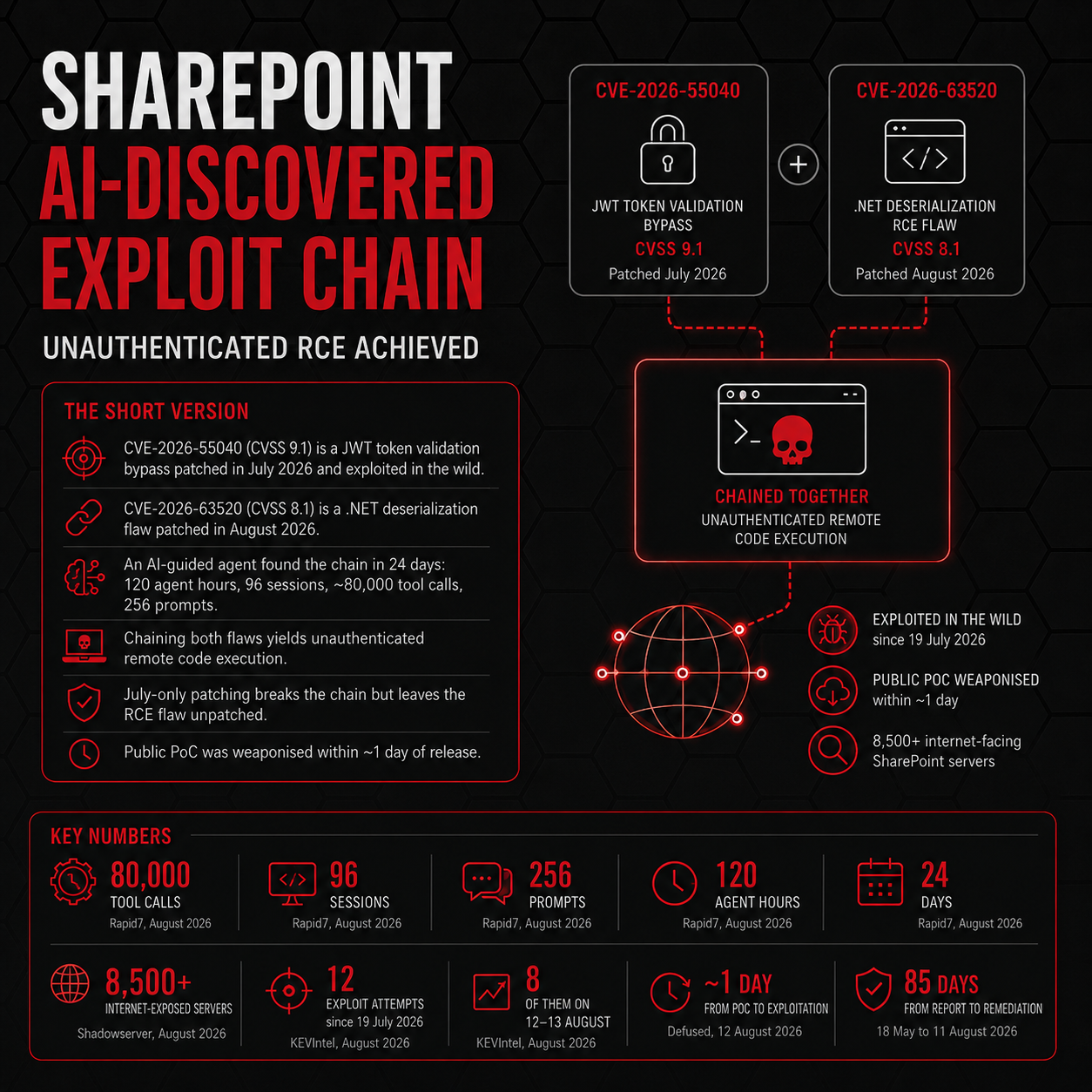
In an era where digital transformations are reshaping the way we operate, the significance of platforms like SharePoint cannot be overstated. However, as we leverage these powerful tools, the looming shadow of potential cyber threats becomes ever more apparent. A recent SharePoint chain of vulnerabilities discovered by security agents has thrown into stark relief the emerging trends in cyber exploitation. This blog delves into the ramifications of this discovery, what it means for organisations worldwide, and how it shapes the potential landscape of cybersecurity over the next decade.
SharePoint, a collaboration platform widely used by businesses globally, was recently found to have a chain of vulnerabilities that could be exploited by malicious actors. This chain of vulnerabilities was pieced together, indicating systemic weaknesses that could be targeted for unauthorised access or data breaches. The complexities of this system made the vulnerabilities harder to detect initially, showcasing the increasingly sophisticated tactics employed by cyber criminals.
The identified vulnerabilities allow attackers to manipulate SharePoint in ways that were previously thought secure. This ranges from privilege escalation to unauthorised data access. Each link in this chain represents an evolution in exploit techniques, hinting at a future where attackers are more resourceful and less reliant on traditional, straightforward attack methods.
The discovery of the SharePoint chain highlights several crucial lessons for the future of cybersecurity. As we look toward the next decade, these learnings could shape organisational strategies and security frameworks.
The integration of security platforms that offer real-time vulnerability scanning can help identify weak links before they become exploited. By employing continuous scanning, enterprises can stay ahead of potential threats rather than reacting post-breach.
The idea of a ‘zero trust’ architecture involves a rigorous verification of every attempt to access company resources. It implies that both internal and external network zones should be treated with equal suspicion. This shift can significantly reduce the risk posed by sophisticated exploitation tactics similar to the SharePoint chain.
As we peer into the future of cybersecurity, it’s clear that the era of reactive security measures is drawing to a close. To mitigate risks, organisations must embrace proactive measures, including the adoption of advanced monitoring and vulnerability management systems. Ensuring data integrity and safeguarding sensitive information will require a concerted effort that prioritises learning from past vulnerabilities, such as the SharePoint chain.
In this evolving landscape, staying informed and adopting a forward-thinking security posture is no longer optional; it’s a necessity. DarkInvader continues to be at the forefront, offering essential tools to arm businesses against these emerging threats. Learn more about how we are redefining cybersecurity.
A SharePoint vulnerability chain is a sequence of security weaknesses within the SharePoint platform that, when exploited together, allow attackers to gain unauthorised access or extract data. This chain illustrates how vulnerabilities can be interconnected, enhancing the threat they pose.
Organisations can protect themselves by employing a comprehensive cybersecurity strategy that includes regular asset and vulnerability scanning, implementing a zero trust model, and maintaining up-to-date security patches across all systems.
Asset monitoring is crucial because it helps organisations maintain visibility over their infrastructure, identifying potential vulnerabilities before they can be exploited. This proactive approach is essential in averting breaches and ensuring information security.
Zero trust is a security concept centred around the belief that organisations should not automatically trust anything inside or outside their perimeters. Implementing zero trust policies requires thorough verification processes, which can significantly deter unauthorised access and exploitation attempts.
By leveraging these insights, businesses can better prepare for an era where cybersecurity threats are more sophisticated and pervasive than ever.

Unlock full visibility of your external attack surface with DarkInvader’s continuous, real-time monitoring. Create your free account to discover unknown assets, detect emerging risks and stay ahead of potential threats before attackers can exploit them.
Create My Free Account
Platform 7D, New Station Street, Leeds,
LS1 4BT, United Kingdom
Mon-Fri, 9:00-17:00
Contact:
sales@darkinvader.io
+44 (0)1138805336
Last updated: 14 August 2026
©2026 DarkInvader, All Rights Reserved


