

Artificial Intelligence (AI) plays a significant role in shaping the contemporary landscape of cybersecurity, presenting a double-edged sword for both attackers and defenders. As technology continues to evolve, so do the strategies employed by cybercriminals and security professionals alike. This blog post explores the dual nature of AI in both offence and defence, the challenges it brings to the attack surface, and the potential ways forward for bolstering cybersecurity measures.
Understanding AI in Cyber Offence
The Role of AI in Cyberattacks
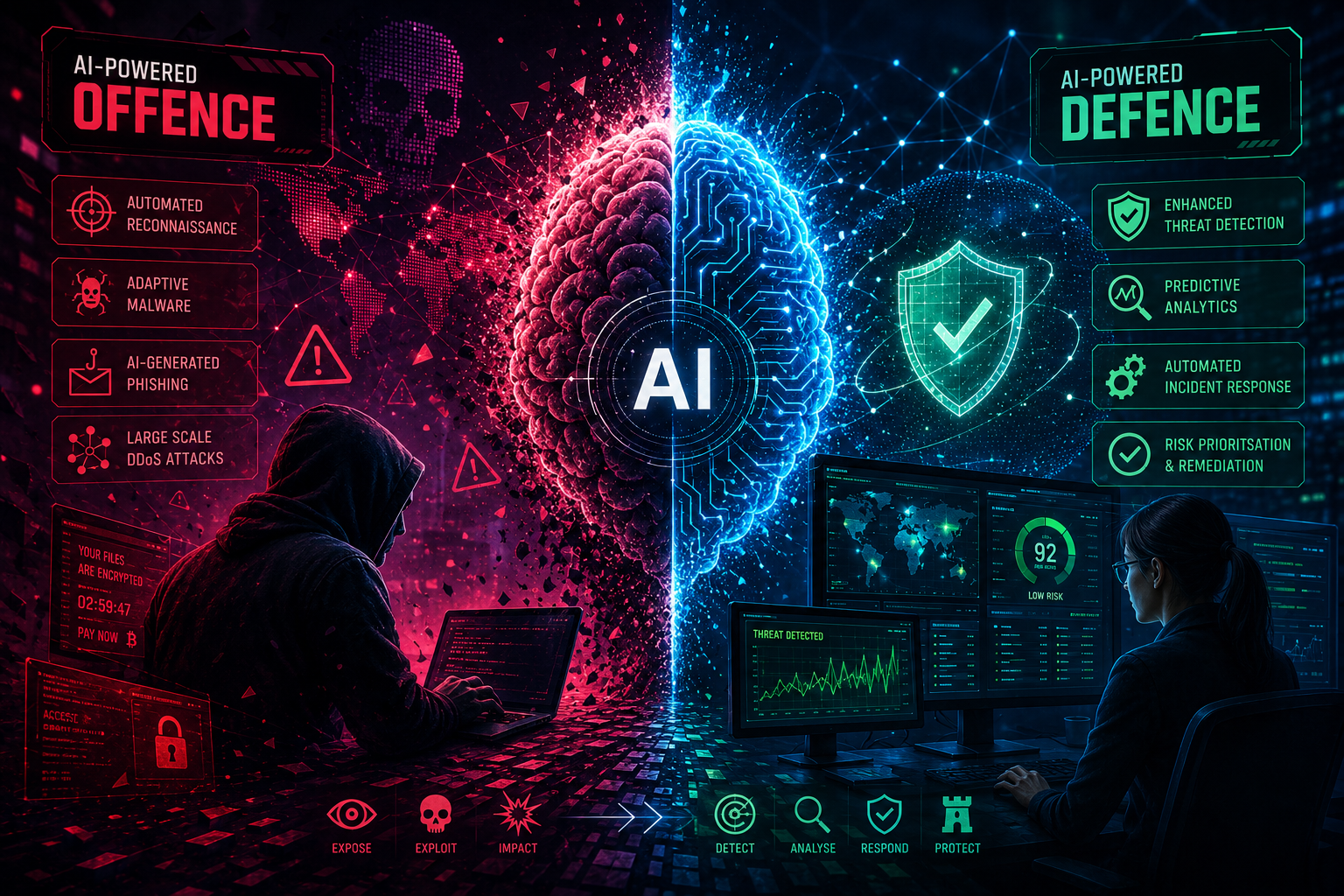
AI's application in cyber offensive strategies is becoming more prevalent, enabling attackers to execute more sophisticated and efficient attacks. AI can automate the reconnaissance process, analyse vast amounts of data to find vulnerabilities, and create more convincing phishing attacks through natural language processing. For instance, AI-driven malware can adapt in real-time, learning from the behaviours of its host environment to evade detection.
Case Studies: AI-Driven Cyber Threats
Several high-profile incidents illustrate the growing use of AI in cyber offences. From DeepLocker, which utilises AI to obfuscate its maleficent code until it recognises its target, to AI-powered bots that increase the scale and impact of distributed denial of service (DDoS) attacks.
AI in Cyber Defence
Enhancing Threat Detection with AI
Conversely, AI offers powerful tools for dramatically improving defence mechanisms. AI systems can continuously monitor network traffic, identify anomalies, and predict potential threats before they materialise. Machine learning algorithms enhance vulnerability scanning, adapting to the latest threat patterns and significantly reducing response times.
For a thorough defence mechanism, organisations employ strategies like vulnerability scanning to regularly assess their security posture and patch potential exploitable weaknesses.
Automating Incident Response
Incident response is another area where AI has a significant impact. By automating repetitive tasks and freeing up human analysts for more complex decision-making, AI improves the efficiency and effectiveness of incident response. AI can analyse logs, correlate disparate events, and provide actionable intelligence to security teams.
The Double-Edged Attack Surface
Increased Complexity and Risks
The integration of AI in cybersecurity introduces increased complexity. The constant evolution of AI technologies means that the attack surface is always expanding, providing both new opportunities and challenges. The sophistication of AI-driven attacks makes it harder to discern normal activities from malicious ones, while AI's predictive capabilities in defence must always strive to stay a step ahead.
Ethical and Privacy Concerns
Deploying AI in cybersecurity raises ethical and privacy concerns. AI systems often rely on large volumes of data, raising questions about data protection and user privacy. Ensuring compliance with regulations like GDPR while employing AI for security purposes requires meticulous attention to detail and a proactive approach.
Strategies for Mitigation
Organisations must adapt their strategies to mitigate the risks associated with AI in cybersecurity. Comprehensive threat intelligence, continuous monitoring through tools like dark web monitoring, and a focus on both technical and human factors are crucial components. Collaboration between AI developers, cybersecurity experts, and policymakers is essential in establishing ethical standards and regulatory frameworks.
Investing in Human Intelligence
While AI can automate many aspects of cybersecurity, human oversight remains indispensable. Investing in cybersecurity training and fostering environments that encourage vigilance and innovation can greatly enhance a company’s defensive posture.
Conclusion
AI’s role in cybersecurity is undeniably transformative, presenting both challenges and opportunities. By understanding the dual nature of AI in offence and defence, organisations can better position themselves to protect against increasingly sophisticated threats. The future of cybersecurity will depend on striking a balance between leveraging AI's capabilities and addressing the ethical, privacy, and security implications it presents.
FAQs
What are the primary benefits of using AI in cybersecurity defence?
The primary benefits include enhanced threat detection, automated incident response, and the ability to process large volumes of data quickly to identify anomalies, all contributing to more robust and effective security measures.
How does AI contribute to the increased attack surface?
AI contributes to the increased attack surface by automating reconnaissance, generating more sophisticated phishing attempts, and adapting malware in real-time. This evolution makes attacks more difficult to detect and prevent.
What measures can organisations take to mitigate the risks associated with AI in cybersecurity?
Organisations should invest in advanced threat intelligence platforms, continuous monitoring tools, and human-centric security awareness training. Additionally, upholding ethical standards and regulatory compliance is crucial.
Is human expertise still necessary with the rise of AI in cyber defence?
Yes, human expertise remains essential. AI can enhance capabilities and automate tasks, but human intuition and strategic thinking are crucial in complex decision-making and ethical considerations.
For more information on how AI can bolster your cybersecurity efforts, you can explore our OSINT monitoring capabilities.