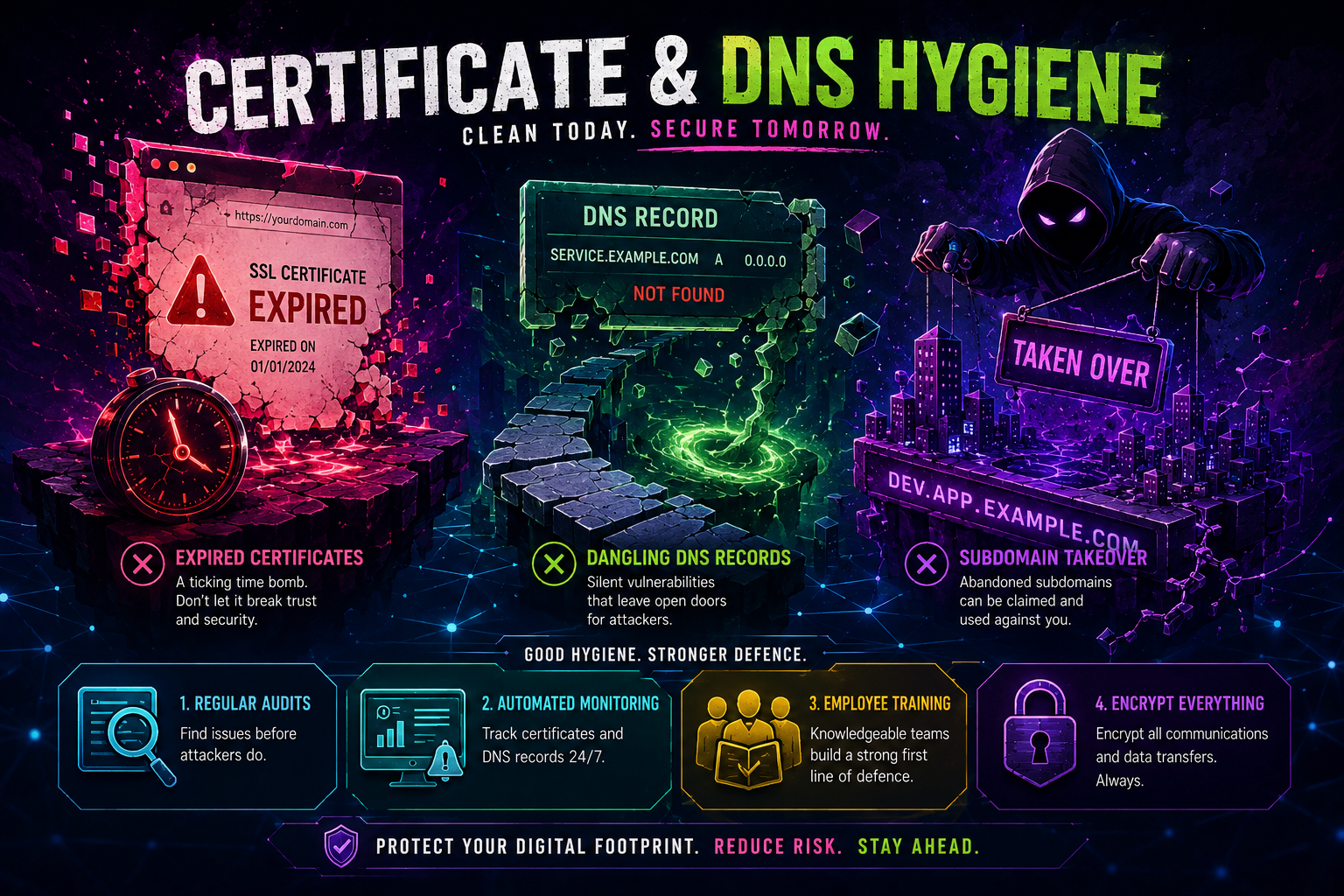
In an era where cyber threats loom large over businesses of all sizes, maintaining impeccable certificate and DNS hygiene is non-negotiable. This blog delves into key concepts surrounding certificate management and DNS issues, emphasising the importance of avoiding dangling records, expired certificates, and the ominous threat of subdomain takeover.
Digital certificates are pivotal for ensuring secure communications across networks. They function like a digital passport, verifying the authenticity of entities during internet communications. Exploring the following key aspects will help maintain good certificate hygiene:
SSL (Secure Socket Layer) and TLS (Transport Layer Security) certificates establish encrypted links between servers and clients. Their primary role is to safeguard sensitive data, providing assurance that the communicating parties are genuine.
An expired certificate can have serious implications. Not only does it halt secure communications, but it also exposes networks to man-in-the-middle attacks. Regularly renewing and monitoring the expiration dates of certificates is crucial.
To avoid these pitfalls, consider leveraging a certificate management solution that systematically tracks certificate validity and sends timely alerts.
At the core of the internet's functionality lies the Domain Name System (DNS). This system, akin to a phonebook, translates human-readable domain names into IP addresses, enabling seamless browsing.
Dangling DNS records point to non-existent resources, essentially creating open doors for attackers. These arise when proper clean-up doesn’t occur after resources are deleted or moved.
A proactive DNS monitoring approach ensures that such vulnerabilities are promptly identified and resolved, fortifying your network against possible breaches.
Subdomain takeover occurs when a subdomain is left unclaimed due to a removed hosting configuration. Cybercriminals can take control of these abandoned subdomains, leading to malicious activities under the guise of your legitimate domain.
Preventive measures include conducting regular audits and ensuring comprehensive security policies are in place for managing DNS records, thereby precluding the risks associated with subdomain takeovers.
Now, let’s explore actionable practices to bolster your certificate and DNS hygiene:
Conduct frequent audits of your certificates and DNS records. Identification of redundancy or errors in the system is pivotal for preemptive action against potential incidents.
Utilise automated tools to track certificate expiration and DNS record status actively. Leveraging vulnerability scanning tools can significantly mitigate these risks.
Educate your team about cybersecurity hygiene. Knowledge about modern threats and best practices empowers employees to act as the first line of defence.
Beyond just certificates, ensure all communications and data transfers are encrypted. This envelops your infrastructure with a security blanket, minimising exposure to malicious entities.
Certificate and DNS hygiene form a cornerstone of robust cybersecurity strategies. By understanding and addressing the risks associated with dangling records, expired certificates, and subdomain takeovers, businesses can shield themselves against multifaceted cyber threats.
Implementing a thorough monitoring strategy, educating employees, and automating processes are essential steps toward safeguarding your digital assets. As cyber threats evolve, staying ahead with meticulous hygiene practices becomes ever more critical.
What is a dangling DNS record?
A dangling DNS record is an entry that points to a non-existent resource. Such records create vulnerabilities that attackers can exploit, making regular audits crucial for network security.
How can expired certificates affect my website security?
Expired certificates can disrupt encrypted communications, exposing your network to risks like man-in-the-middle attacks. Regular monitoring can prevent these disruptions.
What is subdomain takeover, and how can I prevent it?
Subdomain takeover happens when abandoned subdomains are claimed by cybercriminals. Regular monitoring and DNS audits, alongside stringent security practices, can help prevent this threat.
Why is certificate management important for businesses?
Certificate management is vital to ensure continuous secure communications, prevent potential breaches, and maintain customer trust by avoiding expired certificate incidents.
By adopting these practices, businesses not only safeguard themselves against prevalent threats but also demonstrate a commitment to data security, which is invaluable in today’s competitive landscape.

Unlock full visibility of your external attack surface with DarkInvader’s continuous, real-time monitoring. Create your free account to discover unknown assets, detect emerging risks and stay ahead of potential threats before attackers can exploit them.
Create My Free Account
Platform 7D, New Station Street, Leeds,
LS1 4BT, United Kingdom
Mon-Fri, 9:00-17:00
Contact:
sales@darkinvader.io
+44 (0)1138805336
Last updated: 14 August 2026
©2026 DarkInvader, All Rights Reserved


