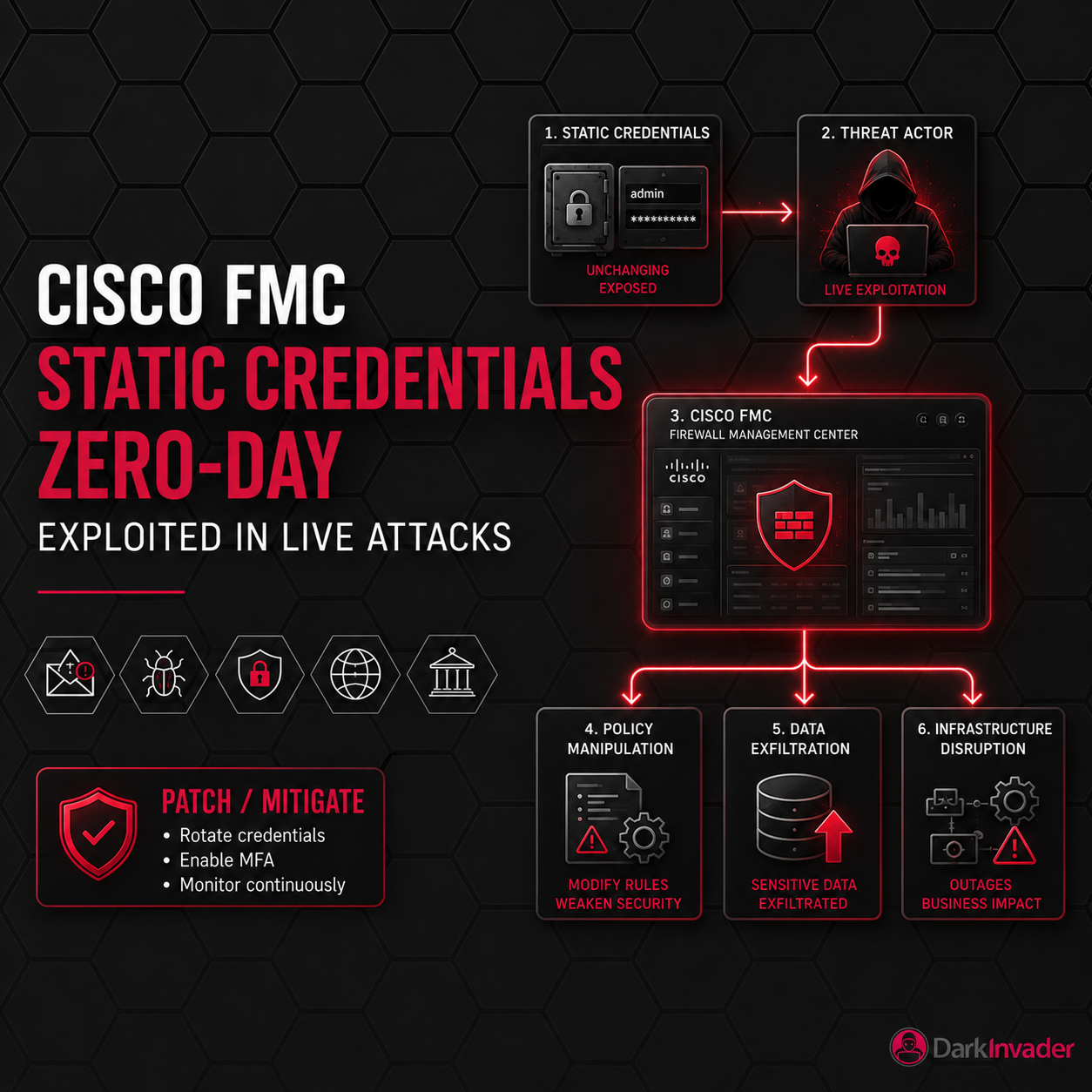
In an era where cyber threats evolve at an alarming pace, the recent zero-day exploit of static credentials in Cisco's Firepower Management Centre (FMC) has raised significant concerns. This breach underscores the vulnerabilities inherent in even the most robust security systems and highlights the critical importance of continuous security monitoring.
A zero-day exploit refers to a cyber attack that occurs on the same day a vulnerability is discovered in software. This leaves the software vendor with "zero days" to create a fix or patch to halt such an attack. Static credentials, in this context, are unchanging login credentials saved within the system, potentially exposing the network to hackers if compromised.
The zero-day in Cisco FMC involves the exploitation of these static credentials. Attackers can gain unauthorized access to the FMC, allowing them to manipulate critical security policies without the need for privileged credentials.
Cisco has been proactive in addressing the flaw by immediately issuing a security advisory and beginning the development of a patch to combat the vulnerability. Understandably, for those relying on Cisco's firewall systems, this incident serves as a wake-up call to re-evaluate their network security posture.
Static credentials present a substantial risk as they rarely change or expire. This vulnerability becomes a gateway for attackers once they discover these unchanging keys. The risks involve:
Organisations aiming to mitigate the risks associated with static credentials might consider implementing the following measures:
Having an External Attack Surface Management (EASM) provider can significantly enhance an organisation's cybersecurity defenses by monitoring potential vulnerabilities in real-time. EASM providers like DarkInvader offer comprehensive services that include assessing asset vulnerabilities, detecting leaked credentials, and providing continuous security monitoring to preemptively address threats.
The zero-day vulnerability in Cisco FMC has already seen live exploitation. Attackers exploiting such vulnerabilities can achieve:
As technology advances, so do cyber threats. The Cisco FMC exploit reiterates the necessity for organisations to remain vigilant and proactive. Continuous education on emerging threats and regular updates to security measures are paramount for effective cybersecurity.
Real-time monitoring and incident response can significantly reduce the risk of zero-day exploits. Employing modern monitoring solutions, such as those provided by EASM services, ensures that potential threats are detected and mitigated swiftly.
The exploitation of a zero-day vulnerability in Cisco FMC serves as a potent reminder of the dynamic nature of cybersecurity threats. Organisations must prioritise adaptive measures and leverage modern technology to bolster their defences against such vulnerabilities.
Static credentials in Cisco FMC are non-changing login details stored within the system. Once discovered, they can serve as a gateway for unauthorised access by cyber attackers.
To protect against zero-day exploits, organisations should employ dynamic credentials, implement two-factor authentication, and rely on continuous security monitoring and response services like those offered by DarkInvader.
Real-time cybersecurity monitoring is crucial as it allows for the immediate detection and mitigation of threats, reducing the likelihood of successful attacks and minimising potential damage.
EASM, or External Attack Surface Management, helps by continuously scanning for potential vulnerabilities, offering insights into potential exposure, and providing solutions to fortify the network against various threats.
For more information about tackling cybersecurity threats and vulnerabilities, consider exploring how DarkInvader can bolster your organisational security strategy.

Unlock full visibility of your external attack surface with DarkInvader’s continuous, real-time monitoring. Create your free account to discover unknown assets, detect emerging risks and stay ahead of potential threats before attackers can exploit them.
Create My Free Account
Platform 7D, New Station Street, Leeds,
LS1 4BT, United Kingdom
Mon-Fri, 9:00-17:00
Contact:
sales@darkinvader.io
+44 (0)1138805336
Last updated: 14 August 2026
©2026 DarkInvader, All Rights Reserved


