


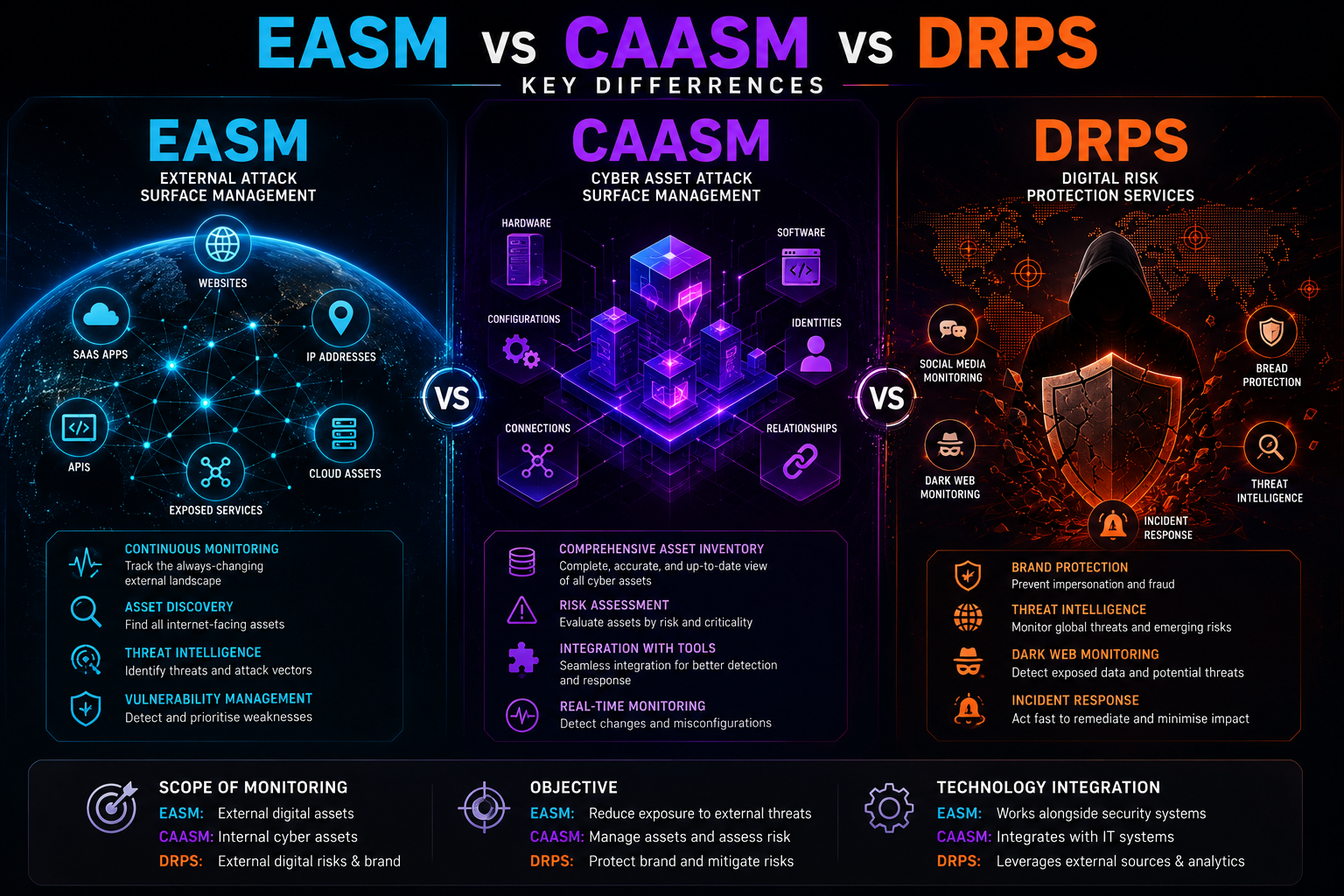
In today’s rapidly evolving cyber landscape, understanding and managing security risks is more complex than ever. With various solutions available, businesses may find it challenging to identify what suits their needs best. In this blog post, we will explore three vital cybersecurity strategies: External Attack Surface Management (EASM), Cyber Asset Attack Surface Management (CAASM), and Digital Risk Protection Services (DRPS). We will dive deep into their distinctions, advantages, and applications to help you make informed decisions for your organisation's security strategy.
Introduction
As cyber threats become increasingly sophisticated, organisations face challenges in protecting their digital assets. Traditional security measures often fall short when it comes to identifying and mitigating external vulnerabilities or managing thousands of assets across numerous platforms. That's where EASM, CAASM, and DRPS come into play. Each has unique attributes and roles within a comprehensive security strategy, but understanding their key differences can be crucial for effective cybersecurity management.
External Attack Surface Management (EASM)
EASM focuses primarily on identifying and monitoring an organisation’s external digital assets that are susceptible to cyber threats. These assets can include websites, SaaS applications, IP addresses, and more. The goal is to provide continuous visibility and manage the external attack surface to mitigate potential risks.
Features of EASM
- Continuous Monitoring: It's vital for tracking the constantly changing external threat landscape.
- Asset Discovery: Helps in inventorying and assessing all external digital assets.
- Threat Intelligence: Provides insights into potential vulnerabilities and threat vectors.
- Vulnerability Management: Identifies weaknesses that could be exploited by attackers.
EASM solutions are crucial for organisations to stay ahead of potential threats by managing their external digital footprint.
Cyber Asset Attack Surface Management (CAASM)
CAASM concentrates on the complete inventory of cyber assets within the organisation. This includes not only software and hardware but also connections, configurations, and relationships between assets. By focusing internally, CAASM provides a structured view of assets and their security posture.
Benefits of CAASM
- Comprehensive Asset Inventory: Ensures that organisations have a complete, accurate, and updated view of all cyber assets.
- Risk Assessment: Evaluates assets based on their risk potential and criticality.
- Integration with Security Tools: Often integrates with existing security tools for enhanced threat detection and response.
- Real-time Monitoring: Keeps track of changes and potential misconfigurations.
Understanding your internal asset environment through CAASM is essential for vulnerability scanning and ensuring optimal security posture.
Digital Risk Protection Services (DRPS)
DRPS targets the protection of an organisation's brand and digital assets by actively monitoring and defending against cyber threats and brand impersonation. These services often extend beyond traditional IT assets to include social media, forums, and the dark web.
Advantages of DRPS
- Brand Protection: Shields against impersonation and fraudulent activities that can damage an organisation's reputation.
- Threat Intelligence: Provides actionable insights by monitoring global threats.
- Dark Web Monitoring: Identifies threats brewing on the dark web that could impact an organisation.
- Incident Response: Offers tools and strategies for immediate threat remediation.
DRPS is key to brand monitoring and safeguarding business reputations.
Key Differences
Scope of Monitoring
- EASM has a broad focus on external digital assets.
- CAASM is internally focused on a comprehensive inventory of cyber assets.
- DRPS extends its reach to external digital risks that affect brand reputation.
Objective
- EASM aims at reducing exposure to external threats.
- CAASM focuses on asset management and continuous risk assessment.
- DRPS prioritises brand protection and mitigation of digital risks.
Technology Integration
- EASM often works alongside other security systems to enhance overall security.
- CAASM requires integration with different IT systems to provide a unified view of all assets.
- DRPS relies on advanced analytics and external sources for threat detection.
Summary
Organisations need a balanced approach to cybersecurity that incorporates EASM, CAASM, and DRPS. While they each serve distinct purposes, their combined use provides a robust defence against a spectrum of cyber threats. By identifying key differences, businesses can better align their security strategies with their unique needs and vulnerabilities.
FAQs
What is EASM in cybersecurity?
EASM, or External Attack Surface Management, is a strategy focused on identifying and monitoring the external digital assets of an organisation to reduce vulnerabilities and manage the attack surface effectively.
How does CAASM differ from traditional asset management?
CAASM provides a complete and real-time inventory of all cyber assets, including software, hardware, and their configurations, enabling better risk identification and management compared to traditional systems which might not provide real-time insights.
Why is DRPS important for businesses?
DRPS is vital for protecting a business's brand and digital footprint from cyber threats that could harm reputation and result in financial losses. It actively monitors for threats across the internet, including social media and the dark web.
Can these strategies be implemented together?
Yes, integrating EASM, CAASM, and DRPS is highly recommended for a comprehensive security strategy. While each addresses different aspects of cybersecurity, together they offer robust protection against a diverse range of threats.
For more insights, explore our comprehensive security solutions.