

Introduction
In a bold move that could redefine cybersecurity expectations globally, India's CERT-In announced a stringent patching mandate with unprecedented urgency. Introduced in the comprehensive "Blueprint for Reducing Exposure and Defending against AI-Assisted Vulnerabilities Exploitation in Digital Infrastructure," this mandate establishes one of the most aggressive patching timelines ever seen. Given the rapid pace of AI-driven cyberattacks, this development is crucial for organisations worldwide. In this blog, we delve into the strategic implications of this directive and what it means for you.
The Need for Speed: Why the 12-Hour Mandate?
What's Driving This Change?
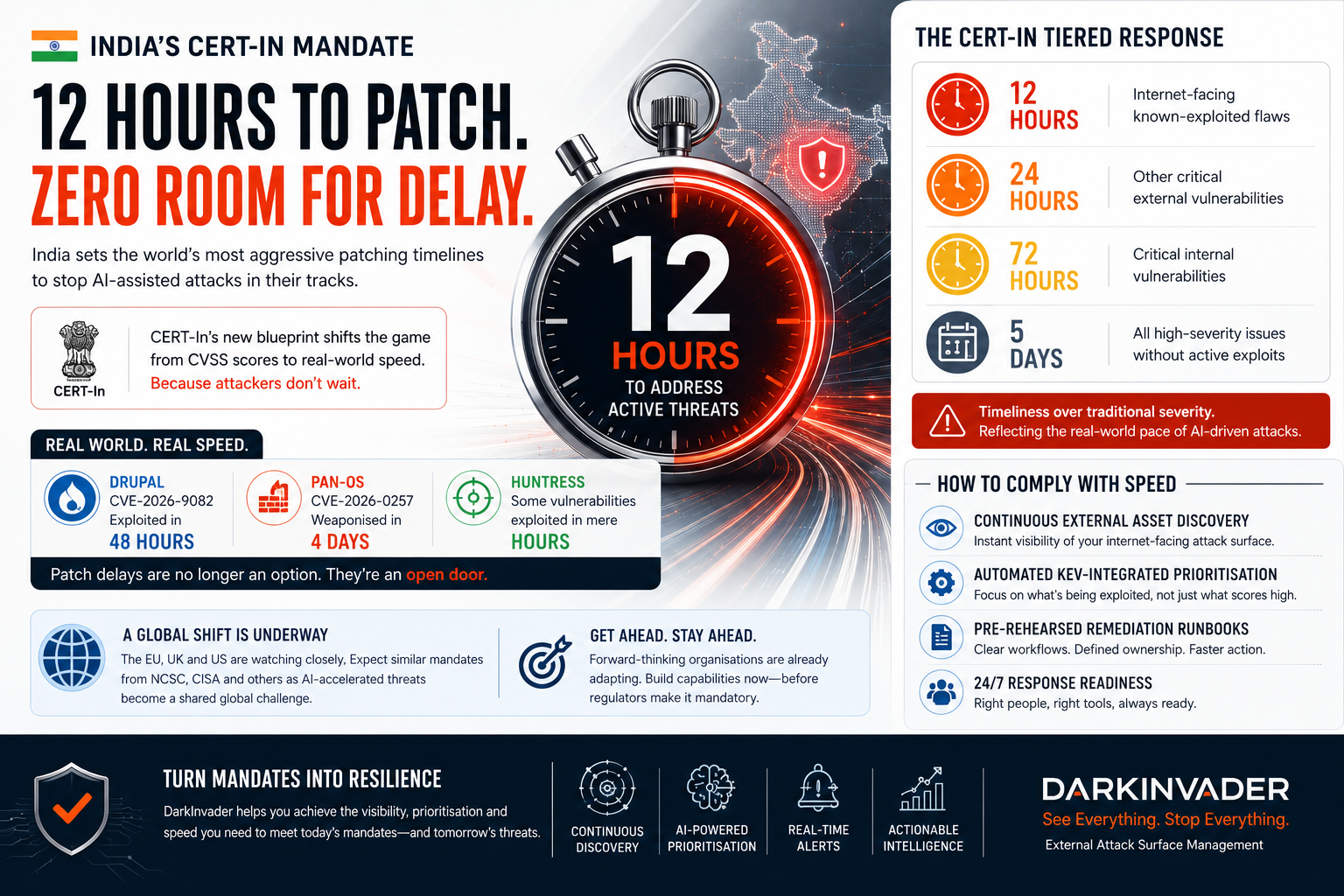
AI-assisted exploitation has dramatically accelerated the attack timelines, making rapid response critical. CERT-In's mandate requires high-priority vulnerabilities to be addressed within 12 hours of acknowledgment. This shift from traditional CVSS-dependent frameworks to AI-driven strategies stems from the realisation that cybercriminals are now weaponising vulnerabilities faster than ever before.
The Numbers
Data underscores this urgency. Vulnerabilities like Drupal CVE-2026-9082were exploited within 48 hours; PAN-OS CVE-2026-0257 saw weaponisation within just four days. Huntress reflects that some vulnerabilities are capitalised upon within merely hours. The lesson is stark: patch delays are costly.
Understanding the Blueprint
Tiered Response Structure
CERT-In categorises vulnerabilities based on threat level:
- 12 hours: For internet-facing known-exploited flaws.
- 24 hours: For other critical external vulnerabilities.
- 72 hours: Address critical internal vulnerabilities.
- 5 days: All high-severity issues without active exploits.
This approach emphasizes timeliness over traditional severity assessments, reflecting the real-world pace of exploitations enabled by AI.
Operational Hurdles
Facing Reality
Despite the mandate's necessity, execution poses numerous challenges. According to Gartner's Apeksha Kaushik, "The primary barriers are not just technical, but operational." Most organisations lack real-time asset visibility and automated vulnerability prioritisation frameworks necessary for such rapid turnarounds.
Building Robust Systems
To adhere to these SLAs, enterprises must transform their operational strategies around the clock:
- Continuous External Asset Discovery:Regular scans are now outdated; instantaneous visibility is imperative.
- Automated KEV-Integrated Prioritisation: Efficiency improves significantly when vulnerability management incorporates Known Exploited Vulnerabilities (KEVs).
- Pre-rehearsed Remediation Runbooks:Ensure every team knows their role, streamlining responses, minimising time wastage.
A Global Perspective
The Geopolitical Impact
India's groundbreaking move sets a precedent; eyes in the EU, UK, and US are already turning towards it. This blueprint's success will resonate beyond borders, particularly as jurisdictions like NCSC and CISA begin to adopt similar frameworks to counter the shared threat of AI-accelerated attacks.
Future-Proofing Through EASM
What does this mean for exposure management teams? It signals the urgency to evolve and build capabilities before regulators mandate change. Smart EASM and vulnerability management leaders should integrate these strategies preemptively.
Conclusion
The CERT-In's aggressive timeline is not merely an Indian anomaly; it is a harbinger of universal transformation. By repositioning patching practices to meet AI-enhanced threats, organisations can safeguard their future in a digitally volatile world.
Stay ahead by embracing this future-driven perspective today. Integrate continuous discovery, automation, and agile team responses with DarkInvader's solutions, setting your organisation as a leader in cybersecurity best practices.
As the digital landscape evolves, so too must our defences. Adapt and thrive by treating CERT-In's blueprint not as an oncoming burden but as an opportunity for resilience.
FAQ
What is CERT-In?
CERT-In is India's national cybersecurity agency responsible for protecting the country's cyber infrastructure.
Why is a 12-hour patching mandate significant?
It's the most rapid patching SLAs globally, acknowledging the swift pace of AI-driven cyberattacks.
How can my organisation meet this stringent deadline?
Adopt continuous asset discovery and automated prioritisation, and streamline response with rehearsed workflows.
Is this mandate likely to influence global cyber strategies?
Yes. With leading geopolitical entities observing, similar mandates will likely emerge internationally.
By transforming your vulnerability management approach aligned with CERT-In's foresight, you embrace inevitable regulatory evolution proactively.