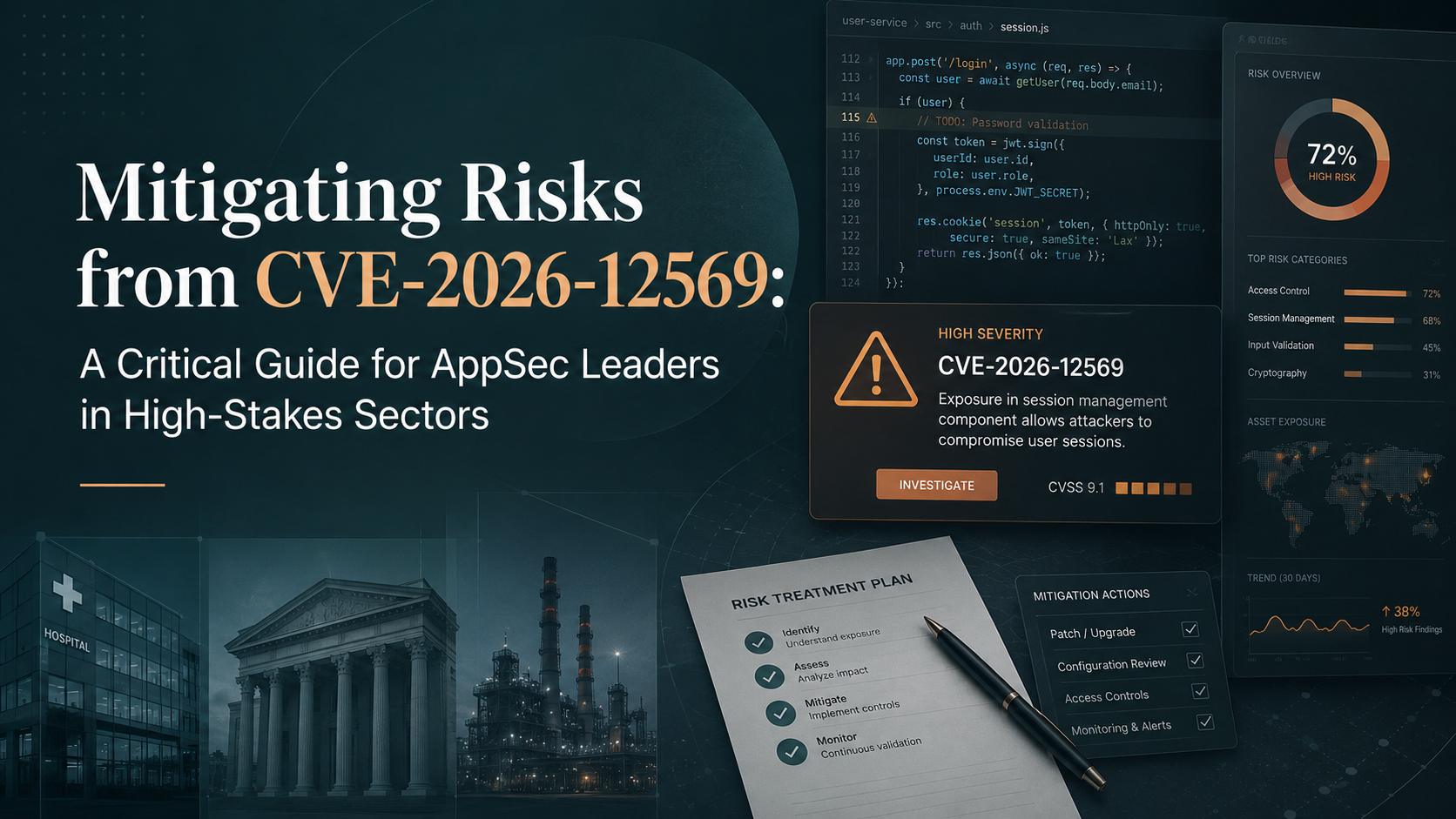
In an ever-evolving cybersecurity landscape, dealing with vulnerabilities like CVE-2026-12569 requires not only vigilance but also a strategic approach. AppSec leaders in high-stakes sectors, such as finance, healthcare, and energy, must prioritize their efforts to protect against these kinds of vulnerabilities which threaten the very fabric of their applications and networks.
Cybersecurity vulnerabilities pose a significant threat to organizations, especially those operating in sectors where the stakes are remarkably high. CVE-2026-12569 has been identified as a critical vulnerability affecting numerous applications, making it a prime concern for those responsible for application security (AppSec). This guide aims to provide AppSec leaders with insights and strategies to mitigate risks associated with this specific vulnerability.
Knowing how to navigate the complexities of a critical vulnerability is essential in maintaining the integrity and security of your systems. Before diving into the specifics of CVE-2026-12569, let us explore what makes certain sectors more susceptible and why swift action is paramount.
CVE-2026-12569 has been marked as a critical vulnerability due to its potential impact and the ease with which it can be exploited. While the exact technical details are reserved for another discussion, the primary concern is the unauthorized access it allows, leading to potential data breaches and system compromises.
As an AppSec leader, staying informed about such vulnerabilities is vital. Regularly monitoring vulnerabilities can save organizations from untold damage, highlighting the need for a robust vulnerability management program.
AppSec leaders must evaluate these risks in the context of their own organizations to assess potential impacts and align with strategic risk management.
Begin with identifying the presence of CVE-2026-12569 in your applications and systems. Utilize comprehensive vulnerability scanning tools to spot existing threats. Once identified, prioritize them based on the risk and impact assessment aligned with your organizational goals.
Ensure that all systems affected by CVE-2026-12569 are updated with the latest security patches. Collaborate with software vendors, if necessary, to gain insights into upcoming patches and enhancements.
Review and upgrade access control measures to prevent unauthorized usage. Implement multi-factor authentication (MFA) across systems to add an extra layer of security.
Leverage OSINT monitoring and threat intelligence services to stay ahead of potential exploits and malicious activities that target your sector.
Your staff should be well-trained in recognizing and handling vulnerabilities. Continuous education programs can help in enhancing their awareness of risks and response strategies.
In the face of an active threat, having a prepared and well-practiced incident response plan allows organizations to act swiftly and minimize damage. Regularly update the plan to account for new types of vulnerabilities.
Mitigating risks from CVE-2026-12569 necessitates a proactive, multi-faceted approach. Awareness, timely intervention, and a comprehensive security strategy play crucial roles in managing the impact of such critical vulnerabilities. For sectors where stakes are particularly high, anticipating the problem and having an active defense strategy is crucial.
By empowering your team with knowledge and providing them with the necessary tools and protocols, you can navigate the complexities of vulnerabilities like CVE-2026-12569 and safeguard your organization’s assets.
1. What is CVE-2026-12569?
CVE-2026-12569 is a critical vulnerability that affects certain applications, allowing potential unauthorized access. Handling this vulnerability is vital for maintaining application security.
2. How can AppSec leaders prioritize vulnerabilities?
AppSec leaders should use risk assessment metrics and decide on a priority list based on the potential impact and likelihood of an exploit. Tools such as vulnerability scanners assist in identifying and prioritizing these threats.
3. What sectors are most at risk from CVE-2026-12569?
Sectors such as finance, healthcare, and energy are particularly at risk due to the sensitive data they handle and the potential for severe disruption.
4. How does continuous monitoring help in mitigating CVE-2026-12569?
Continuous monitoring aids in rapidly identifying and addressing potential threats, offering real-time insights into vulnerabilities and helping organizations to adapt proactively.
For more on how you can protect your organization against vulnerabilities, visit our darkinvader.io vulnerability scanning page.

Unlock full visibility of your external attack surface with DarkInvader’s continuous, real-time monitoring. Create your free account to discover unknown assets, detect emerging risks and stay ahead of potential threats before attackers can exploit them.
Create My Free Account
Platform 7D, New Station Street, Leeds,
LS1 4BT, United Kingdom
Mon-Fri, 9:00-17:00
Contact:
sales@darkinvader.io
+44 (0)1138805336
Last updated: 14 August 2026
©2026 DarkInvader, All Rights Reserved


