


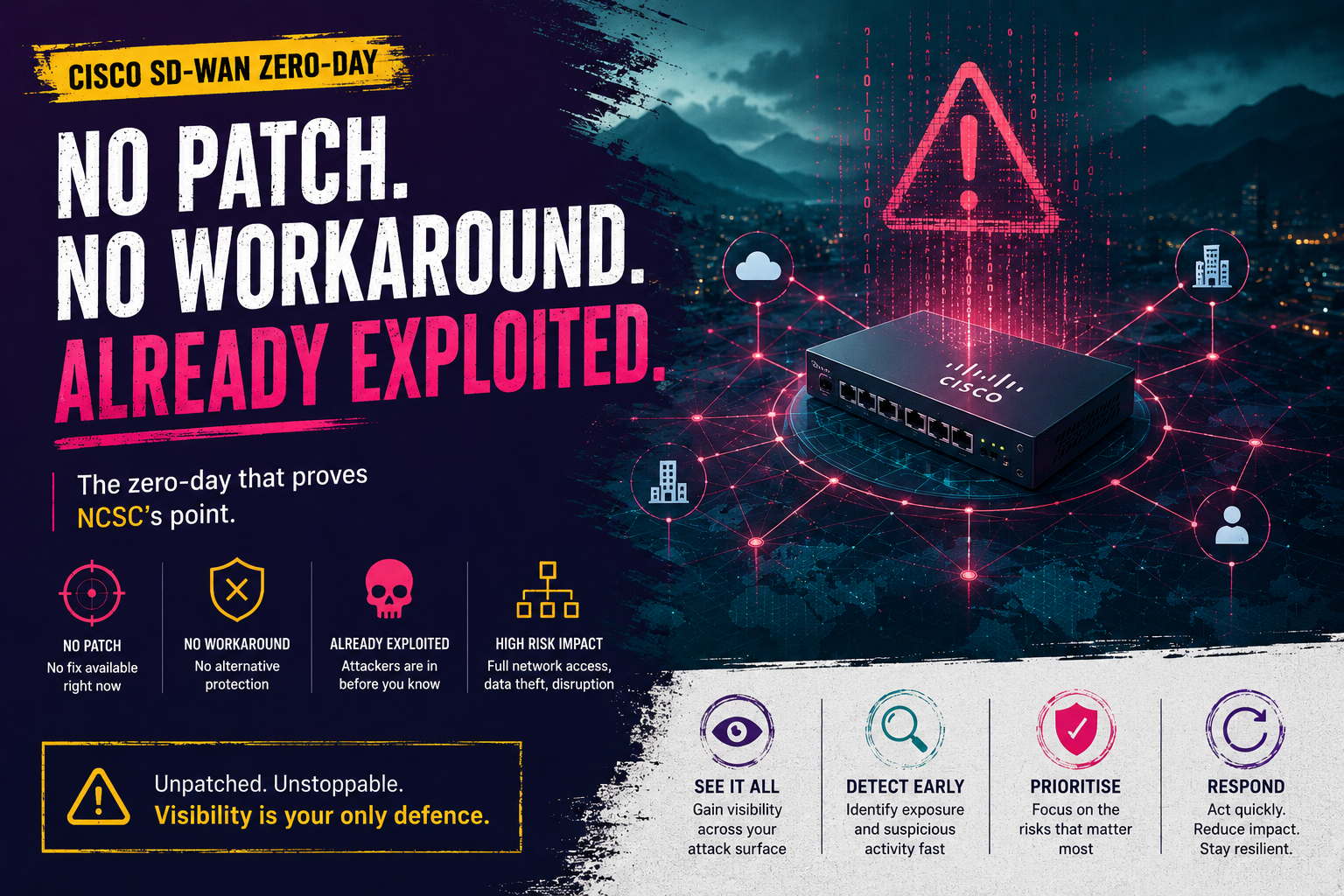
In the ever-evolving landscape of cybersecurity threats, a notable incident serves as a stark reminder of the critical importance of maintaining robust cyber defences. A zero-day vulnerability in Cisco's SD-WAN solution has been recently discovered, exploited, and reported. This incident echoes the warnings from the National Cyber Security Centre (NCSC) about the dire consequences of neglecting proactive cybersecurity measures. In this blog post, we delve into the intricacies of this zero-day vulnerability, its implications, and the broader lessons organisations must learn to protect themselves in a digital-first world.
Understanding the Cisco SD-WAN Zero-Day Vulnerability
Cisco SD-WAN provides foundational capability for companies to perform reliable and secure wide-area networking. However, the recent identification of a zero-day vulnerability revealed a critical weakness that left organisations exposed. A zero-day vulnerability is a software flaw that attackers exploit before the vendor has developed a fix.
What Makes This Zero-Day Unique?
Unlike many cybersecurity incidents where patches are quickly developed, this Cisco SD-WAN flaw has no available patch or workaround at the time of writing. The potential damage from this vulnerability is significant, potentially allowing attackers complete access to corporate networks, data interception, and malicious modifications.
Real-World Implications
The exploitation of this vulnerability isn't theoretical. It highlights the substantial risks enterprises face, alongside underscoring the need for continuous vulnerability assessment measures. Tools like vulnerability scanning serve as fundamental parts of an enterprise's cybersecurity strategy, enabling them to detect weaknesses before they're actively exploited.
NCSC's Stance on Proactive Cybersecurity
The NCSC has been an advocate for proactive cybersecurity measures. Their guidelines emphasise the importance of regular patching, continuous monitoring, and developing a robust incident response plan. The absence of a patch for this zero-day vulnerability aligns with NCSC's recommendation for preparedness, as real-time threat intelligence and response are far more vital when a patch is unavailable.
Lessons for Organisations
1. Embrace Active Monitoring
To mitigate risks associated with such vulnerabilities, instituting active monitoring systems is crucial. Solutions like asset monitoring continuously identify and report unauthorized activities on networks, providing real-time alerts and insights.
2. Importance of Threat Intelligence
Staying ahead of attackers necessitates understanding potential threats. Implementing a global threat intelligence framework helps organisations anticipate and neutralise threats before they materialise.
3. Regular Security Audits
Regular security audits can uncover potential vulnerabilities in infrastructure. These audits should be conducted alongside continuous education and training of employees to foster a pervasive culture of security awareness.
4. Incident Response Planning
An effective incident response strategy is no longer optional. It's imperative for managing and mitigating the impact of exploits that inevitably occur despite preventative measures.
Conclusion
The Cisco SD-WAN zero-day vulnerability serves as a potent reminder of the vulnerabilities intrinsic to our hyper-connected world. It underscores the essence of the NCSC's cautions – the digital estate of an organisation must be fortified with a combination of proactive monitoring, regular updates, and employee education. The rapid technological evolution means threats can come from any vector, and having a comprehensive protection strategy is critical to safeguarding assets.
FAQs
What is a zero-day vulnerability in Cisco SD-WAN?
A zero-day vulnerability in Cisco SD-WAN refers to a previously unknown flaw in the system that attackers can exploit before a fix has been developed. This particular issue has no available patch, highlighting the importance of proactive cybersecurity measures.
How does Cisco handle zero-day vulnerabilities?
Cisco typically addresses zero-day vulnerabilities by rapidly developing patches and updates. However, until these solutions are deployed, organisations must rely on other defence measures such as threat monitoring and incident response planning.
Why is threat intelligence crucial for organisations?
Threat intelligence provides organisations with critical insights into the cyber threat landscape, enabling them to anticipate and respond effectively to potential attacks. It helps in identifying weak points and defensive strategies proactively.
What role does NCSC play in cybersecurity?
The NCSC provides guidance and support to organisations to bolster their cybersecurity posture. They advocate for proactive measures, continuous monitoring, and strong incident response strategies to protect against emerging cyber threats.
For further guidance on enhancing your cybersecurity posture, explore our suite of monitoring solutions.