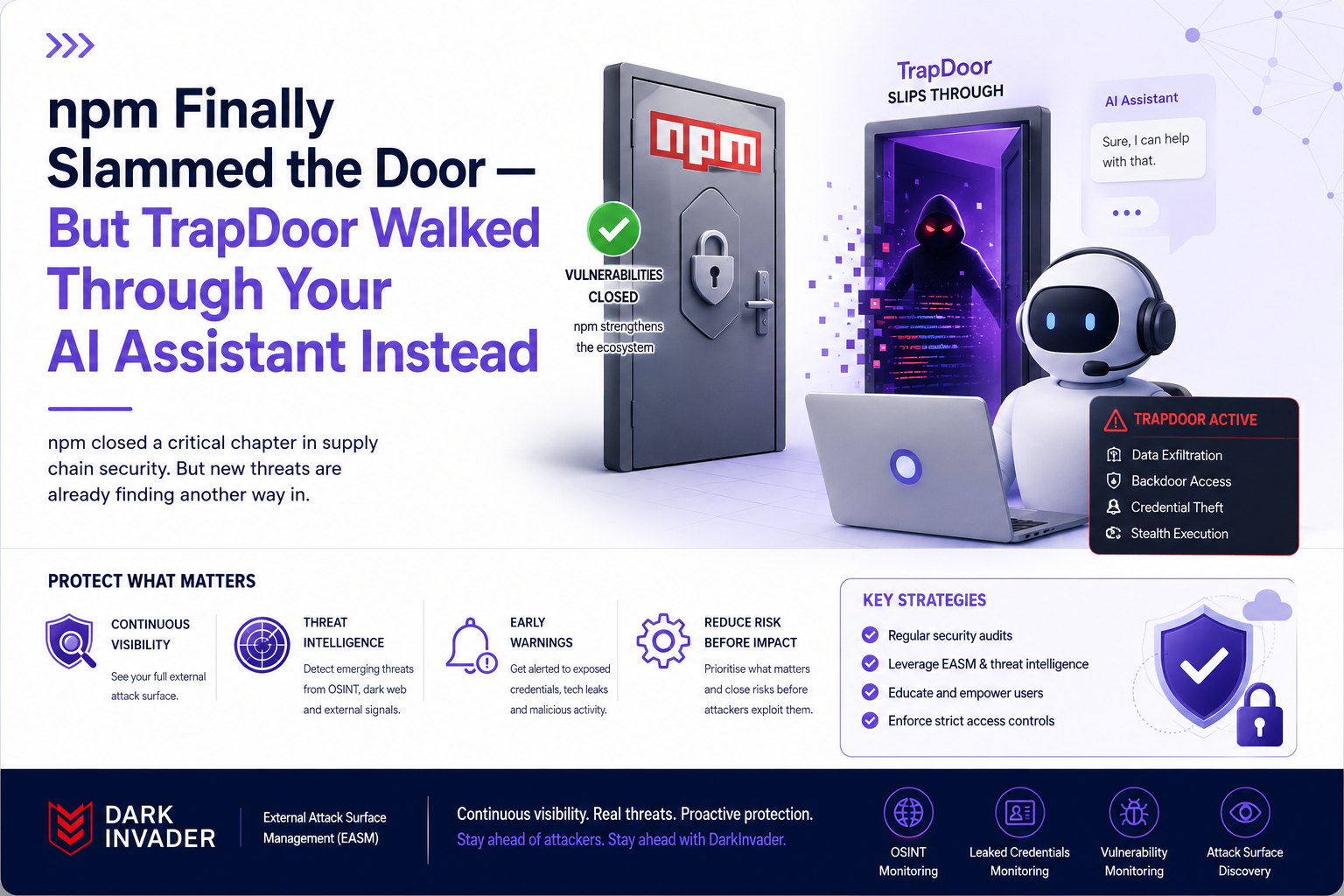
In the ever-evolving world of software development, the tools and platforms we rely on are continuously tested by both natural evolution and rogue elements. Recently, a significant move in the cybersecurity chess game emerged as npm took a decisive stance by closing vulnerabilities that have long plagued its users. Yet, while one door may have closed, others swung wide open, allowing threats such as TrapDoor to infiltrate through your AI assistant. Let's delve into how this happened, why it’s crucial, and what it means for your cybersecurity.
npm, or Node Package Manager, has been a pivotal player in the JavaScript ecosystem, providing developers with access to an extensive library of packages. However, with great power comes great responsibility—and risk. Over the years, cybercriminals have exploited npm vulnerabilities, leading to security breaches that affected countless projects globally.
In response, npm has initiated a comprehensive security upgrade, implementing measures to prevent further exploitation. By severing certain weaknesses, npm aims to fortify the platform, ensuring that malware and vulnerabilities are identified and neutralized before they can wreak havoc.
Despite npm's rigorous upgrades, the landscape remains as treacherous as ever. Cybersecurity efforts cannot solely rely on the enhancements of a single entity. Developers and users must remain vigilant, employing additional measures to ensure their projects remain secure. This is where External Attack Surface Management (EASM) solutions, such as DarkInvader’s OSINT Monitoring, play a vital role in providing comprehensive protection against potential threats.
While npm reinforced its defenses, another threat was slipping through the cracks—TrapDoor. This insidious threat has found its niche infiltrating AI assistants, a burgeoning sector that is rapidly becoming integral in both personal and professional spaces. AI assistants, powered by advanced algorithms, are tools designed to simplify tasks, enhance productivity, and provide instantaneous information. However, their expansive access makes them prime targets for cyberattacks.
TrapDoor exploits vulnerabilities within AI assistants by embedding malicious codes. These codes can execute a range of malicious activities—from stealing sensitive information to installing backdoors for remote access. The danger lies in their stealthy nature; TrapDoor attacks often go unnoticed until significant damage has been done.
TrapDoor's method of infiltration is a modern twist on classic phishing tactics, cleverly disguised within benign interactions users perform daily. This could be anything from downloading a productivity app to engaging with AI-driven customer service portals.
To combat threats like TrapDoor, a multi-faceted approach to cybersecurity is imperative. Here are several strategies to enhance protection:
Ensuring cybersecurity in the evolving digital landscape is akin to an arms race—an ongoing battle requiring constant vigilance and adaptation. While npm has taken admirable strides to bolster its defenses, threats like TrapDoor emerge in unexpected arenas, such as AI assistants, highlighting that the battle is far from over.
The key is a proactive approach, leveraging advanced EASM solutions and maintaining an educated user base to face these challenges head-on.
Explore more about safeguarding your digital assets with DarkInvader's comprehensive suite of services.
npm has implemented a range of security upgrades to close vulnerabilities, including enhanced package auditing and stricter access controls, ensuring a more secure environment for developers.
TrapDoor uses sophisticated methods such as embedding malicious code in apps and phishing tactics to gain access and execute harmful operations within AI assistant frameworks.
EASM solutions like those provided by DarkInvader ensure a comprehensive defense, identifying and mitigating potential external risks before they can impact your systems.
Implementing regular security audits, using advanced threat intelligence tools, educating users, and enforcing strict access controls are effective strategies in protecting AI systems from such threats.

Unlock full visibility of your external attack surface with DarkInvader’s continuous, real-time monitoring. Create your free account to discover unknown assets, detect emerging risks and stay ahead of potential threats before attackers can exploit them.
Create My Free Account
Platform 7D, New Station Street, Leeds,
LS1 4BT, United Kingdom
Mon-Fri, 9:00-17:00
Contact:
sales@darkinvader.io
+44 (0)1138805336
Last updated: 14 August 2026
©2026 DarkInvader, All Rights Reserved


