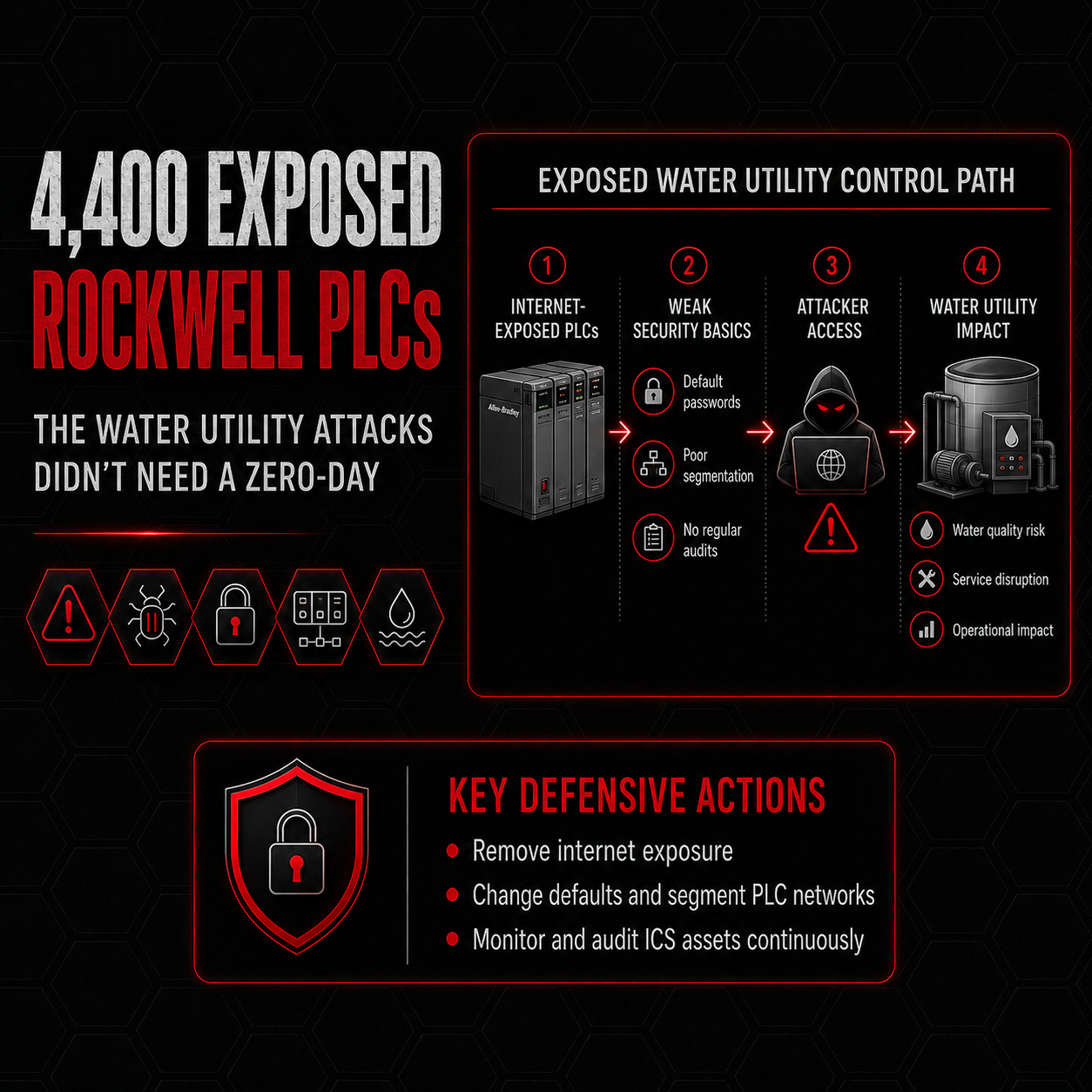
In recent years, cybersecurity has taken on a new level of importance across all industries. However, the rise in cyber attacks within critical infrastructure sectors, such as water utilities, highlights a particularly worrying trend. The discovery of 4,400 exposed Rockwell PLCs (Programmable Logic Controllers) serves as a stark reminder of the vulnerabilities facing these systems. This article delves into how these exposures occurred, the implications for water utilities, and what steps can be taken to mitigate such risks.
PLCs are digital computers used to control manufacturing processes, such as those found in factory assembly lines or infrastructure facilities. In water utilities, PLCs are crucial as they manage tasks like water purification, distribution, and monitoring. They are designed for real-time use, an essential factor for safe and efficient utility operation.
PLC systems should ideally be shielded from external network threats. However, an increasing number of these systems are being connected to the internet, often without adequate security measures, which leaves them vulnerable to cyber attacks.
Rockwell Automation is a renowned manufacturer of PLCs. The revelation that 4,400 of these systems were exposed to possible security breaches without a zero-day vulnerability being exploited is alarming. A zero-day attack involves a newly discovered vulnerability that hackers exploit before developers can issue a fix. The fact that this attack vector was unnecessary emphasises a serious lapse in existing security protocols.
These exposures were not the result of extraordinarily sophisticated hacking tactics. Instead, basic security oversights played a significant role.
1. Inadequate Network Segmentation: Many utility providers failed to implement network segmentation effectively. This allowed attackers to access PLCs through less secure parts of the network.
2. Default Configurations and Passwords: A disturbingly common issue was the reliance on default configurations and passwords. These defaults are often well-documented publicly, providing an easy entry point for attackers.
3. Lack of Regular Security Audits: Many utilities did not conduct regular security audits, which could have identified vulnerabilities and exposures early.
This situation is not unique to water utilities. Various sectors reliant on industrial control systems (ICS), such as energy and transport, have faced similar challenges. For example, the Colonial Pipeline ransomware attack underscored vulnerabilities in critical energy infrastructure, where basic security measures were overlooked.
The exposure of these Rockwell PLCs has several dire implications:
The incident highlights several crucial lessons for water utilities and other ICS-dependent sectors:
The exposure of 4,400 Rockwell PLCs illustrates the pressing need for a comprehensive approach to cybersecurity within critical infrastructure. Although no zero-day exploit was needed, the consequences of so many systems being exposed are potentially devastating. It underscores the importance of implementing foundational security practices and ensuring that every component, from digital assets to physical systems, is protected against evolving threats.
Water utilities can protect PLCs by conducting rigorous security audits, updating and patching systems regularly, using strong, unique passwords, and ensuring proper network segmentation. DarkInvader's Vulnerability Scanning service can provide early warning and defence against potential exposures.
Exposed PLCs could lead to an intentional or accidental modification of water treatment processes, potentially compromising water quality and posing health risks.
Securing ICS is crucial as they manage critical infrastructure services like power, water, and transport. Any disruption or manipulation can have widespread, severe impacts on public safety and economic stability.
DarkInvader offers a suite of monitoring and security tools designed to protect digital assets from exposure, providing essential support in identifying weaknesses and defending against cyber threats.

Unlock full visibility of your external attack surface with DarkInvader’s continuous, real-time monitoring. Create your free account to discover unknown assets, detect emerging risks and stay ahead of potential threats before attackers can exploit them.
Create My Free Account
Platform 7D, New Station Street, Leeds,
LS1 4BT, United Kingdom
Mon-Fri, 9:00-17:00
Contact:
sales@darkinvader.io
+44 (0)1138805336
Last updated: 14 August 2026
©2026 DarkInvader, All Rights Reserved


