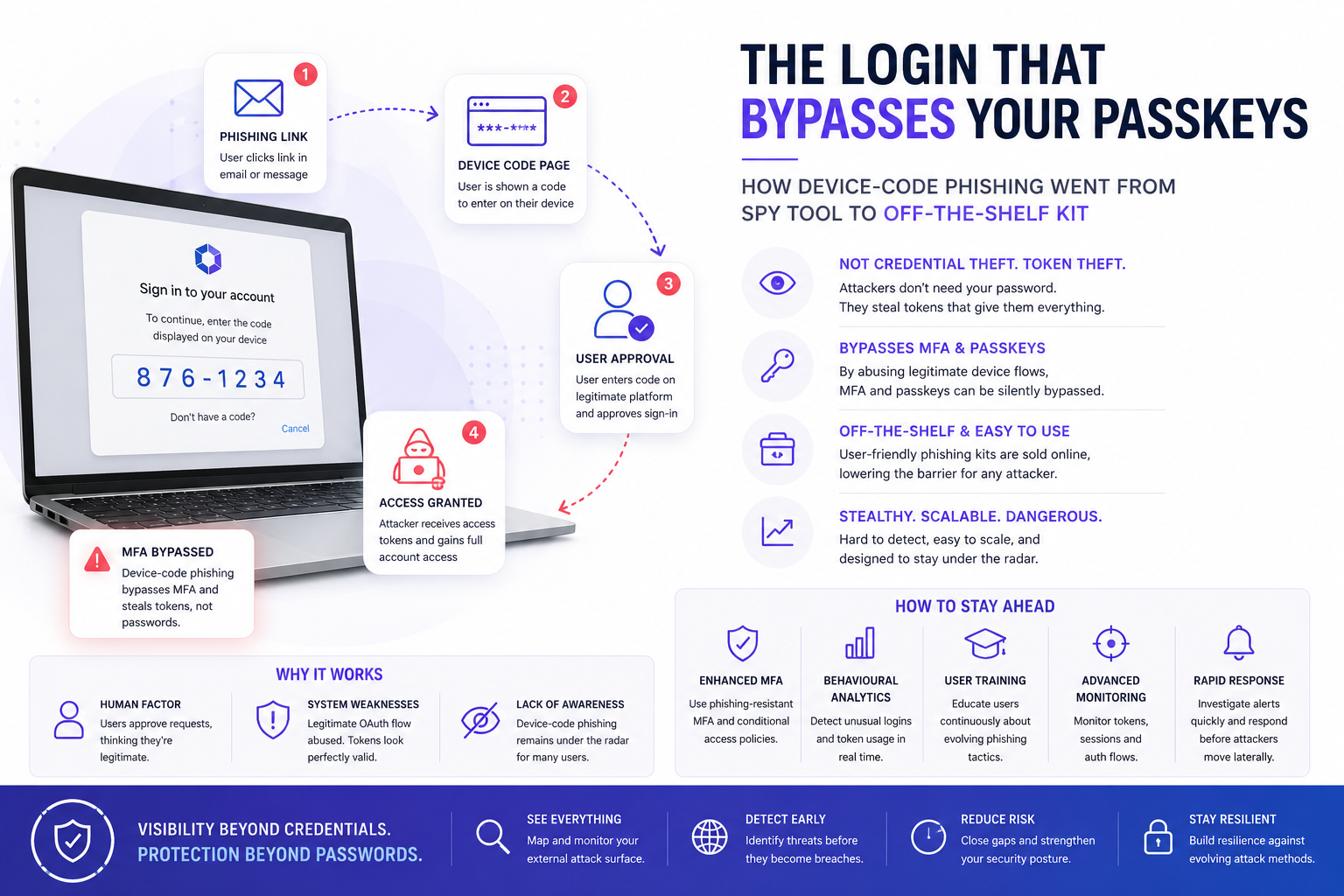
In the dynamic realm of cybersecurity, threats continuously evolve, challenging even the most robust defences. Device-code phishing, which began as an espionage tool, has become an accessible off-the-shelf kit available to any hacker with malicious intent. This technique silently infiltrates accounts, rendering traditional security measures futile.
Device-code phishing abuses a legitimate OAuth flow to bypass MFA entirely. By tricking users into entering a malicious device code, attackers obtain access and refresh tokens. This highlights a gap in token-level visibility, not credential hygiene.
Explore more about device flow vulnerabilities and how to mitigate them.
Initially crafted for espionage, device-code phishing has trickled into the cybercriminal marketplace. Kits include user-friendly interfaces, making them accessible even to less tech-savvy hackers.
Read about our phishing detection solutions to understand how to detect these threats early.
Passkey systems, while designed to be secure, are challenged by device-code phishing. Its rise illustrates flaws in device authentication components, reflecting the need for robust detection mechanisms.
Despite the sophisticated nature of device-code phishing, being vigilant and informed can mitigate risks.
Refer to our defense solutions for comprehensive strategies.
Solutions like EASM provide advanced monitoring to pre-empt potential threats.
As device-code phishing transitions from espionage tools to common kits, it epitomises the dynamic nature of cyber threats. Organisations must continuously assess and reinforce their security measures to adapt to this evolving landscape.
Device-code phishing exploits device authentication systems, tricking victims into providing access by approving fraudulent device authentication requests. Learn more about vulnerability assessment.
It targets human elements and exploits flaws in device authentication, deceiving users into approving device-code requests. Enhance understanding through our security training programs.
Be cautious of unsolicited authentication requests. Use enhanced MFA, stay aware of phishing strategies, and employ behavioural analytics. Explore our comprehensive protection services.
EASM offers tools for monitoring and mitigating threats, identifying potential weaknesses, and proactively addressing them.

Unlock full visibility of your external attack surface with DarkInvader’s continuous, real-time monitoring. Create your free account to discover unknown assets, detect emerging risks and stay ahead of potential threats before attackers can exploit them.
Create My Free Account
Platform 7D, New Station Street, Leeds,
LS1 4BT, United Kingdom
Mon-Fri, 9:00-17:00
Contact:
sales@darkinvader.io
+44 (0)1138805336
Last updated: 23 June 2026
©2026 DarkInvader, All Rights Reserved


