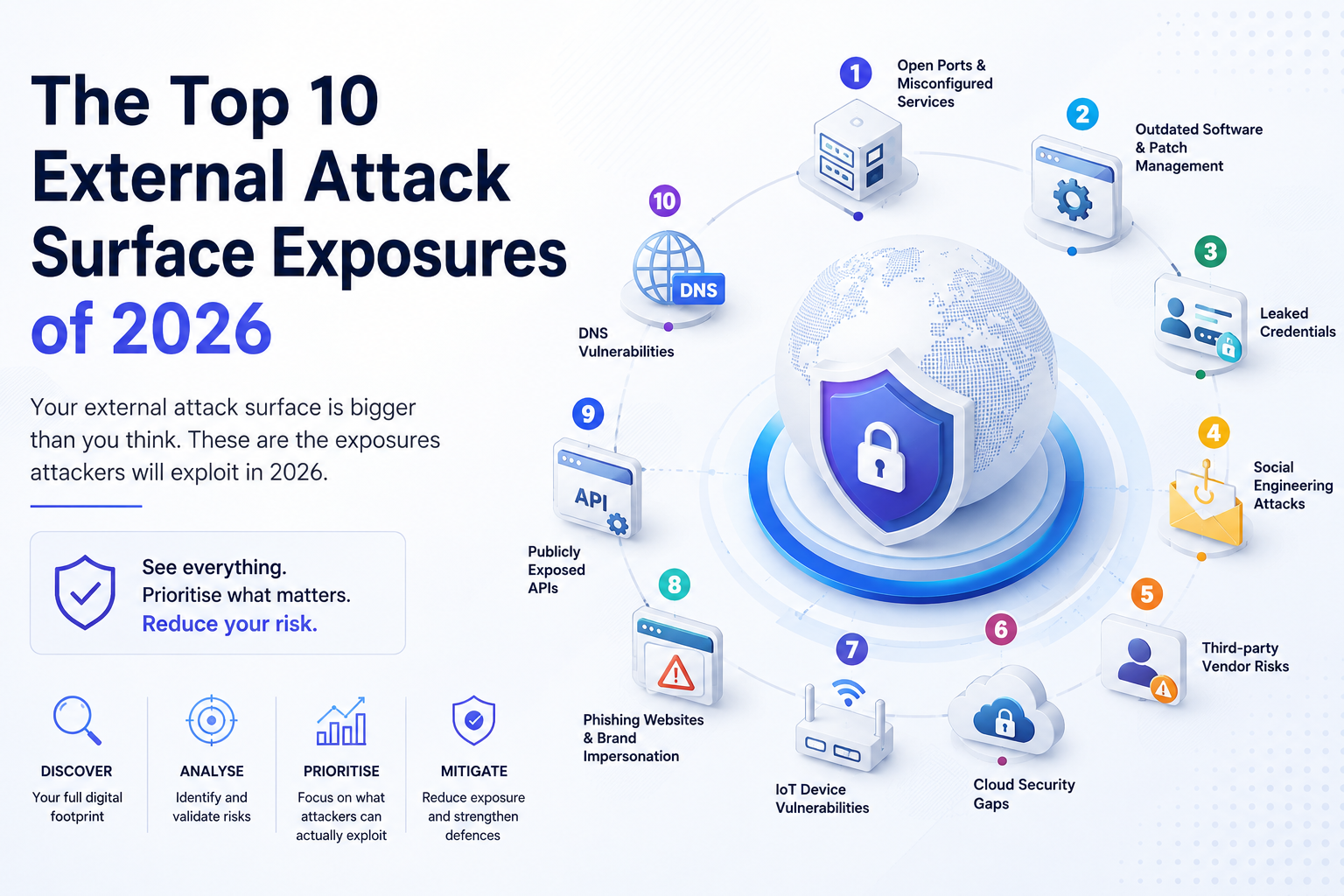
In today's rapidly evolving digital landscape, organisations are increasingly susceptible to sophisticated cyber threats. As technology progresses, so do the techniques employed by cybercriminals. By 2026, understanding the external attack surface will become crucial for businesses striving to secure their digital assets and maintain customer trust. In this article, we'll explore the top 10 external attack surface exposures and how enterprises can effectively mitigate these risks.
Before diving into the specific threats, let's clarify what the external attack surface entails. It encompasses all the points of interaction between a company’s IT infrastructure and the external world. This includes networks, devices, systems, and configurations exposed to potential adversaries. As companies expand digitally, their attack surface invariably grows, making them vulnerable to cyber threats.
In 2026, open ports and misconfigured services remain a primary target for attackers. Cybercriminals exploit these openings to gain unauthorised access to systems. Organisations must implement regular vulnerability scanning to identify and secure open ports. Utilising tools like vulnerability scanning can help detect these exposures and reinforce network security.
Not keeping software up-to-date poses a significant risk. Attackers frequently exploit known vulnerabilities in outdated software. Efficient patch management practices ensure that systems are protected against potential breaches. With DarkInvader's vulnerability scanning, companies can stay ahead of emerging threats by maintaining current software patches.
Leaked credentials present a treacherous threat as attackers use them to access various systems. In 2026, credential stuffing and brute force attacks are expected to rise. Implementing strong password policies and multi-factor authentication is critical. Additionally, regular leaked credentials monitoring can quickly alert organisations to exposed data on the dark web.
Human error continues to be a pivotal factor in external attack surface exposures. Social engineering attacks, including phishing and spear-phishing, thrive on exploiting human behaviour. Educating employees about recognising and responding to social engineering attempts can considerably reduce these risks.
As supply chains become more complex, third-party vendors significantly contribute to the external attack surface. Cybercriminals target these vendors to infiltrate larger organisations. Effective supplier risk management and comprehensive due diligence are essential for safeguarding against these vulnerabilities.
With the widespread adoption of cloud services, misconfigurations in cloud environments present a substantial risk. Ensuring adequate security measures, such as data encryption and access controls, can mitigate these vulnerabilities. Companies should implement robust security frameworks for cloud infrastructure.
Internet of Things (IoT) devices, often poorly secured, expand the external attack surface significantly. Cybercriminals exploit these devices to gain entry into networks. Implementing IoT monitoring solutions and ensuring devices are securely configured will be essential by 2026.
As more businesses engage online, phishing websites and brand impersonation attacks become prevalent. These deceitful sites trick users into revealing sensitive information. Effective brand and website monitoring can help identify and neutralise threats before they cause damage.
Public APIs, if not properly secured, can be exploited to access sensitive data and services. It's crucial for organisations to adopt strict API security measures, including authentication, authorisation, and regular vulnerability assessments, to protect their interfaces.
DNS vulnerabilities, including DNS spoofing and cache poisoning, expose organisations to data breaches and service disruptions. Regular DNS monitoring and employing secure DNS configurations can help mitigate these risks.
The digital landscape in 2026 will require businesses to be agile and proactive in addressing external attack surface exposures. Regular monitoring, employee education, and utilising advanced cybersecurity technology will be paramount in safeguarding against these threats. By comprehensively understanding and addressing the mentioned vulnerabilities, companies can enhance their security posture and protect their valuable assets.

Unlock full visibility of your external attack surface with DarkInvader’s continuous, real-time monitoring. Create your free account to discover unknown assets, detect emerging risks and stay ahead of potential threats before attackers can exploit them.
Create My Free Account
Platform 7D, New Station Street, Leeds,
LS1 4BT, United Kingdom
Mon-Fri, 9:00-17:00
Contact:
sales@darkinvader.io
+44 (0)1138805336
Last updated: 14 August 2026
©2026 DarkInvader, All Rights Reserved


