


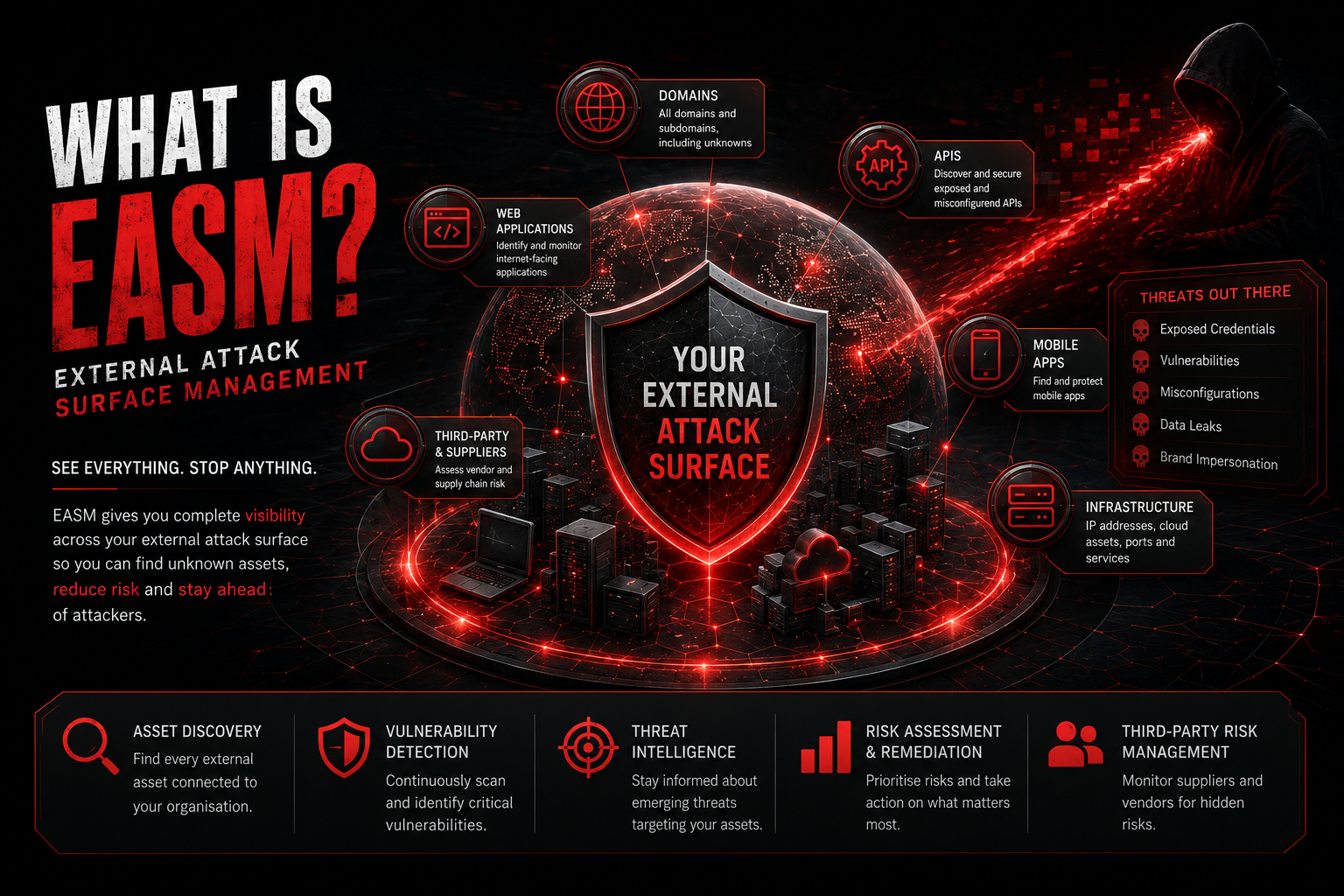
In the rapidly evolving world of cybersecurity, understanding and mitigating potential risks is at the core of every organisation’s survival strategy. A concept that has been gaining significant attention recently is External Attack Surface Management (EASM). But what exactly is EASM, and why should businesses be concerned about it?
Understanding External Attack Surface Management (EASM)
What Is an Attack Surface?
Before diving into EASM, it's crucial to comprehend what constitutes an attack surface. An attack surface is essentially the totality of points where an unauthorized user can try to enter data to or extract data from an environment. This includes domains, IP addresses, applications, devices, and databases that could potentially harbour vulnerabilities.
The Role of EASM
External Attack Surface Management (EASM) is a proactive cybersecurity strategy aimed at continuously identifying, monitoring, and managing an organisation's external digital assets to understand their vulnerabilities. By doing so, organisations can reduce the risk of cyber attacks and bolster their cybersecurity posture effectively.
EASM focuses on the external viewpoint, drawing a distinct line from traditional Vulnerability Management that often concerns itself with internal assessments.
Key Components of EASM
- Asset Discovery: Identifying all external assets linked to your business, such as web applications, domain names, APIs, and mobile apps, is the first step in EASM. With effective asset monitoring, businesses can better understand their exposure.
- Vulnerability Detection: Continuous monitoring can uncover vulnerabilities that might be exploited by malicious actors. Vulnerability scanning is pivotal.
- Threat Intelligence: Gathering intelligence on potential threats targeting your industry or specific assets is vital to preemptively addressing these issues before they manifest into full-blown attacks.
- Risk Assessment and Remediation: Evaluating the risk each vulnerability poses, and prioritising them for remediation ensures that resources are allocated effectively.
- Third-party and Supply Chain Risk Management: Managing risks associated with third-party vendors and suppliers is equally crucial, as they can be a source of vulnerabilities too.
Why EASM is Essential for Modern Enterprises
Protecting Digital Assets
As businesses embrace digital transformation, their digital assets become more distributed and potentially vulnerable. EASM acts as a sentinel guarding these assets from external threats, ensuring data integrity and operational continuity.
Real-time Threat Mitigation
Unlike traditional security measures that react to breaches, EASM provides real-time insights, allowing organisations to neutralise threats before they can cause damage. This proactive approach is indispensable in today’s fast-paced cyber environment.
Meeting Compliance and Regulatory Requirements
With the rising pressure on industries to comply with data protection regulations, EASM offers a comprehensive approach to meet compliance mandates by providing a clear view of the organisation’s risk exposure.
Enhancing Customer Trust
A robust EASM strategy not only fortifies your security architecture but also adds trust and value to your brand in consumers' eyes, reassuring them that their data is in safe hands.
Implementing EASM – Steps to Take
- Assessment of the Current Security Framework: Identify gaps and assess the existing security architecture to understand the unique needs of your organisation.
- Integration of EASM Tools: Employ cutting-edge technology that provides automation, real-time monitoring, and detailed insights into your external attack surface.
- Team Training and Awareness: Equip and train your team to utilise EASM tools effectively and keep them informed about the latest cyber threats and trends.
- Regular Updates and Audits: Continuous monitoring and regular audits ensure that your EASM framework adapts to evolving threats and remains robust.
Conclusion
External Attack Surface Management is more than just a cyber shield; it's a comprehensive approach to ensuring that your enterprise remains vigilant and prepared against potential cyber threats. Implementing EASM can transform security for organisations, ensuring proactive risk management, regulatory compliance, and the protection of digital assets.
In a time when cyber threats are as prevalent as ever, understanding and harnessing the power of EASM is not just beneficial; it’s essential.
FAQs
What Is External Attack Surface Management?
External Attack Surface Management (EASM) is a proactive strategy that involves identifying, monitoring, and managing an organisation's external digital assets to uncover vulnerabilities and prevent cyber attacks. It fundamentally enhances the cybersecurity posture by focusing on managing risks from an external viewpoint.
How Does EASM Differ from Traditional Vulnerability Management?
While traditional Vulnerability Management often deals with internal scans and assessments, EASM emphasizes the external threats and vulnerabilities. It takes a broader view of the organisation's attack surface, focusing on external digital assets and third-party risks.
Why Is EASM Important for Compliance?
EASM plays a crucial role in ensuring compliance with data protection regulations by providing detailed visibility into the external vulnerabilities and potential threats. It helps in meeting regulatory mandates by offering insights and facilitating the management of digital assets effectively.
How Can Organisations Implement EASM?
Organisations can implement EASM by assessing their current security frameworks, integrating advanced EASM tools, training staff, and conducting regular audits to maintain an adaptive and resilient security posture.
For more information on enhancing your cybersecurity measures, explore our vulnerability scanning tools and read our guide on OSINT monitoring.