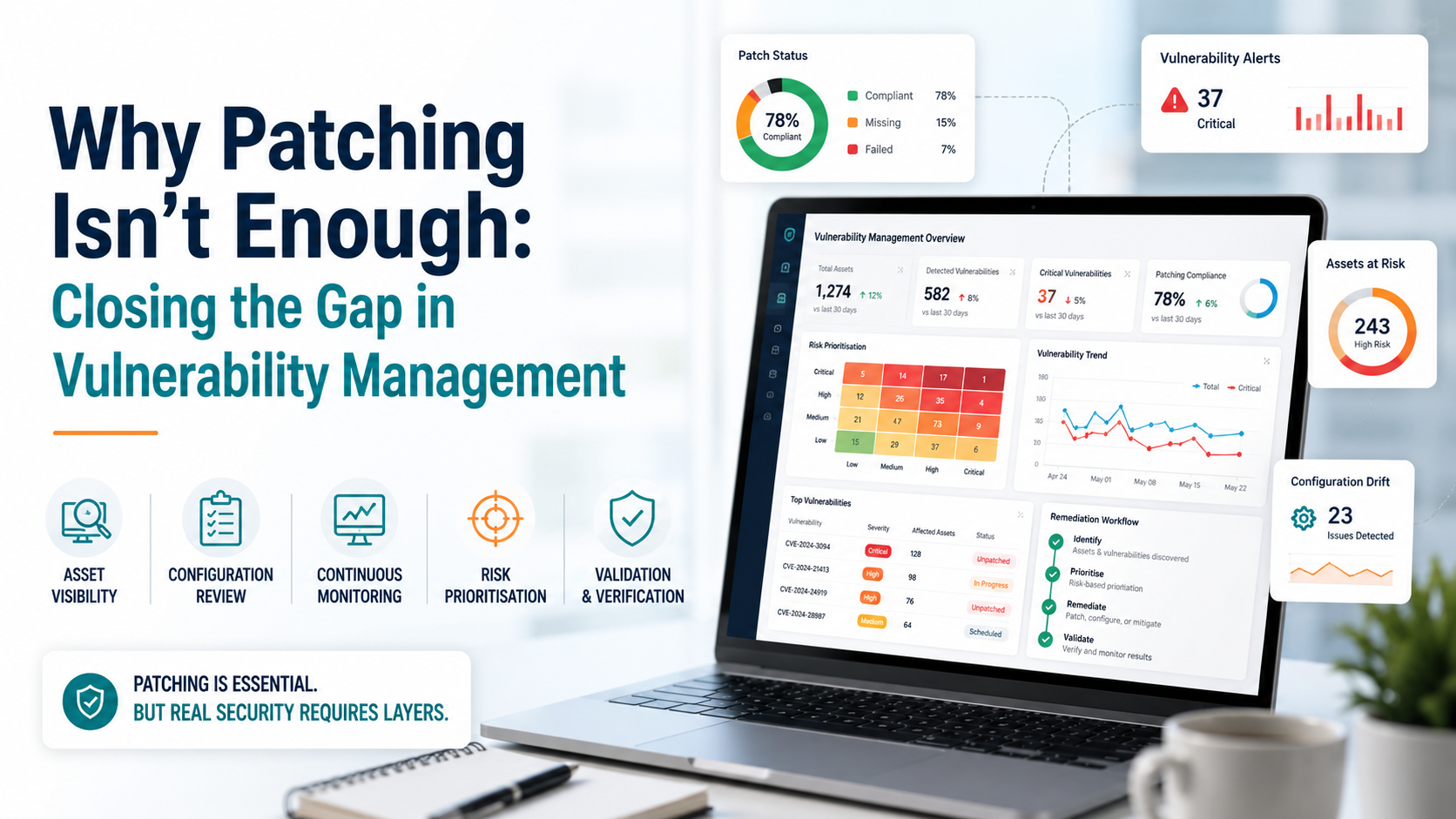
In the fast-paced realm of cybersecurity, organizations continually strive to protect their digital assets from a myriad of threats. Patching vulnerabilities plays a crucial role in maintaining security, but it becomes clear that patching alone is not sufficient. This article explores the gaps in vulnerability management and discusses comprehensive strategies to enhance your security posture.
The reliance on digital systems has skyrocketed, making cyber threats more pervasive than ever. Organizations often resort to patching—updating software to fix vulnerabilities—to fend off potential attacks. However, a common misconception is that patching equates to full protection. While essential, patching is merely one piece of the larger cybersecurity puzzle. Many vulnerabilities remain unaddressed, and new ones continually emerge, necessitating broader strategies to safeguard sensitive data.
Patching involves applying updates to software, operating systems, or applications to resolve vulnerabilities that attackers might exploit. It is a reactive measure, often dependent on vendors identifying and fixing known issues.
A significant issue with maintaining security solely through patching is its reactive nature. Immediate patches sometimes lead to untested solutions that may introduce new vulnerabilities or disrupt system functionality. Organizations often patch in response to disclosed vulnerabilities, leaving a potential window for attackers to exploit issues before fixes are applied.
The number of vulnerabilities disclosed annually is overwhelming. Handling numerous patches quickly and efficiently becomes a daunting task, especially for organizations with large and complex IT environments.
Applying patches can sometimes conflict with existing software or hardware, leading to compatibility issues. Moreover, the process often requires system downtime, impacting productivity. In some sectors, downtime is not a feasible option, causing delays in applying necessary patches.
Patching only addresses known vulnerabilities. Unknown vulnerabilities, known as zero-days, are not covered. These threats require robust monitoring and proactive security measures that go beyond traditional patching strategies.
Not all vulnerabilities carry the same level of risk. Conducting risk assessments helps prioritize which vulnerabilities require immediate attention based on potential impact and exploitability. Utilizing tools for asset monitoring and continuous vulnerability scanning can streamline this process.
Continuous monitoring solutions, such as DarkInvader's asset management tools, enable organizations to stay ahead of potential threats. By constantly analyzing the security landscape, these tools can identify anomalies and potential vulnerabilities before they are exploited.
Incorporating threat intelligence into your security strategy involves gathering data on emerging threats and attack vectors. This information can inform your patching priorities and enhance your ability to defend against advanced persistent threats. Global threat intelligence services can offer insights tailored to your industry and geographical area.
Security is not merely the IT department's responsibility; it involves everyone within an organization. Training employees to recognize potential threats and understand basic cybersecurity practices can reduce the risk posed by human error.
Automation can significantly enhance vulnerability management by handling repetitive tasks such as patch deployment and monitoring. Using artificial intelligence can assist in predicting potential threats based on historical attack patterns, allowing organizations to allocate resources effectively.
While patching remains a fundamental component of cybersecurity, it is clear that it cannot stand alone as a singular strategy for robust vulnerability management. Comprehensive approaches combining risk assessment, continuous monitoring, threat intelligence, and a culture of security awareness are essential to effectively mitigate risks and protect organizational assets in today’s ever-evolving threat landscape.
Patching is a reactive measure that only addresses known vulnerabilities and doesn't cover unknown or zero-day vulnerabilities. Full protection requires a combination of strategies that include proactive monitoring and intelligence.
By implementing continuous monitoring solutions and integrating global threat intelligence services, organizations can be more aware of emerging threats and tailor their security measures accordingly.
Automation helps streamline vulnerability management by handling repetitive tasks and efficiently deploying patches, allowing IT teams to focus on higher-level strategic efforts.
A security-aware culture ensures that all employees understand cybersecurity's importance, thereby reducing the likelihood of breaches caused by human error. Training and awareness programs can significantly enhance an organization’s security posture.
By leveraging various strategies and tools, organizations can truly close the gap in their vulnerability management and ensure a resilient security framework.

Unlock full visibility of your external attack surface with DarkInvader’s continuous, real-time monitoring. Create your free account to discover unknown assets, detect emerging risks and stay ahead of potential threats before attackers can exploit them.
Create My Free Account
Platform 7D, New Station Street, Leeds,
LS1 4BT, United Kingdom
Mon-Fri, 9:00-17:00
Contact:
sales@darkinvader.io
+44 (0)1138805336
Last updated: 14 August 2026
©2026 DarkInvader, All Rights Reserved


