


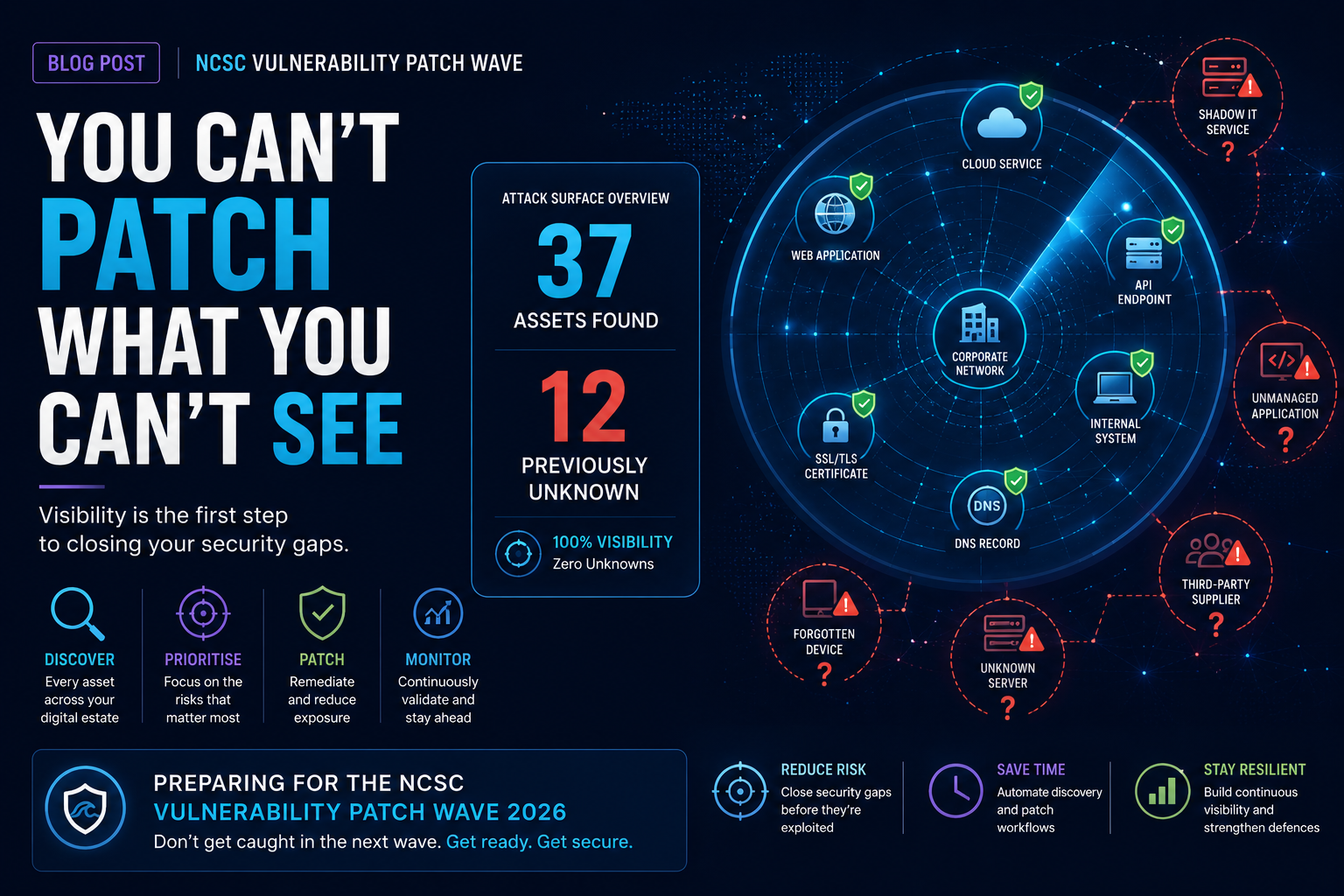
In the ever-evolving landscape of cybersecurity, vulnerability management has become a cornerstone of proactive defence strategies for organisations worldwide. The urgency to identify and patch vulnerabilities swiftly is underscored by the recent campaign initiated by the UK’s National Cyber Security Centre (NCSC), dubbed the "Vulnerability Patch Wave". But as any cybersecurity professional will tell you, you can't patch what you can't see.
Understanding the NCSC's Vulnerability Patch Wave
The NCSC's initiative aims to fortify the digital infrastructure by urging organisations to prioritise vulnerability management. The concept is simple: ensure your systems are patched promptly to fend off potential threats. However, the challenge lies in the visibility of these vulnerabilities. Without a clear view of your entire digital estate, you may be leaving holes open for exploitation.
The Importance of Asset Discovery
The first step in vulnerability management is knowing what you have. Asset discovery is crucial for identifying all the elements of your network, including forgotten web servers or legacy applications, which might be harbouring unpatched vulnerabilities. This is where extensive asset monitoring is invaluable, as it ensures you have a complete picture of your network infrastructure.
Effective Vulnerability Scanning
Once assets are identified, the focus shifts to vulnerability scanning, a practice that involves examining your digital estate for known vulnerabilities. Tools that perform vulnerability scanning are essential in this respect. By automating this process, organisations can ensure that no stone is left unturned, thereby enhancing their overall security posture.
The Role of External Threat Intelligence
While internal monitoring and scanning are critical, external threat intelligence is equally important. Understanding the broader threat landscape enables organisations to prioritise patches based on the likelihood of exploitation. Global threat intelligence services can provide real-time insights into emerging threats, allowing organisations to act swiftly.
Key Steps to Prepare for the Patch Wave
1. Comprehensive Asset Mapping
Begin by conducting a thorough asset inventory. Utilise tools and services that provide visibility across all corners of your network. This includes scanning for devices, software, and certificates that might be out of sight.
2. Prioritisation of Vulnerabilities
Once you have visibility, the next step is to assess and prioritise vulnerabilities. Not all vulnerabilities require immediate attention; focusing on those that pose the greatest risk is key. Utilize CVSS (Common Vulnerability Scoring System) scores to guide your prioritisation efforts.
3. Timely Patch Management
The heart of the NCSC's campaign is timely patch implementation. Ensuring patches are applied swiftly prevents attackers from exploiting known vulnerabilities. Embrace a robust patch management strategy that includes automated updates where possible to minimise delay.
4. Continuous Monitoring and Reassessment
Vulnerability management is not a one-time activity. Continuous monitoring, aided by effective asset monitoring solutions, ensures that as new vulnerabilities are discovered, they can be swiftly addressed.
Preparing Your Organisation
Building a Cyber-Resilient Culture
Preparation for the NCSC’s Vulnerability Patch Wave goes beyond technology. It involves cultivating a culture of cybersecurity awareness across the organisation. Employees should be trained to recognise vulnerabilities and understand the importance of patch management.
Integrating with Third-Party Solutions
As part of your strategy, consider integrating with third-party threat intelligence and vulnerability management services that provide deeper insights and automated response capabilities.
Conclusion
The NCSC's Vulnerability Patch Wave is a call to action for organisations to enhance their cybersecurity measures. By focusing on visibility, prioritisation, and timely patching, organisations can significantly reduce their risk of cyber threats. Remember, effective cybersecurity begins with seeing and understanding your vulnerabilities, because truly, you can't patch what you can't see.
FAQ
What is the main goal of the NCSC's Vulnerability Patch Wave?
The main goal is to encourage organisations to enhance their patch management practices by identifying and addressing vulnerabilities swiftly, thus reducing the risk of exploitation.
How can asset monitoring help in vulnerability management?
Asset monitoring gives organisations comprehensive visibility over their digital estate, crucial for identifying where vulnerabilities exist. Services like asset monitoring aid significantly in this process.
Why is external threat intelligence important for patch management?
External threat intelligence provides insights into the broader threat landscape and helps in prioritising patches based on the likelihood of their exploitation, aiding in proactive security measures.
How often should vulnerability scanning be performed?
Vulnerability scanning should be a continuous process. Regular scans ensure that new vulnerabilities are identified and addressed promptly, maintaining system security.
To bolster your cybersecurity framework and stay informed about emerging threats, explore our global threat intelligence solutions. For further details on asset monitoring and vulnerability scanning, visit DarkInvader.