• year
Every post published in this year, newest first.
Executive protection cyber monitoring gives close protection teams early warning from leaks, fake domains and threat chatter. See how to start.
Cyber attack cost UK, line by line: response, downtime, ICO exposure, supplier claims and brand damage. See which exposures drive the bill.
Dark Telegram channels explained: the five channel types, how leaked data moves through them, and how to verify a claim. See what to monitor instead.
Fraudulent data requests, from forged police emails to fake DSARs, trick staff into handing over data. See the exact checks that stop them.
Telegram data leak monitoring fails in predictable ways. See the six mistakes that hide stealer logs and real breaches, and how to fix each one.
Attack surface drift leaves inventories out of step with what attackers see. Learn the 7 causes, the signals to watch and a 30-day plan to close the gap.
Stealer logs expose passwords, cookies and session tokens. Follow a 48-hour triage sequence to revoke, contain and report. See the full runbook.
Domain spoofing detection needs more than DMARC. Five signals that surface lookalike domains early, how to triage them, and what gets a takedown.
Capita ICO fine explained beyond the £14m headline: the six exposure gaps it exposes and how UK teams close them. See what to fix first.
NCSC hacktivist alert: find the exposed control panels, remote access and lookalike domains attackers scan for. See what to check first.
Unknown asset discovery, explained: the seven places forgotten internet-facing assets hide, how to attribute them and who fixes them. See the process.
NCSC adversary simulation guidance explained: how CyAS differs from pen testing, what to fix before scoping, and the data a red team needs. Read the guide.
Check Point VPN vulnerability response done properly: find every gateway, confirm the hotfix and catch stolen VPN logins. See the checklist.
Cyber Security and Resilience Bill: what in-scope firms and MSPs must prove, from 24-hour reporting to asset inventory. See the checklist.
Harrods data breach explained: what was taken, how a supplier let it happen, and six checks to stop the same gap hitting you. See the 30-day plan.
Monitoring Telegram for threats, explained end to end: channel collection, noise reduction, verification and escalation. See how to build the workflow.
Leaked credentials on the dark web are mostly recycled noise. Learn how to sort dead records from live, exploitable exposures. See the triage model.
Glasgow Council cyber attack explained: what was confirmed, why supplier-hosted assets go unmapped, and how to find yours. See the practical steps.
Leaked credentials check done right: cover your whole domain, tell old dumps from live stealer logs, and act in hours. See what free tools miss.
Third party data breach risk hides in gaps annual vendor checks never test. See the five blind spots and how to monitor suppliers continuously.
Attack surface monitoring software compared by what matters: discovery, noise, human triage, takedowns and reporting. See the 9 questions to ask vendors.
Stealer logs expose employee passwords, cookies and session tokens. Get a 72-hour triage runbook and see why resets alone fail. Start free.
VIP monitoring done properly: how to choose which executives need cover, the exposure signals to watch, and how to act on findings. See how to set it up.
ServiceNow vulnerabilities are only half the problem. Learn how to inventory every exposed instance, test safely and respond in 72 hours.
Manchester Airports cyber attack: what was stolen, why WiFi and number plate data matters, and a 10-day plan to check your own exposure.
PaperCut NG vulnerability response beyond patching: fingerprint exposed print servers, check for compromise and prove it’s closed.
Digital ID security risks explained through the real attack paths: stolen sessions, spoofed portals and supplier gaps. See how to monitor and respond.
Third party breach hitting your data? Get the early warning signals, a 72-hour UK response runbook and the contract fixes that stop a repeat.
CVE-2026-19490 is a critical authentication bypass vulnerability in NetScaler ADC and Gateway. It refers to an authentication flaw that could potentially become a major security threat if not addressed promptly.
Shadow IT risks explained from the attacker’s view: 7 exposures, how each one is discovered from outside, and what to fix first. See how to find yours.
CVE-2026-19478 is a critical code injection vulnerability in GitLab. Rated 9.4, it permits unauthenticated deletion of public projects. GitLab has released patches for affected versions.
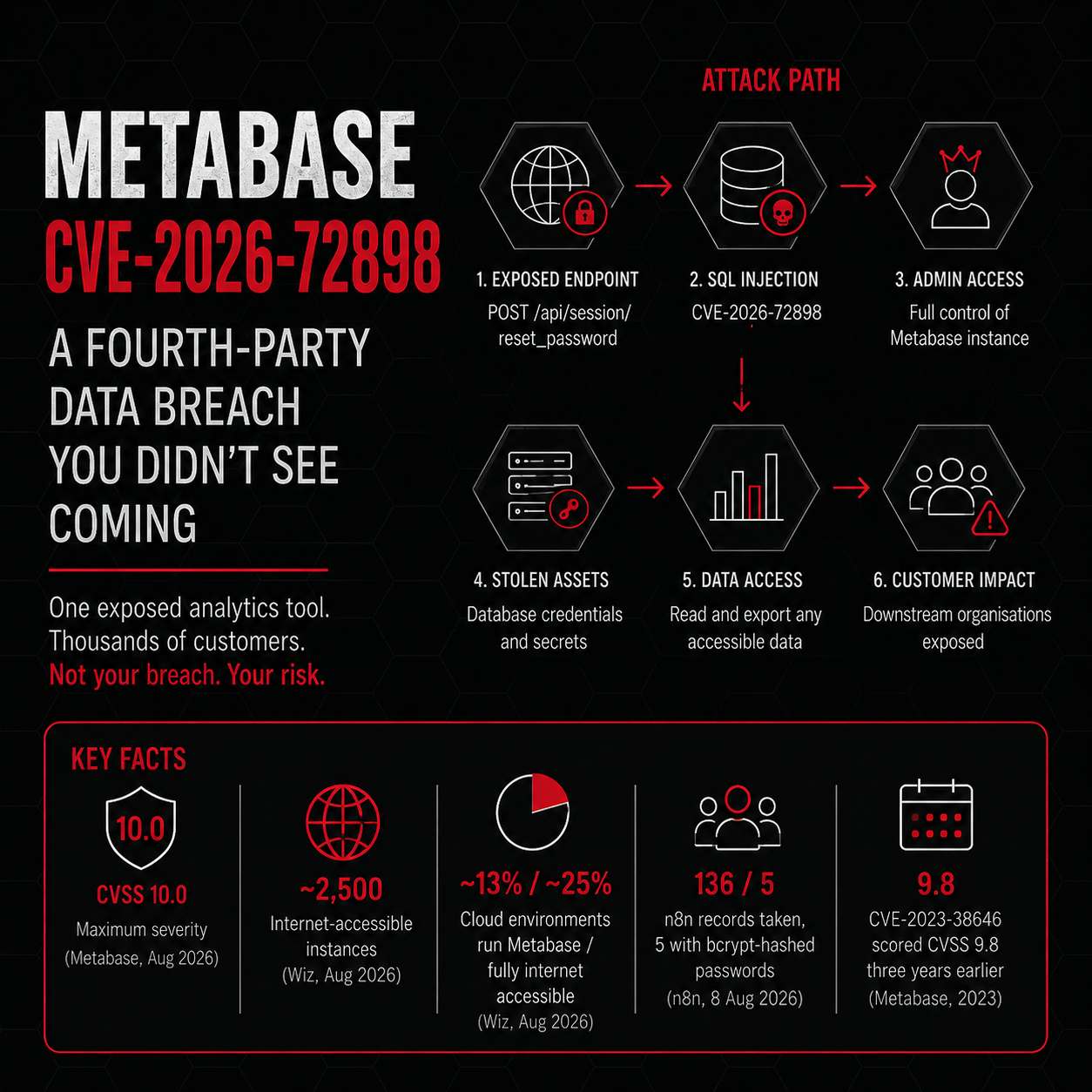
Explore the anatomy of a fourth-party data breach, examining the risks associated with Metabase, Framework, and n8n and how to mitigate them.
In the interconnected world of industrial operations, cyber threats can emerge unexpectedly. This post explores how a forgotten VPN at a wind farm compromised Siemens PLCs at a heat plant and the importance of robust cybersecurity strategies.
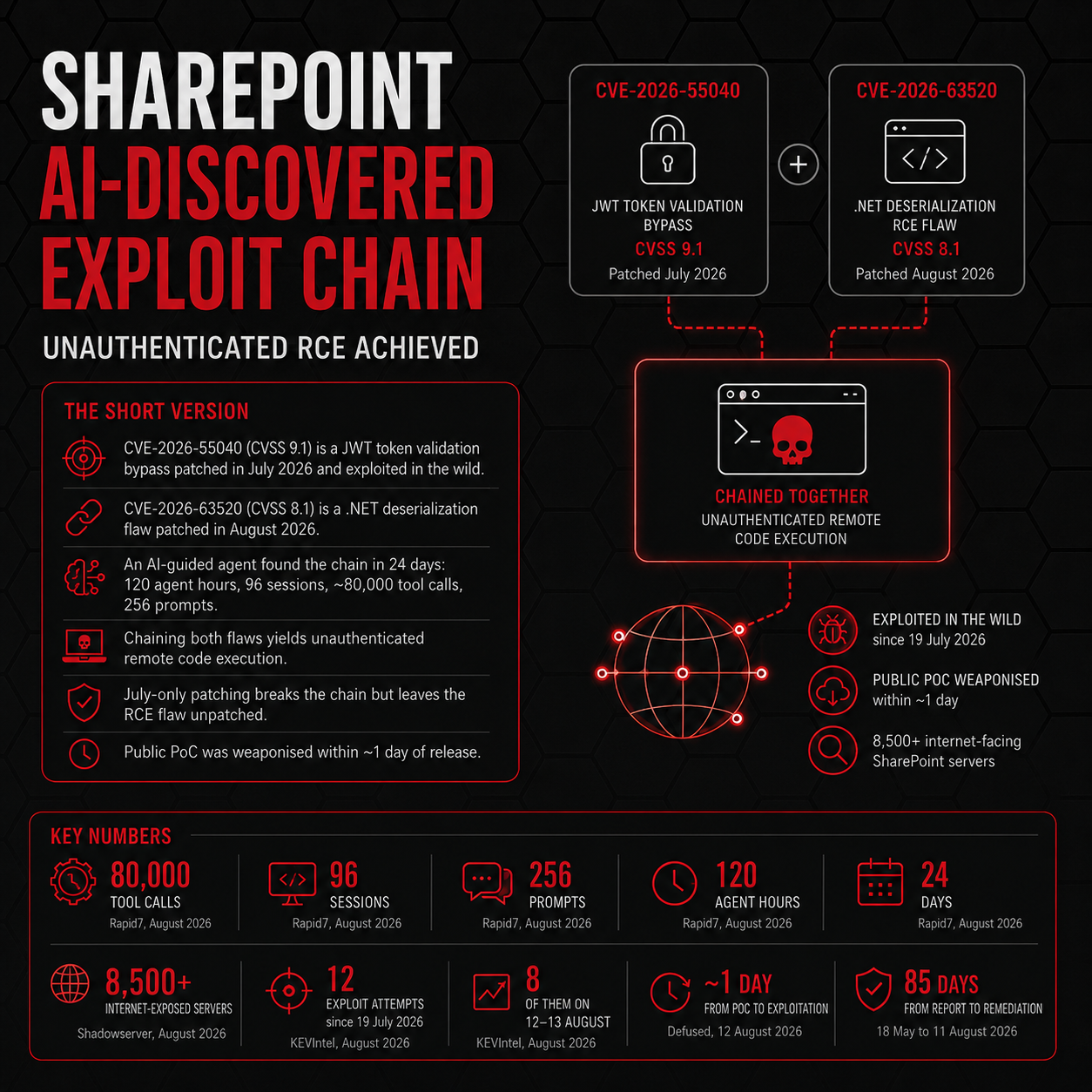
In cybersecurity, anticipating future trends means understanding current discoveries. The agent-discovered SharePoint vulnerability chain illuminates how exploitation could evolve and how organisations can prepare.
A comprehensive analysis of the vCenter Syslog Flaw, its potential impacts, and mitigation strategies.
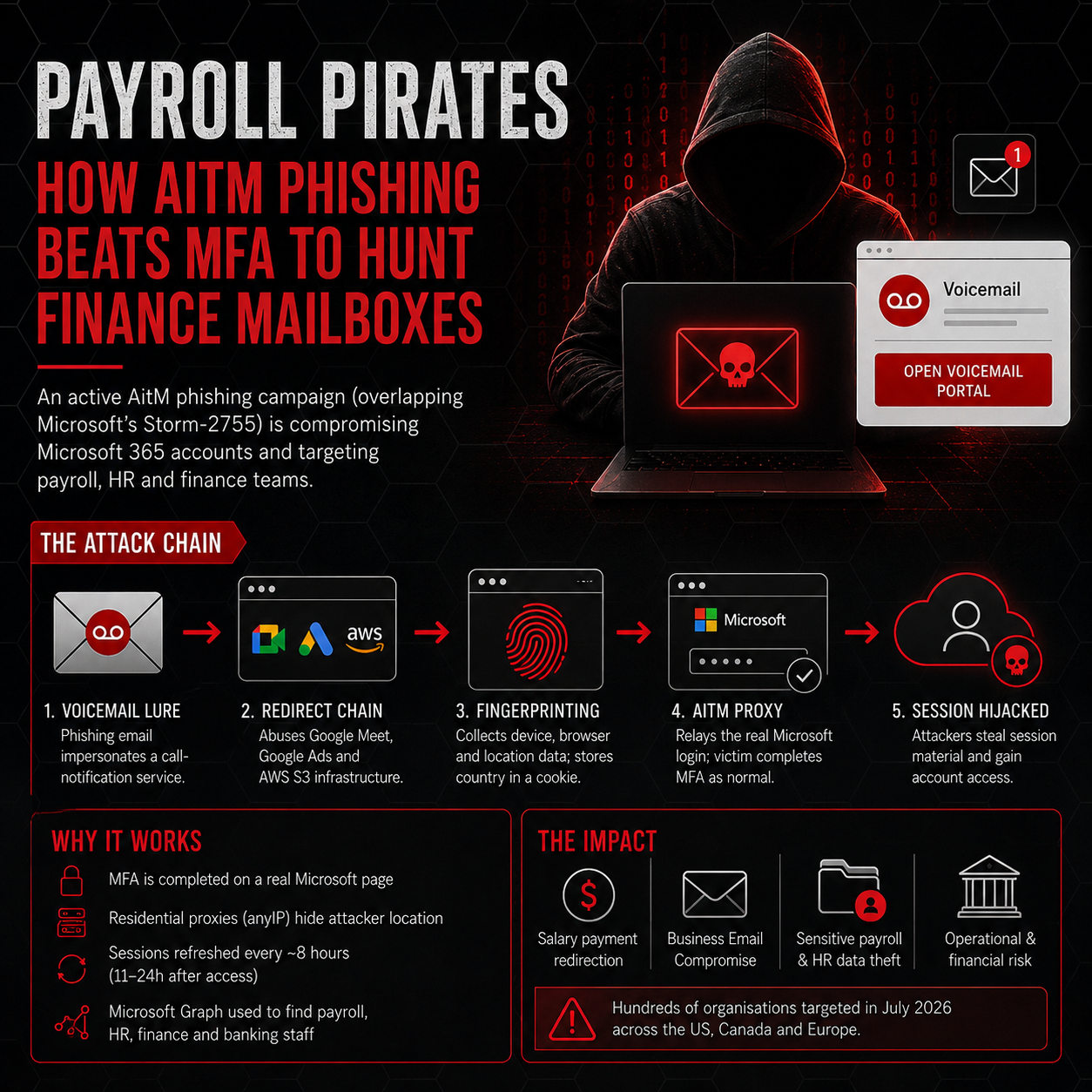
An exploration of the "Payroll Pirates" AitM phishing campaign, highlighting its techniques and providing guidance for detection and defense.
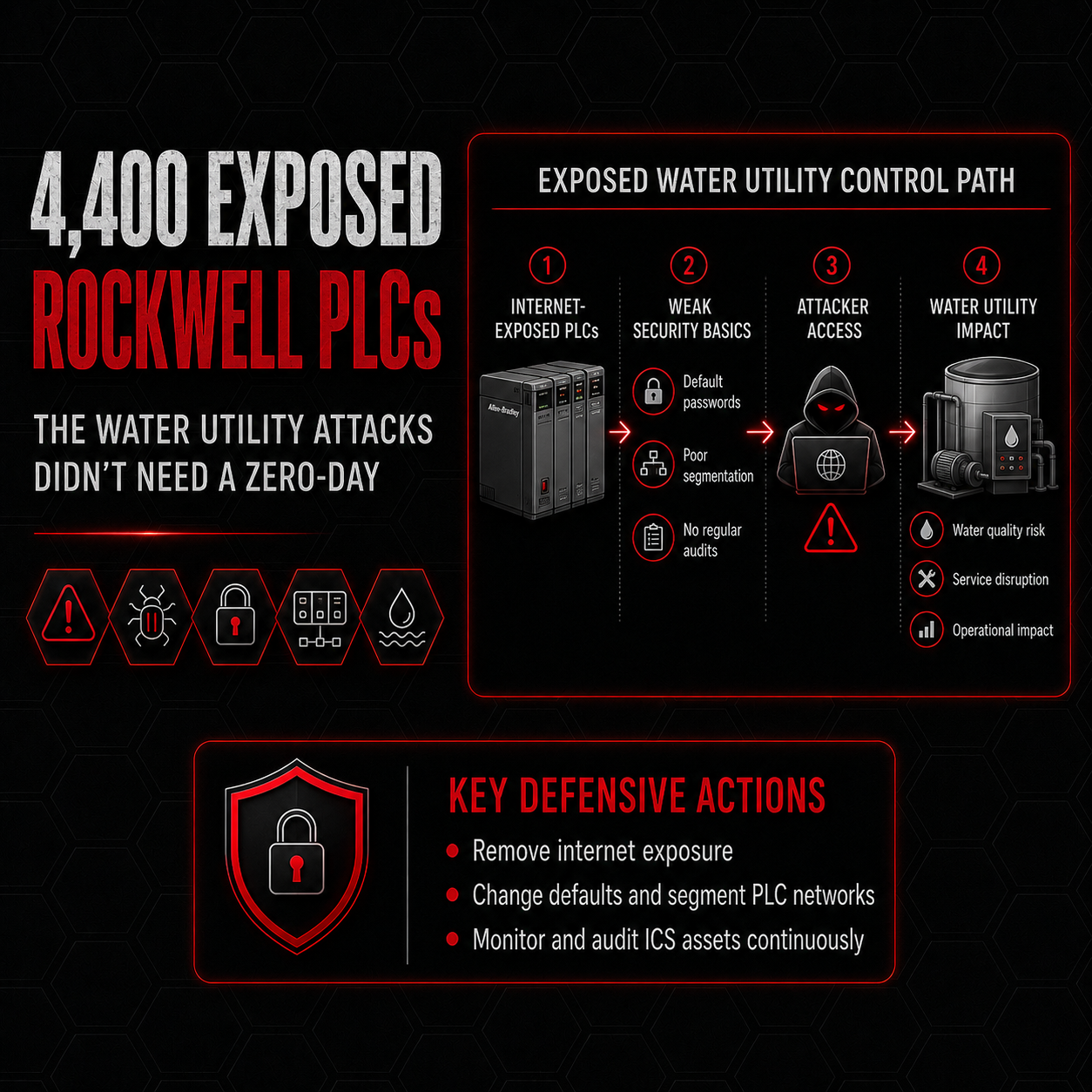
Forescout’s Vedere Labs identified 4,407 internet-exposed Rockwell Automation/Allen-Bradley PLCs in an August 2026 scan, including 22 in cities affected by coordinated attacks on US water utilities. Attackers achieved disruption without exploiting any vulnerability: they changed IP addresses and set passwords on controllers that were already publicly reachable.
CVE-2026-8037 is a critical (CVSS 9.6) unauthenticated command injection flaw in Progress Kemp LoadMaster, disclosed on 4 June 2026 and added to CISA’s KEV catalogue on 7 August 2026 after telemetry recorded 792 exploitation attempts from 65 IP addresses over 41 days. Attackers can execute arbitrary OS commands on unpatched appliances without credentials.
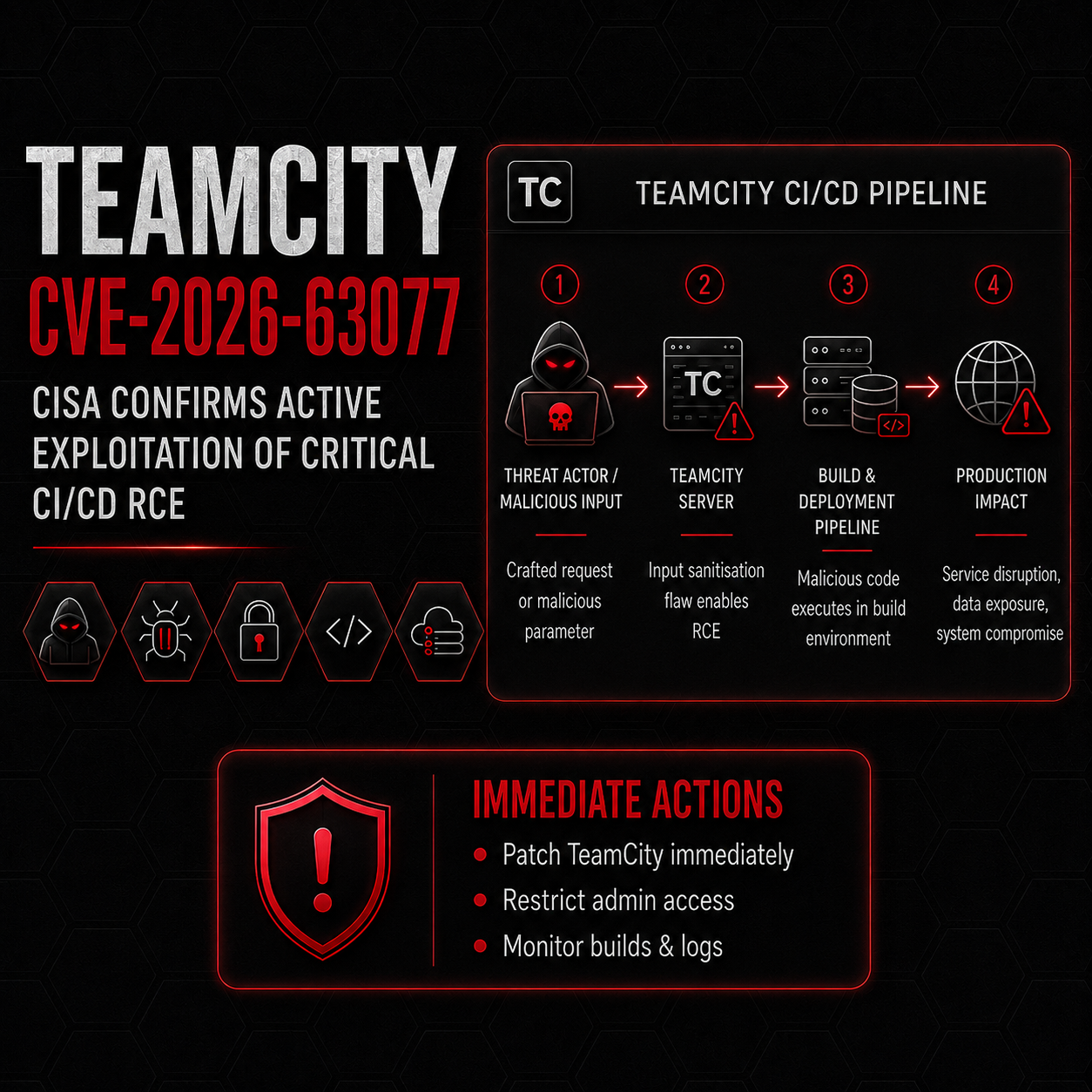
Explore the critical TeamCity CVE-2026-63077 vulnerability, actively exploited as confirmed by CISA. Learn about its implications, mitigation strategies, and how organisations can protect themselves.
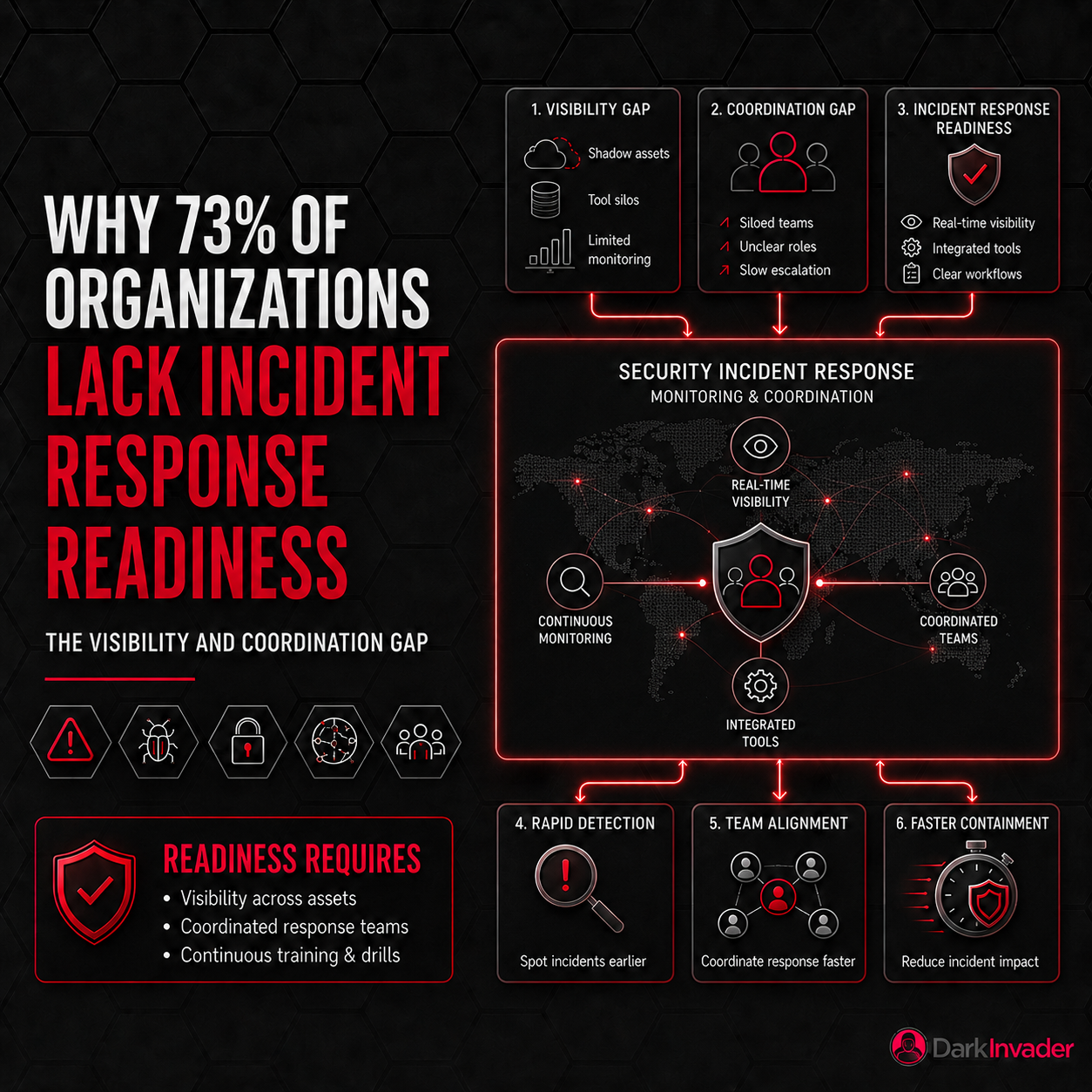
73% of organisations lack adequate incident response capabilities. This blog explores the gaps in visibility and coordination, offering solutions to enhance readiness and resilience.
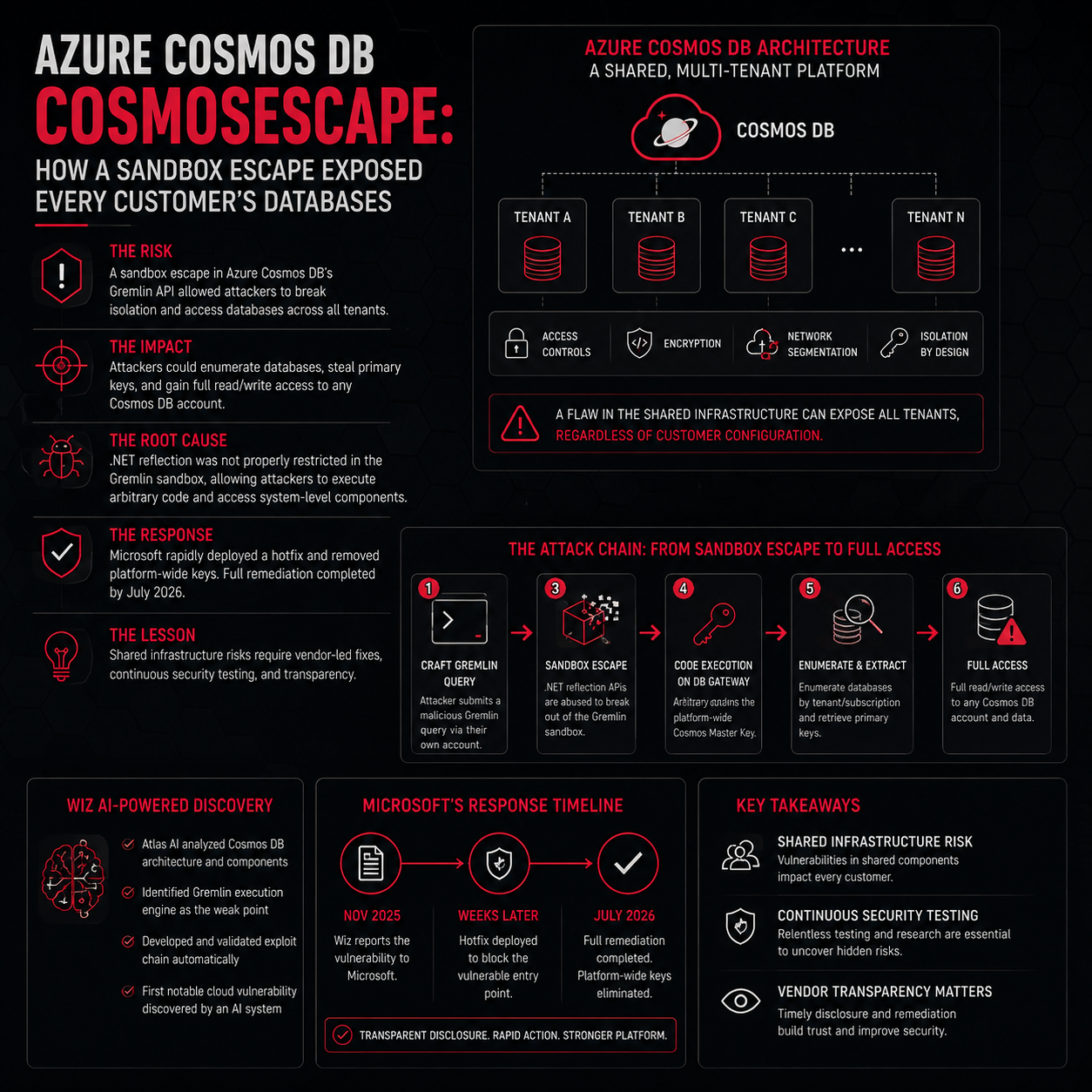
Exploration of Azure Cosmos DB critical vulnerability, CosmosEscape, highlighting the risks of shared infrastructure in cloud computing.
Explore how External Asset Visibility (EAV) is crucial in safeguarding Minnesota’s water systems from cyber attacks.
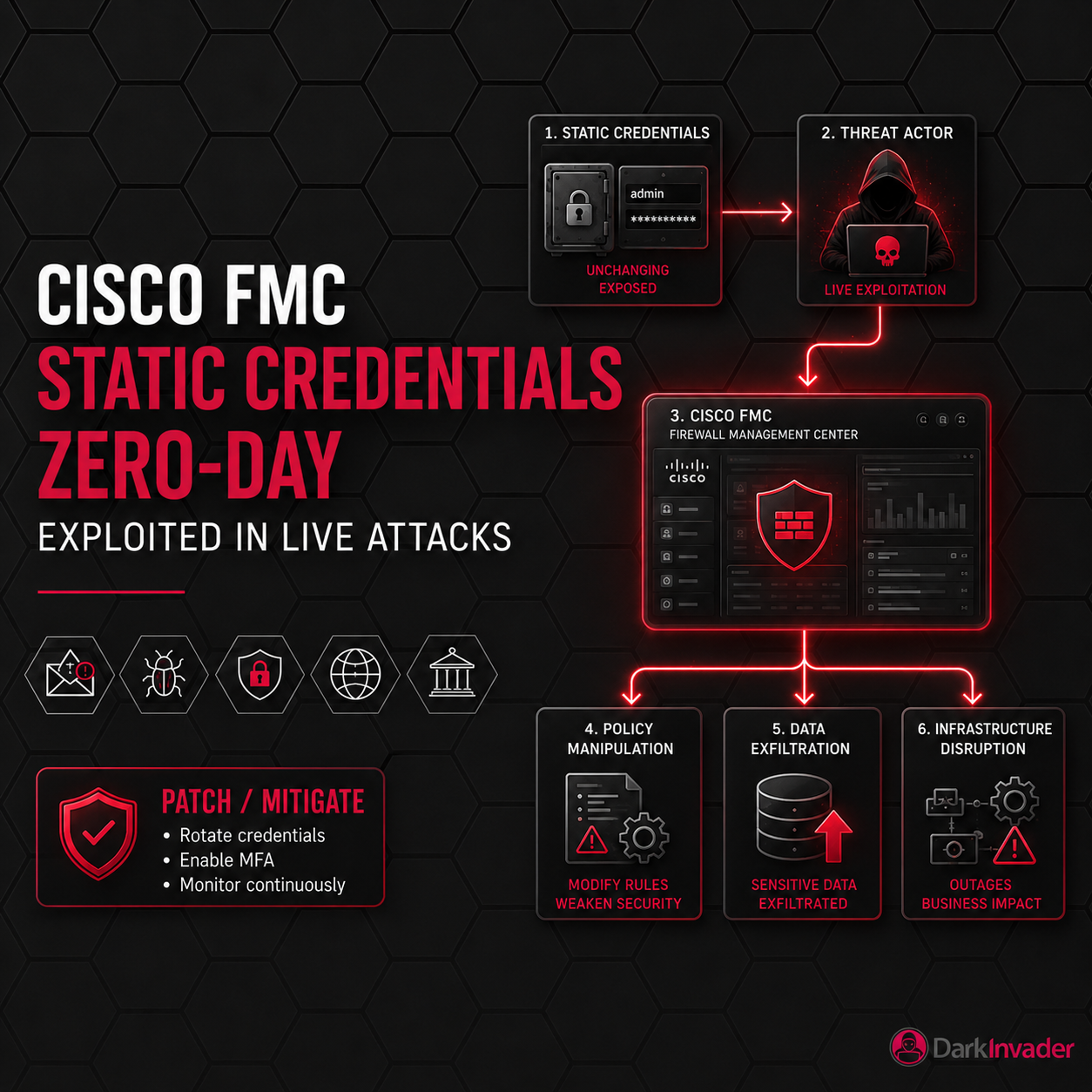
Cisco FMC static credentials vulnerability CVE-2026-20316 actively exploited. Immediate patching needed by August 1 deadline. Exploit details and remediation steps.
Discover the wp2shell vulnerability affecting millions of WordPress sites. Explore the critical Remote Code Execution (RCE) flaw and learn how to protect your site from mass attacks.
Critical vulnerability discovered in AWS Kiro allowing silent code execution through prompt injection, posing risks to developers.
Cl0p ransomware exploits vulnerabilities in PTC Windchill and FlexPLM, enabling unauthenticated RCE and data theft. Critical patching is essential.
NCSC alerts to Russian state-backed LAUNDRY BEAR zero-click attacks on Zimbra email platforms. Learn detection signals and patching priorities for your organisation.
Explore the hidden risks of cloud misconfiguration and exposed services, and learn strategies to protect your organisation.
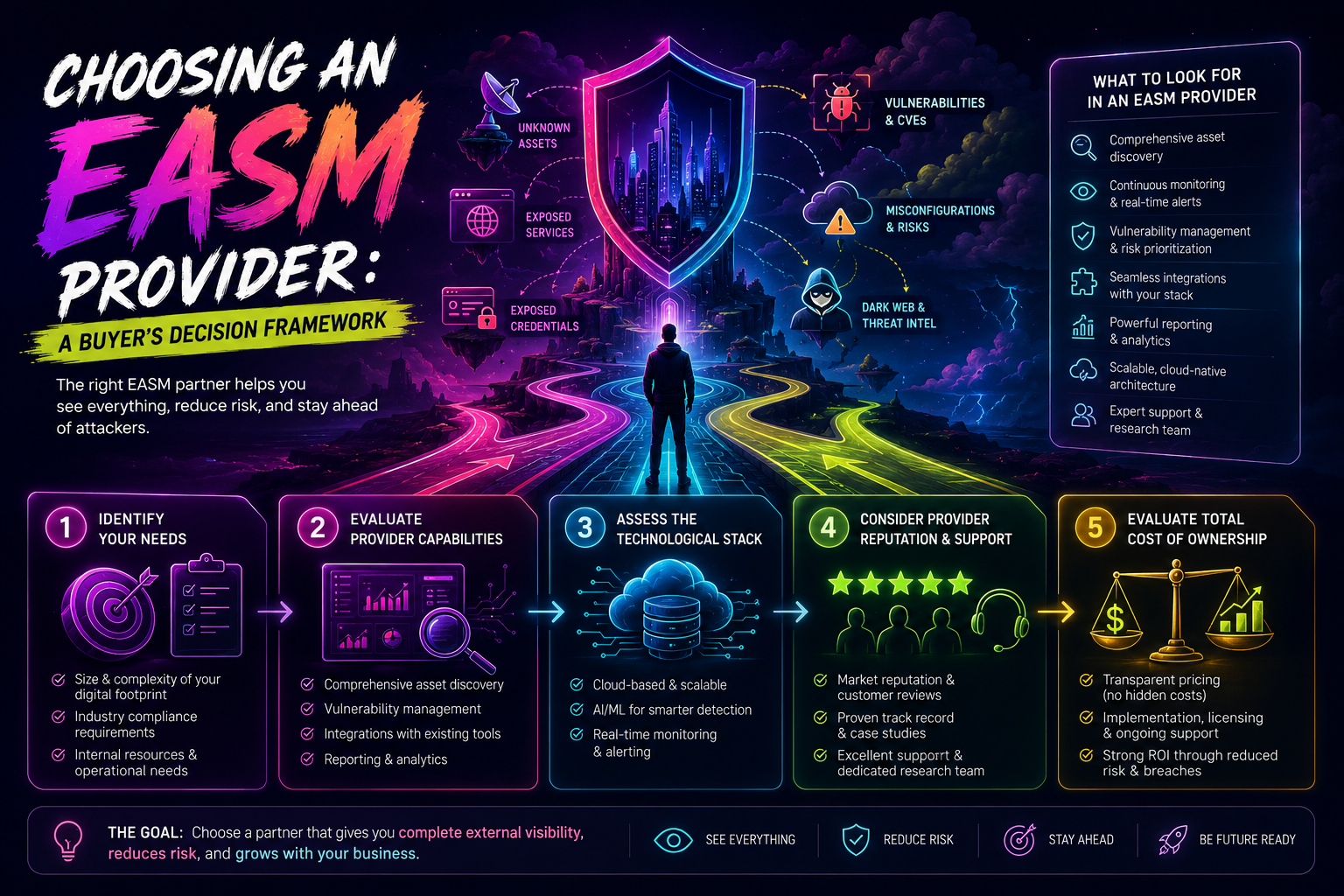
Explore a comprehensive framework to select the right External Attack Surface Management (EASM) provider, ensuring robust cybersecurity and safeguarding digital assets.
Explore the dual nature of AI in cybersecurity, highlighting its roles in offense and defence, challenges on the attack surface, and strategies to mitigate risks.
Explore the UK’s Cyber Security and Resilience Bill and its impact on your organisation’s attack surface.
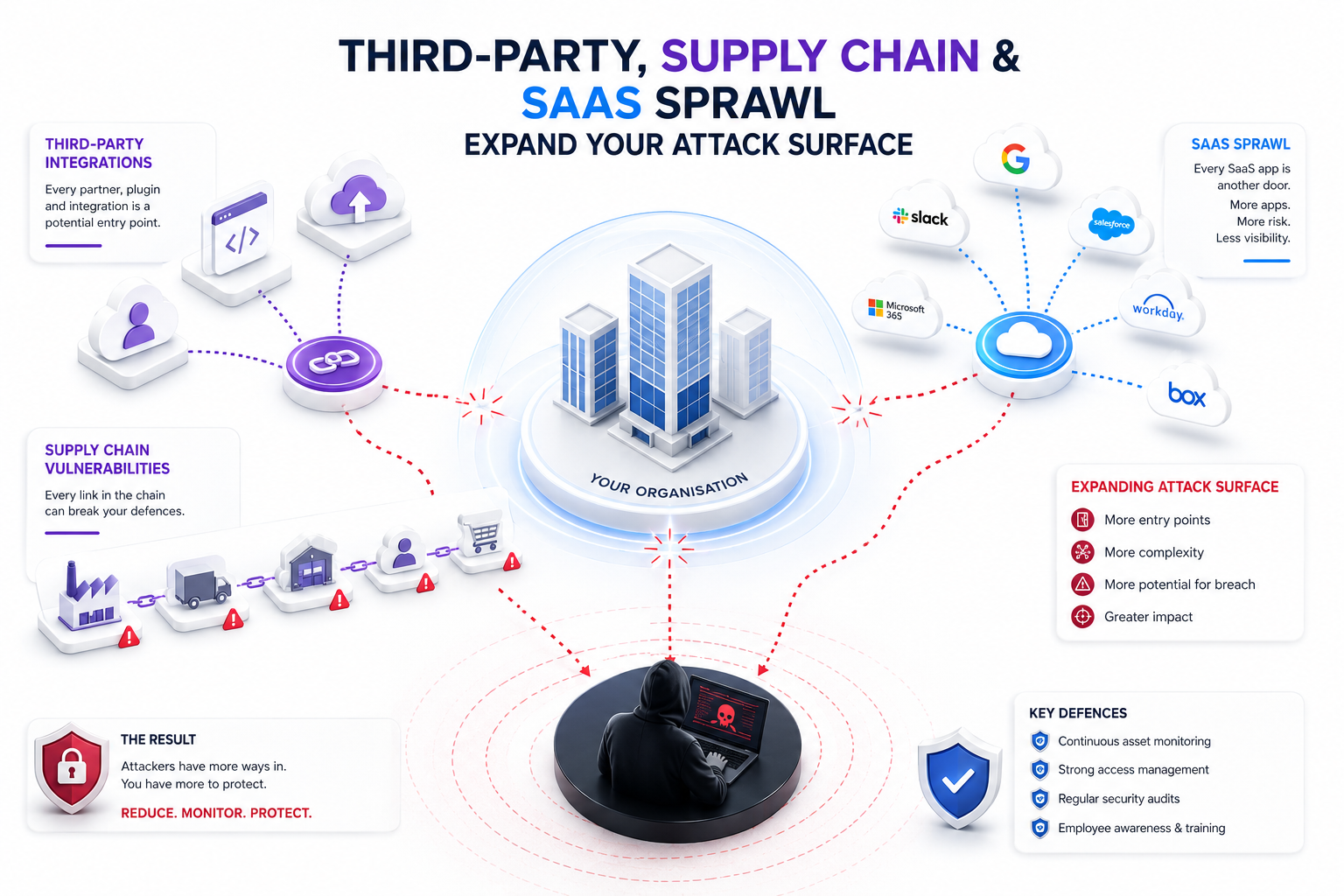
Explore how third-party vendors, supply chains, and SaaS applications contribute to attack surface expansion and discover strategies for minimisation.
In the world of cybersecurity, External Attack Surface Management (EASM) is a proactive strategy to monitor and manage digital vulnerabilities. Learn why it’s essential for protecting modern enterprises.
Learn about the factors affecting the cost of External Attack Surface Management (EASM) and how to choose a value-driven solution.
Learn practical steps to reduce your external attack surface and enhance cybersecurity.
Exploring the cyber attack surface trends of 2026 and how businesses can mitigate potential threats.
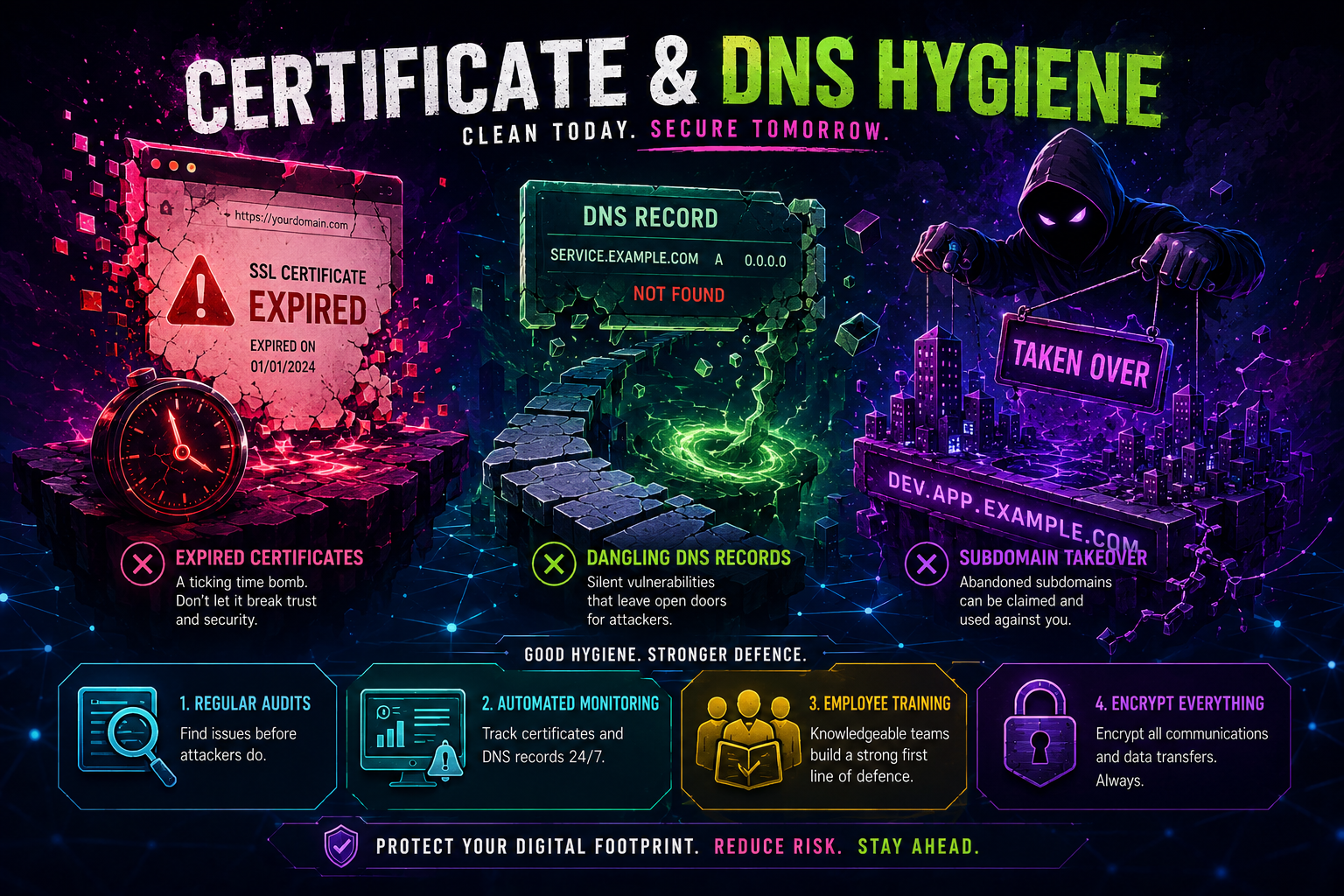
This blog emphasises the importance of maintaining certificate and DNS hygiene to prevent cyber threats such as dangling records, expired certificates, and subdomain takeover.
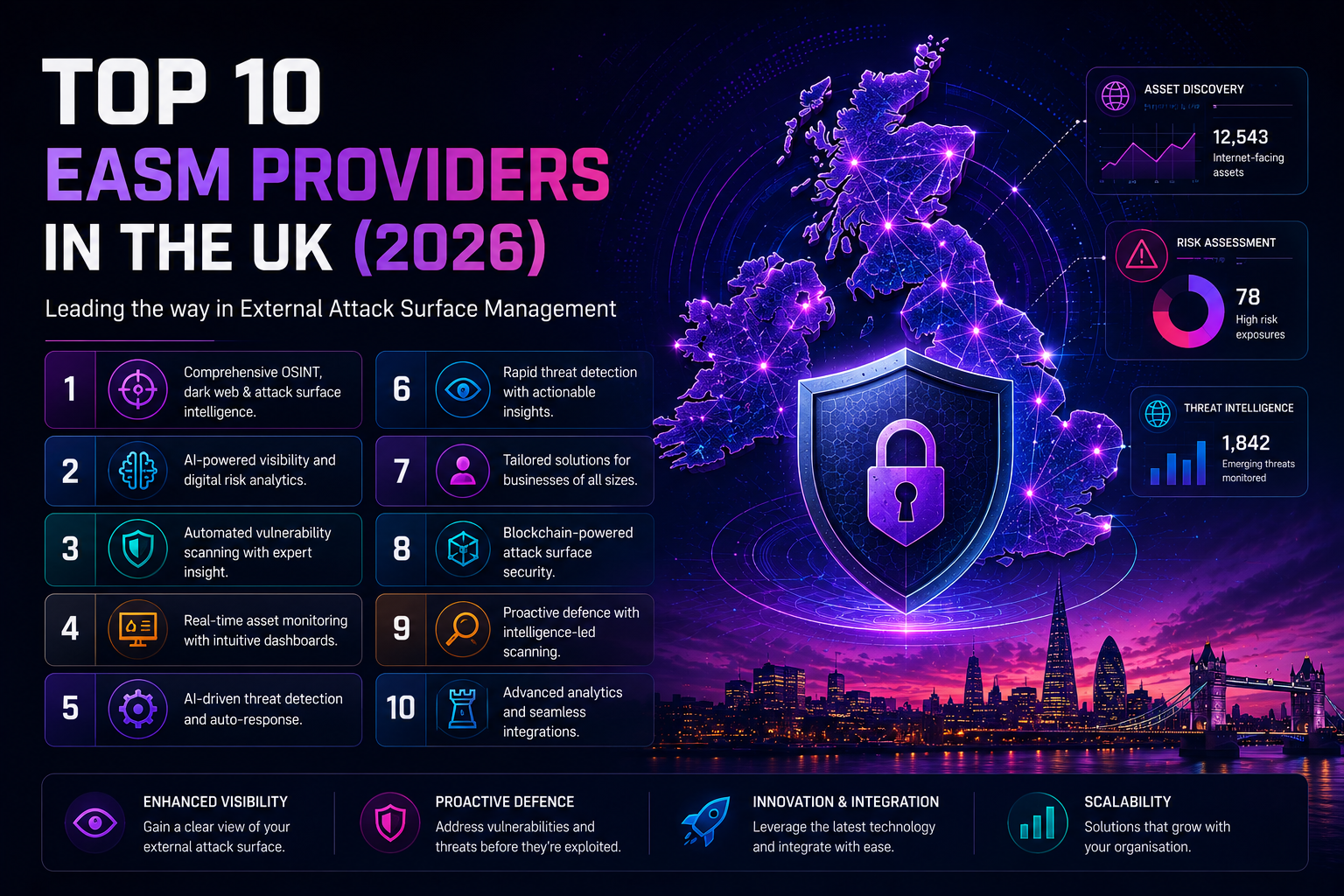
Ten real EASM providers UK organisations can buy in 2026, including our own platform, with what each does, its UK presence and how to choose.
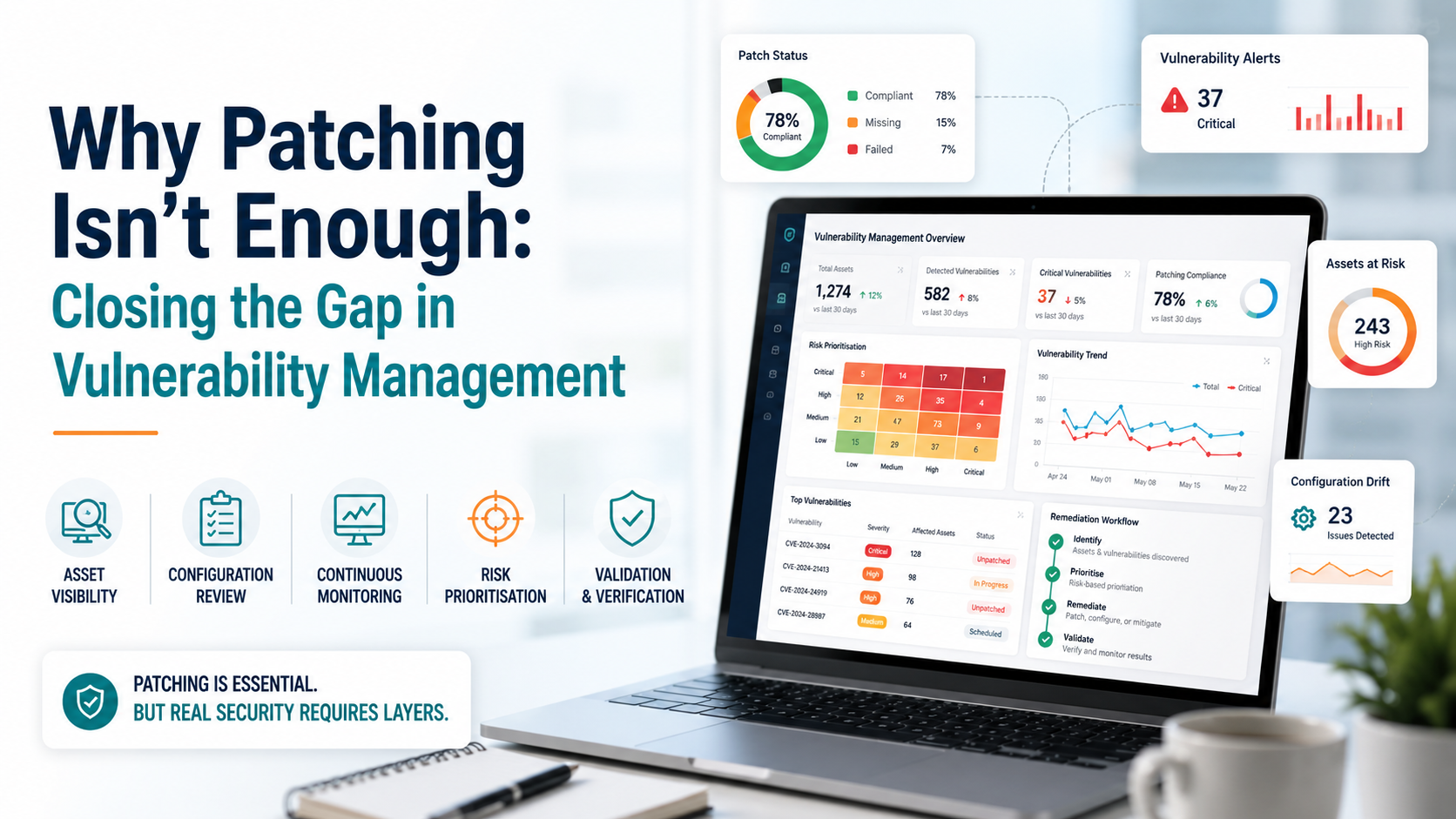
This article discusses the limitations of patching in vulnerability management and explores comprehensive strategies for improving security posture, such as continuous monitoring and threat intelligence.
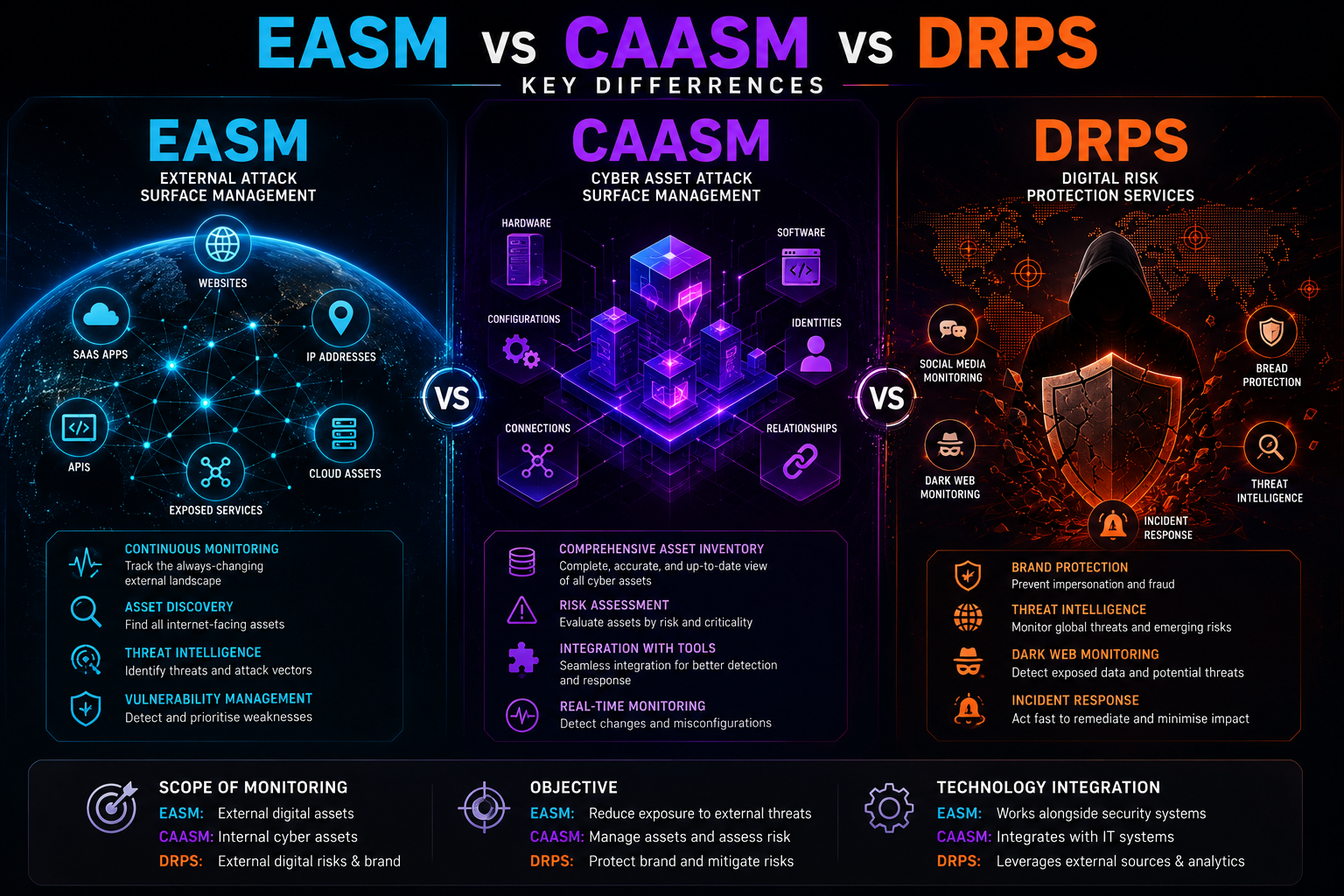
Explore the key differences between EASM, CAASM, and DRPS in cybersecurity to make informed decisions for your organisation’s security strategy.
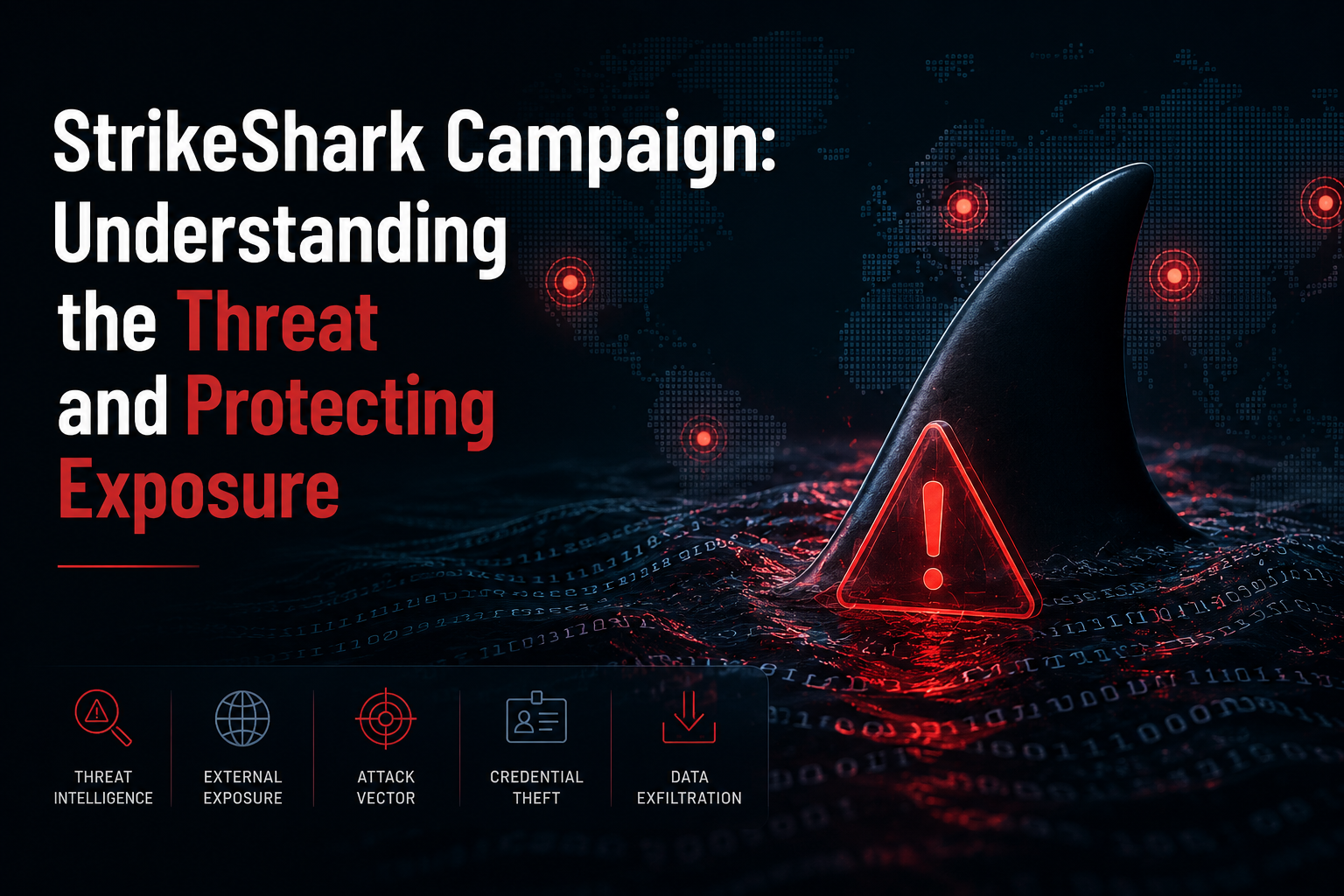
Explore the StrikeShark campaign, a sophisticated cyber threat targeting businesses. Learn how to protect exposure with advanced cybersecurity strategies.
CVE-2025-67038 is a critical command injection vulnerability affecting the Lantronix EDS5000 series. Learn about the risks and mitigation strategies.
A guide for AppSec leaders to mitigate risks from CVE-2026-12569 in high-stakes sectors like finance, healthcare, and energy.
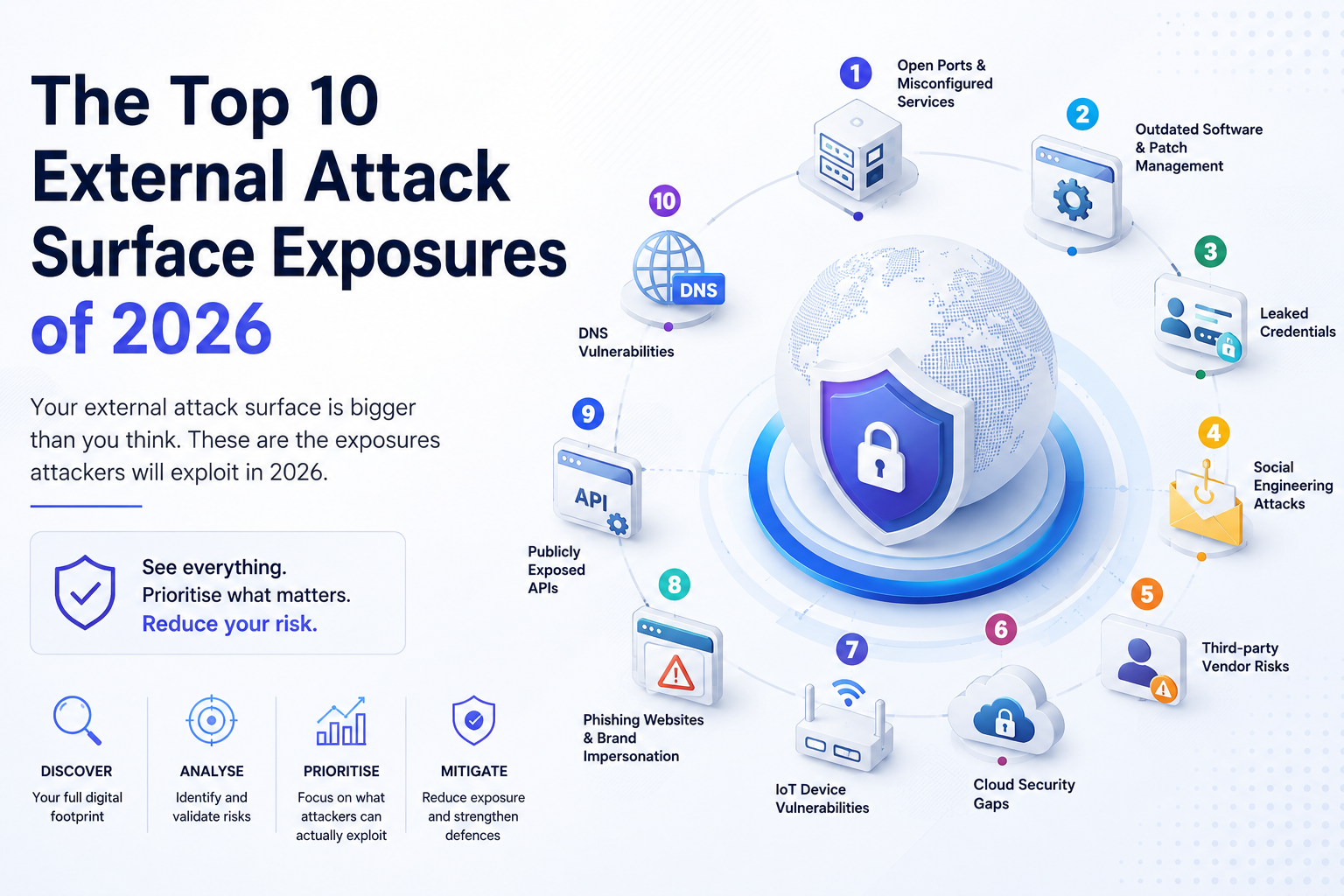
Explore the top 10 external attack surface exposures in 2026 and how to mitigate these cybersecurity risks.
Explore Adversarial Exposure Validation (AEV) and its role in Continuous Threat Exposure Management (CTEM) for prioritizing real exploitability over mere visibility in cybersecurity.
Explore the critical Joomla JCE CVE-2026-48907 vulnerability, its impacts, and protective measures for organisations.
Explore the FortiBleed mass Fortinet credential-harvesting campaign, its impact, and how to defend against such threats.
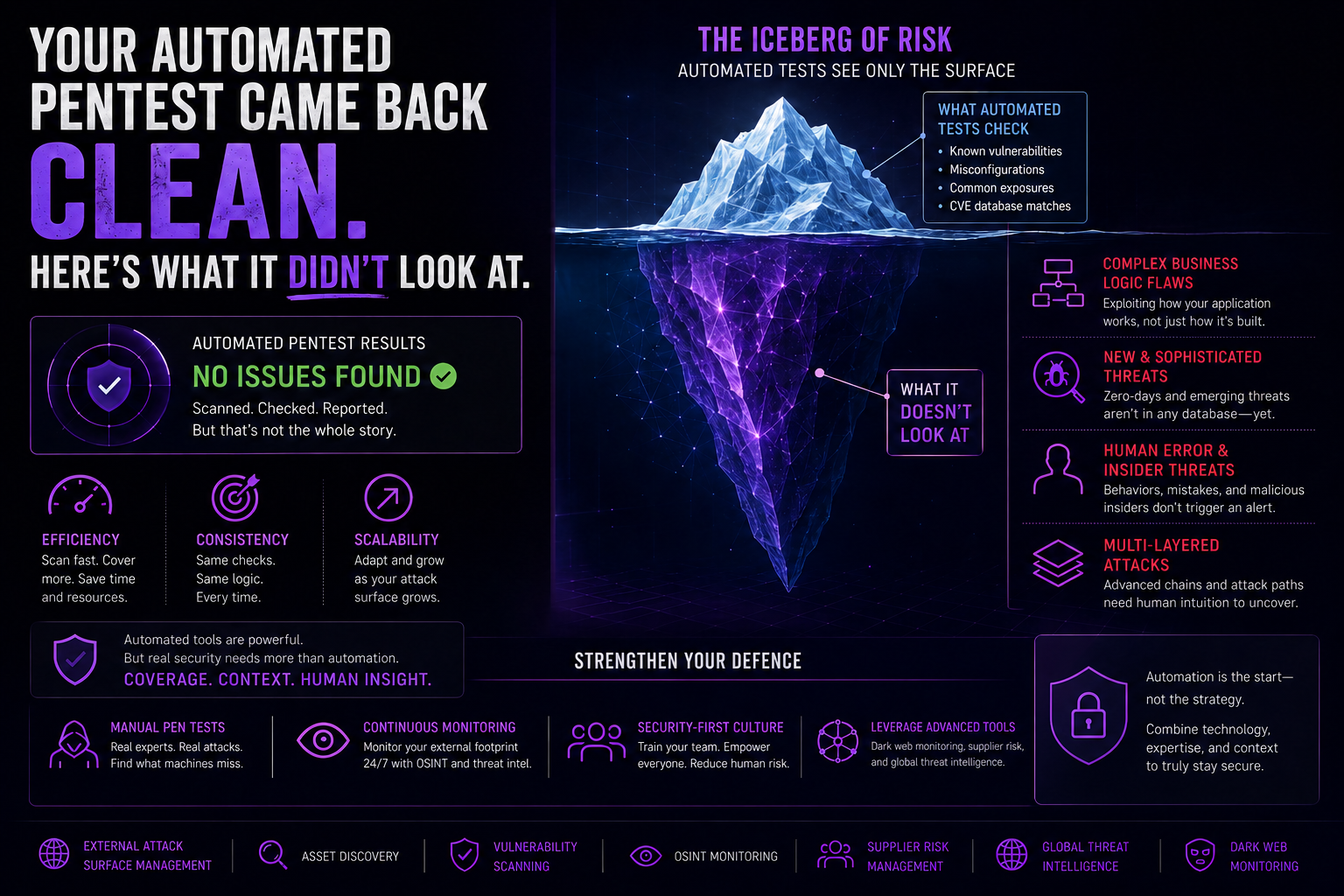
Explore the unseen gaps in automated pentesting and discover how continuous EASM can enhance your cybersecurity strategy.
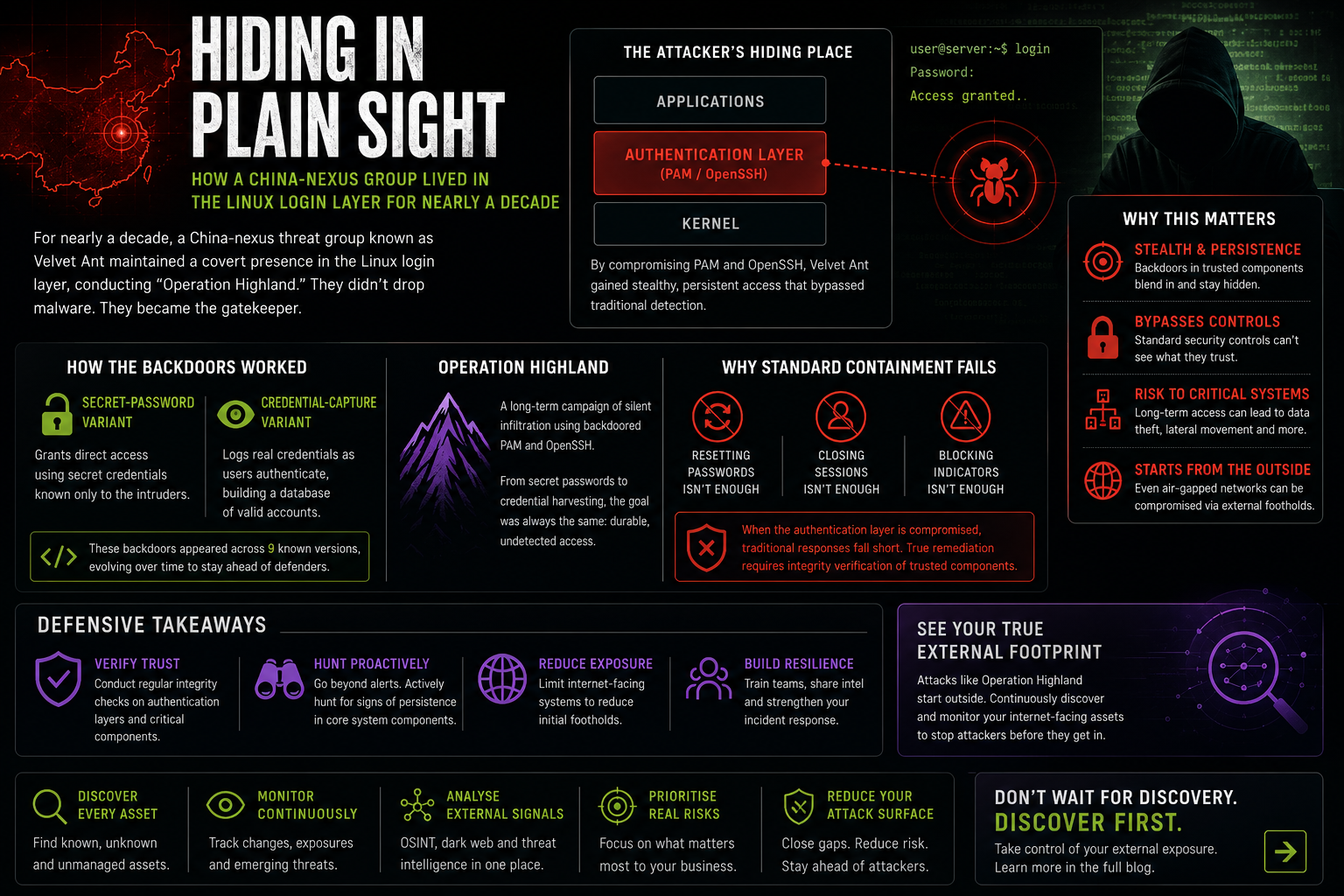
Discover how the China-nexus group Velvet Ant conducted a decade-long infiltration of Linux login systems in "Operation Highland," using backdoors in PAM and OpenSSH to maintain persistence.
Explore how over 400 hijacked Linux packages turned developer machines into gateways to unauthorised access, and the crucial cybersecurity measures needed to safeguard the digital ecosystem.
Explore how memory issues in self-hosted AI agents lead to vulnerabilities like remote code execution, and discover strategies to mitigate these risks.
Explore how the World Cup scam wave reveals vulnerabilities in domain protection, and learn effective EASM strategies for brand safety.
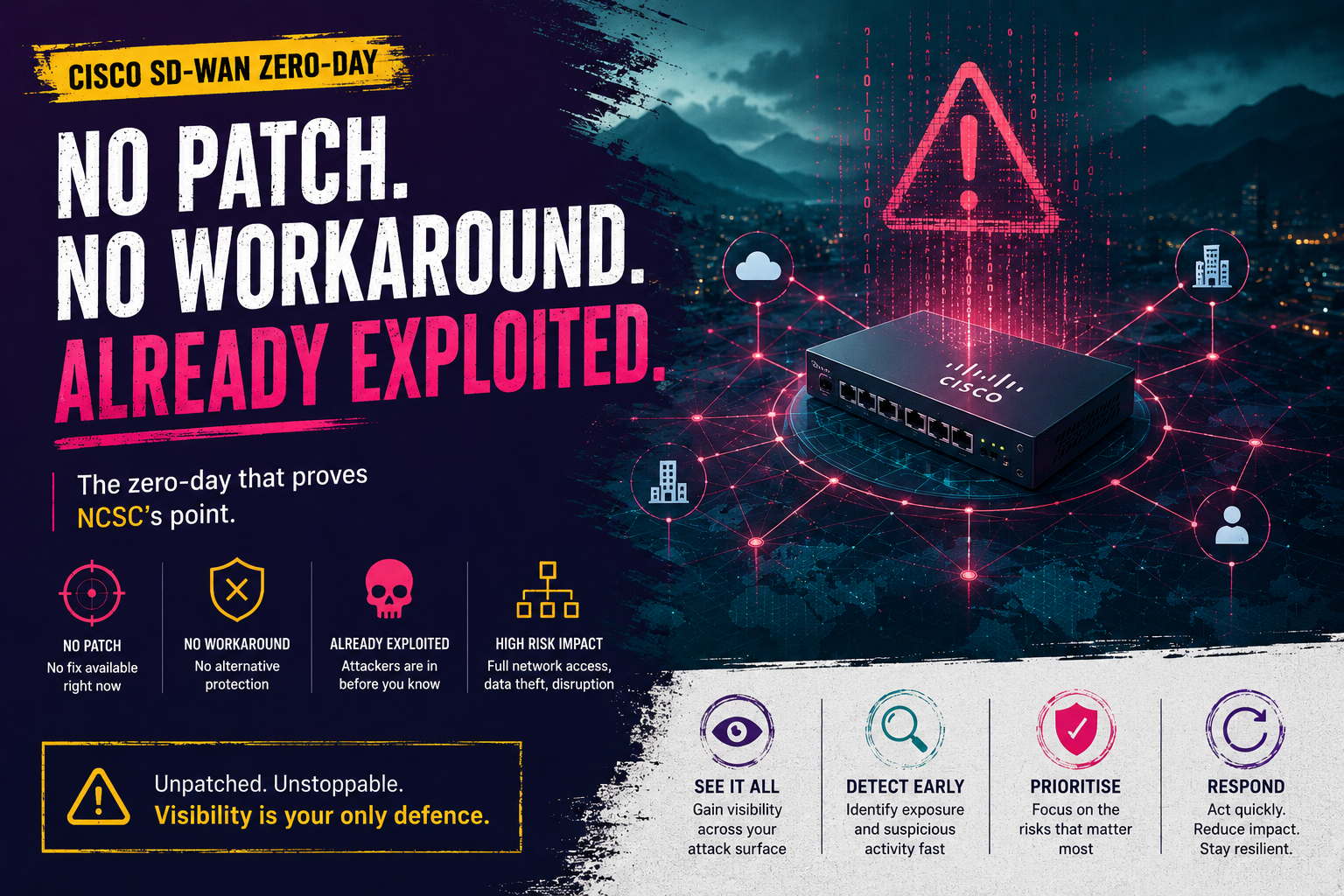
A zero-day vulnerability in Cisco’s SD-WAN has been exploited, stressing the urgency of proactive cybersecurity measures as per NCSC’s warnings.
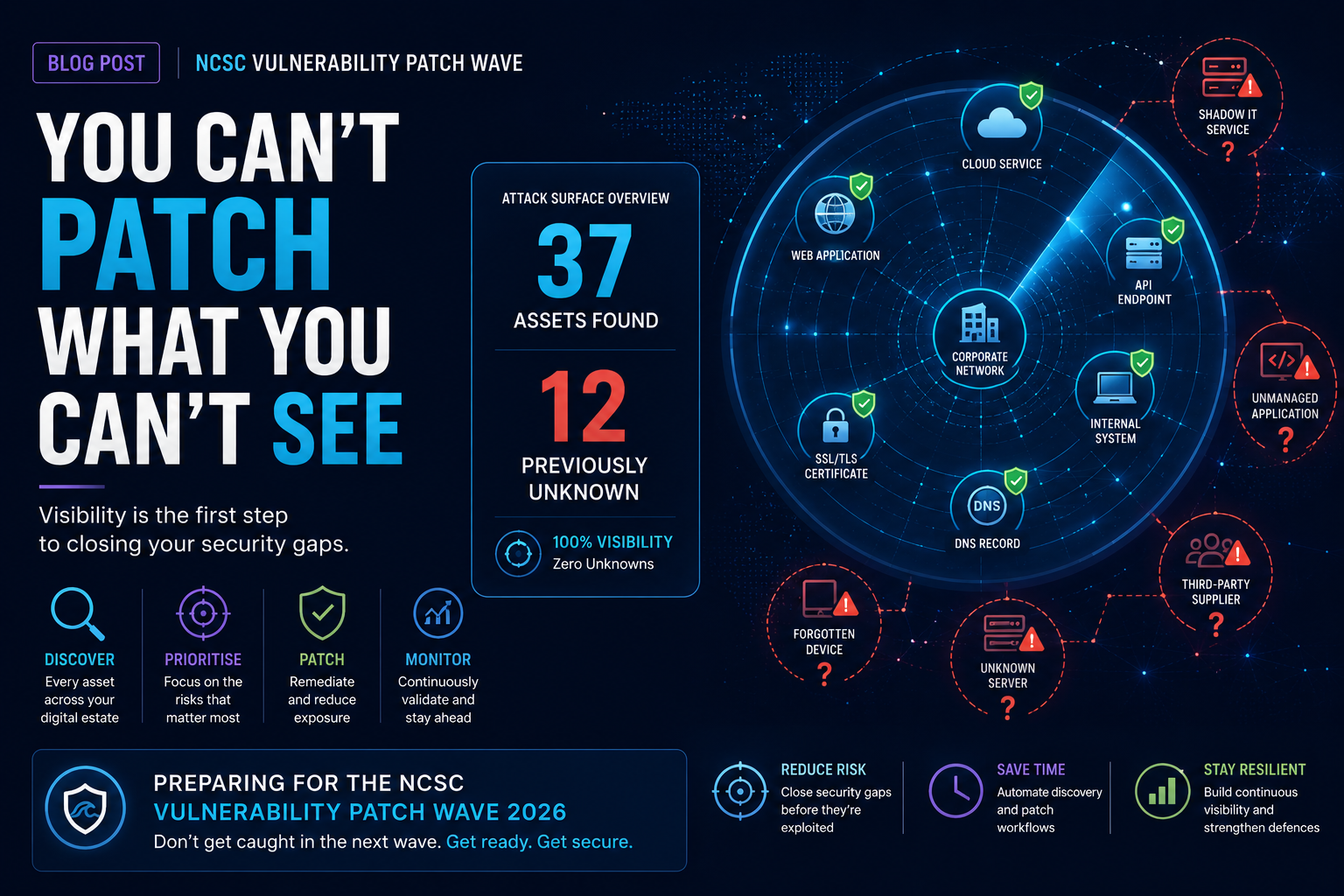
Explore the NCSC’s ‘Vulnerability Patch Wave’ campaign to enhance cybersecurity with proactive vulnerability management. Learn why visibility and prioritization are key to effective patching.
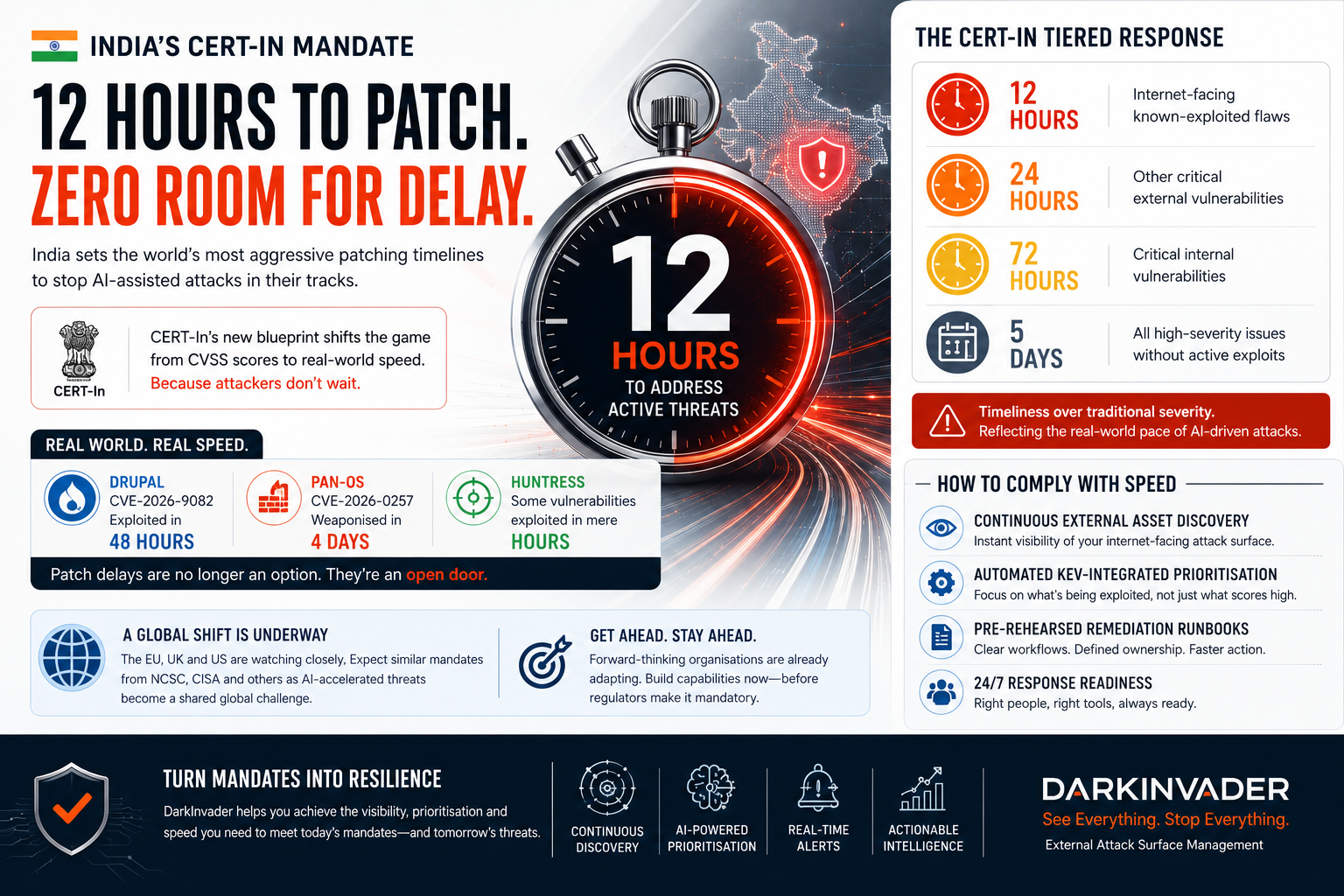
India’s CERT-In introduces a 12-hour critical patching mandate, reshaping global cybersecurity protocols in response to AI-driven threats.
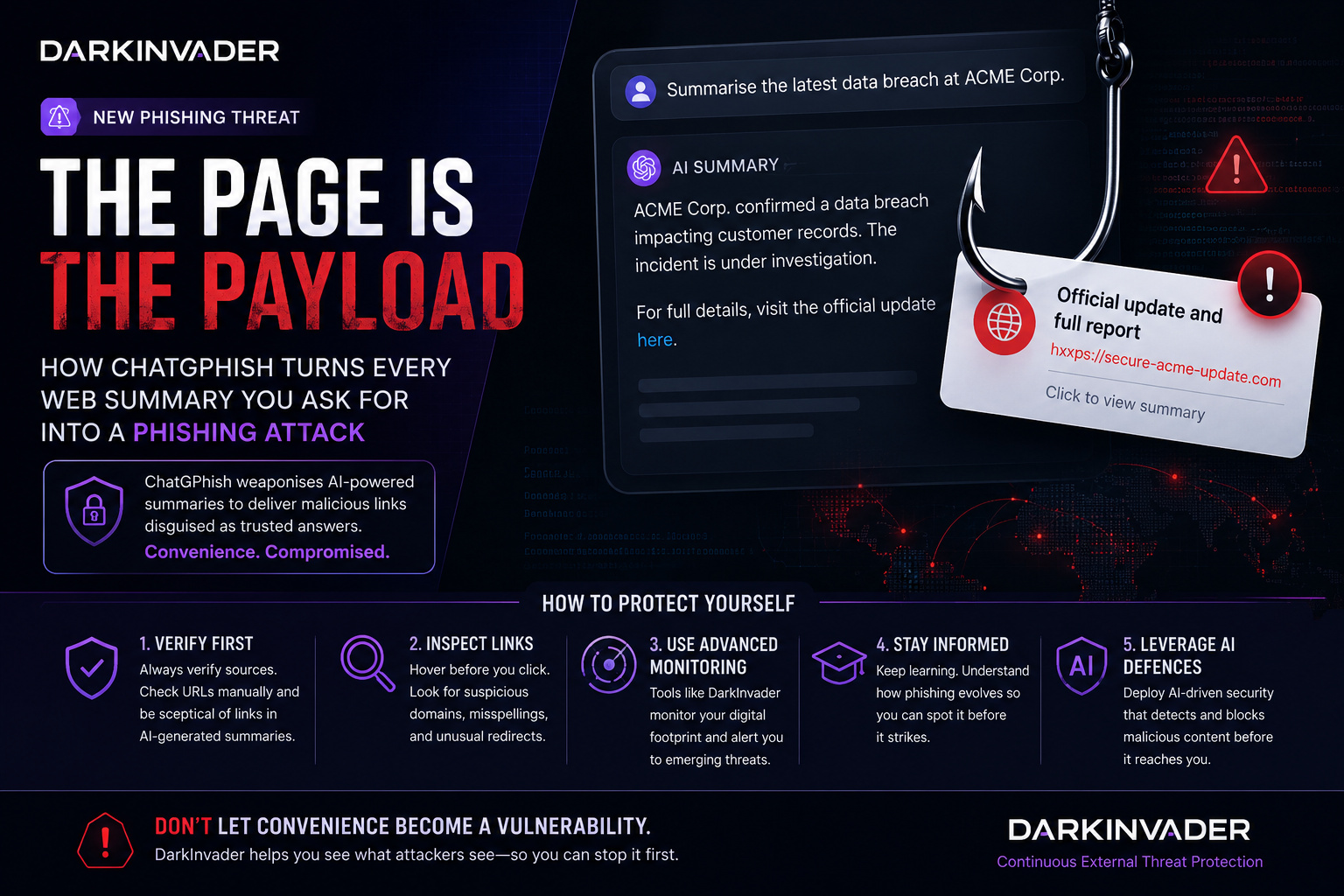
Explore the emerging threat of ChatGPhish, a phishing attack exploiting AI-generated summaries, and learn how to protect yourself.
A Dutch raid uncovered a staggering 17 million routers used in cybercrime, revealing a quiet economy where criminals exploit connectivity without users knowing. Learn how it happened and how to protect yourself.
Explores CVE-2026-0257, a critical vulnerability in VPNs that could allow forged cookie attacks, posing serious security threats.
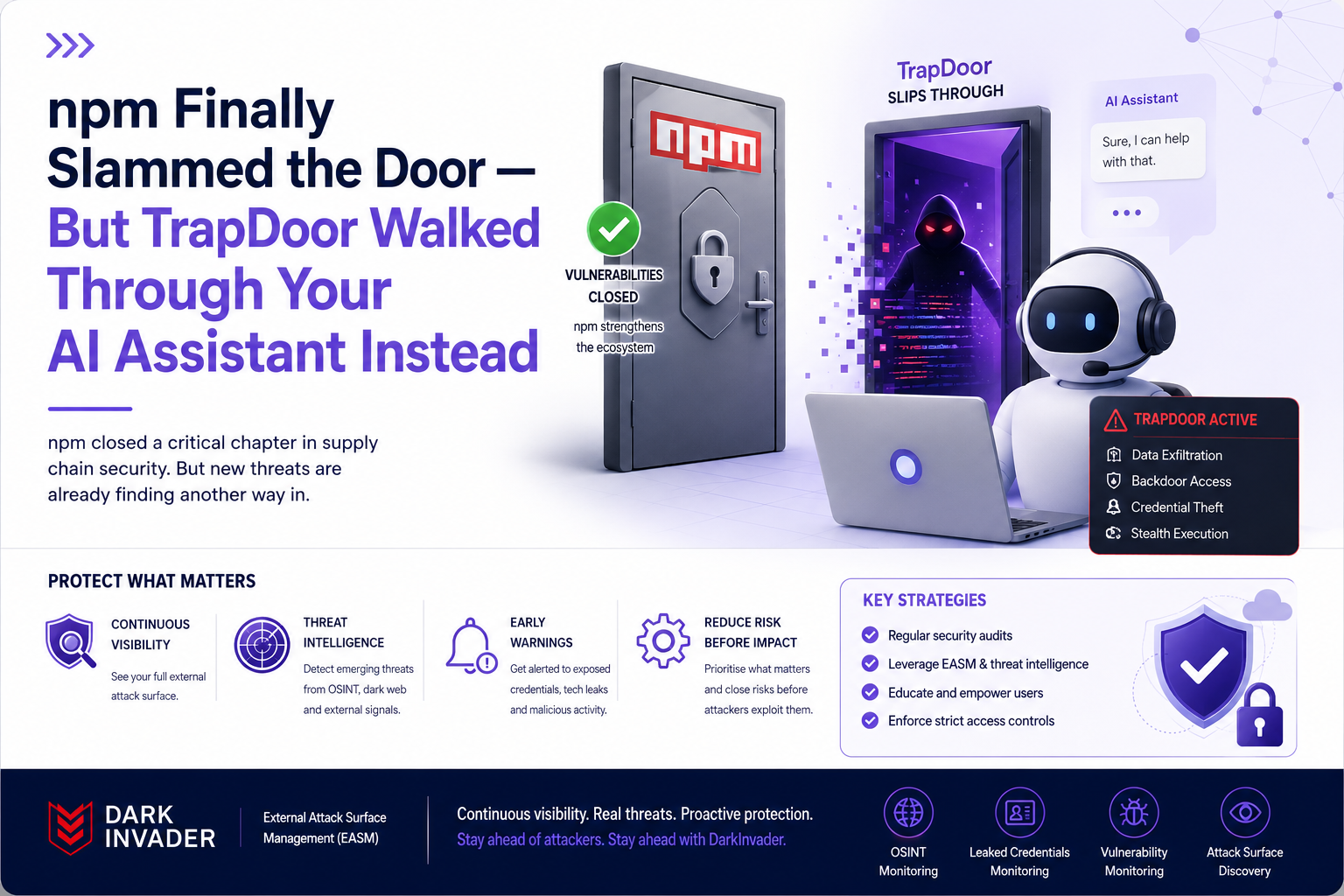
Explore the dynamics of npm’s new security measures in juxtaposition with the emergence of the TrapDoor threat targeting AI assistants. Discover proactive strategies to safeguard your digital landscape.
An analysis of the May 2026 GitHub breach, highlighting the vulnerabilities it exposed and lessons about software security.
Megalodon backdoored 5,561 GitHub repos in six hours in May 2026 using stolen tokens, likely from infostealer logs. What happened and how to respond.
CVE-2026-9082 is a critical Drupal vulnerability. Exploitation began within 48 hours of disclosure. Act now to protect your sites.
Exploring the implications of AI-driven zero-day 2FA bypass for mass exploitation and its impact on cybersecurity strategies.
Organisations often overlook validating if a fix for vulnerabilities is effective, leaving them exposed. This blog explores the verification gap, its risks, and offers a framework for ensuring remediation effectiveness.
Understanding your real attack surface through 45 days of monitoring reveals hidden vulnerabilities and optimises security measures. Discover key insights and improve your cybersecurity posture.
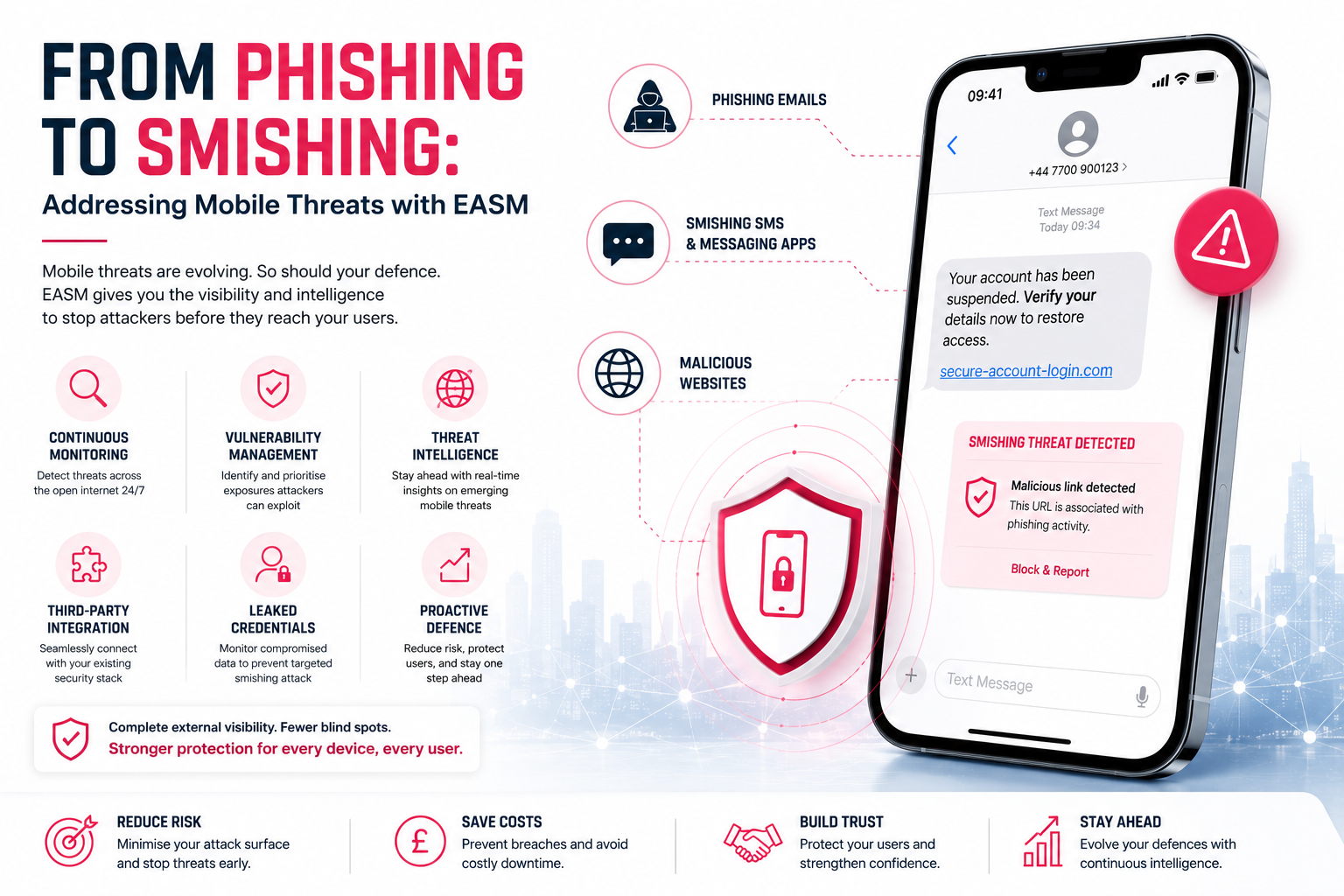
Explore the evolution from phishing to smishing in mobile threats and discover how External Attack Surface Management (EASM) provides proactive protection.
Explore cybersecurity predictions for 2026, focusing on how External Attack Surface Management (EASM) will play a pivotal role in shaping the future of digital security.
GlassWorm is a resurgence of malicious VS Code extensions that expands attack surfaces by targeting developer machines holding sensitive credentials and code, evading traditional security detection. Learn detection and mitigation tips.
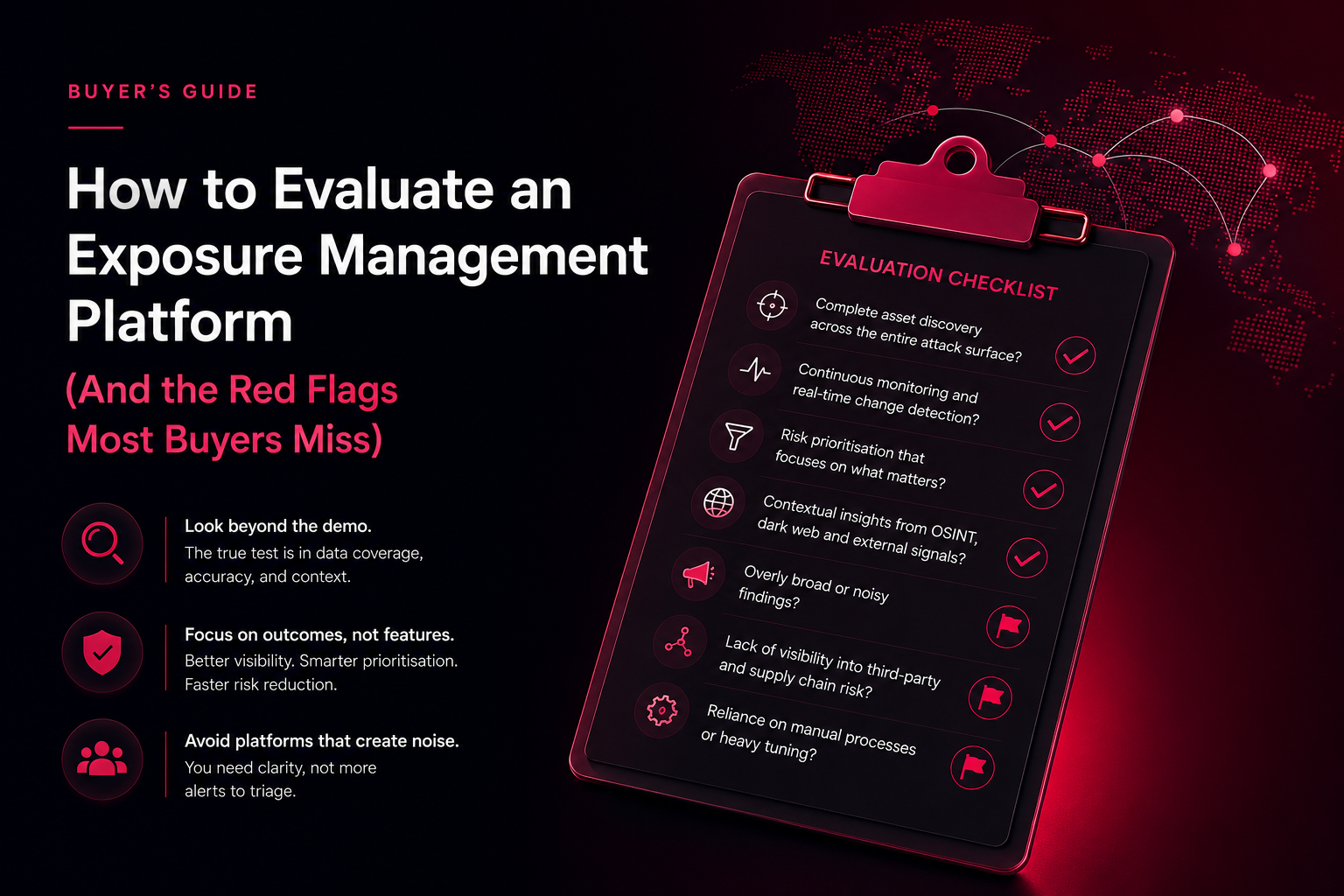
A contrarian buyer’s guide to evaluating exposure management platforms, highlighting the critical features and red flags most buyers overlook.
Nyx is the new AI security consultant inside DarkInvader. It analyses every risk on your external attack surface, explains what it means, and tells you what to ask next.
Passkeys represent the future of secure authentication, replacing vulnerable passwords with device-specific cryptographic keys integrated with biometrics, promising enhanced security and user convenience.
In this blog, we explore China-linked cyber threats, their risks, and comprehensive defence strategies including cyber hygiene, intelligence, and policy roles to combat these sophisticated threats.
An in-depth analysis of the FIRESTARTER backdoor incident exposing vulnerabilities in federal systems and outlining key lessons and strategies to enhance cybersecurity resilience.
Ghost identities are dormant or obsolete user accounts that pose significant risks to enterprise data security. Identifying and eliminating these accounts through audits, tools, and strict access controls is crucial to safeguard sensitive information.
Exploring how Nexcorium targets IoT devices for attacks, their tactics, and strategies to mitigate these cyber threats.
As AI regulations rise globally, understanding their impact on your cybersecurity attack surface is crucial. This blog covers increased attack surface complexity, enhanced monitoring, data protection, and vendor risk management strategies to stay compliant and secure.
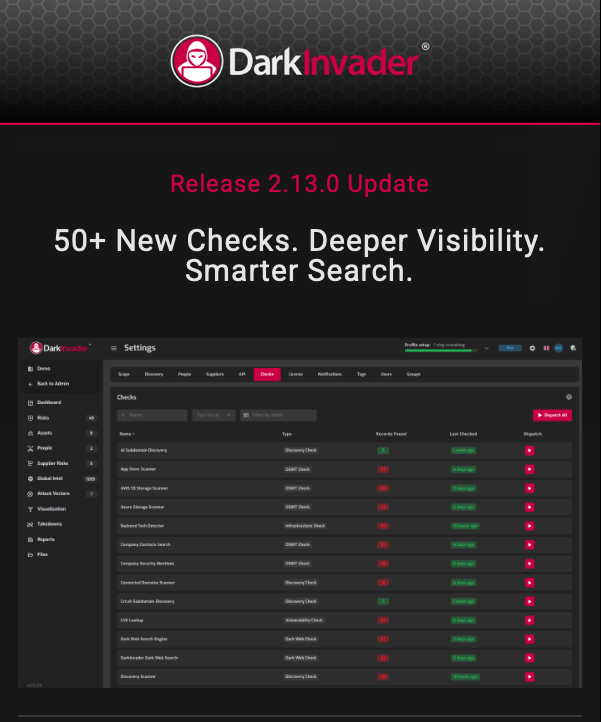
This release significantly expands attack surface visibility with 40+ new checks covering technical risks, AI exposure, supply chain issues, and compliance. Improvements in global search and scoped terms enhance risk detection and investigation accuracy.
Explore how combining AI and EASM transforms real-time threat intelligence and modern cybersecurity practices, enhancing detection, prediction, and response.
Exploring how External Attack Surface Management (EASM) strengthens security posture in 2026 through continuous monitoring, real-time threat detection, risk management, and incident response.
EASM is a vital tool in defending businesses against sophisticated phishing techniques by continuously monitoring internet-facing assets, discovering vulnerabilities, and providing threat intelligence to proactively reduce risks.
browse by tag
browse by category
browse by year
free trial
Try DarkInvader Pro free. No payment details required.